

Papua New Guinea’s Electoral Commission is working with the Department of Information and Communications Technology (DICT) to give voters new ways to check and update their enrolment ahead of the 2027 National General Election.
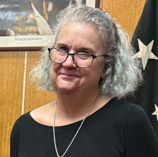
Electoral Commissioner Dr. Nicole Haley told a Special Parliamentary Committee hearing on Friday, October 9, that the Commission’s provincial application had been restored after its data was migrated to DICT’s government-hosted digital infrastructure.
The migration, completed within the previous 48 hours, had enabled provincial roll-update data to be entered into the electoral roll, Dr. Haley said. Some updates had already begun using paper forms, but the data could not be entered into the system while the application was offline.
Dr Haley said the Commission hoped to introduce an enrolment service through the government’s Service Pass or Service Wallet by the end of October. Voters would be able to check and claim their enrolment, add facial biometrics, enroll if missing from the roll, or request a transfer if listed in the wrong ward.
A separate electoral roll look-up service would also be available for people who only wanted to check their enrolment, Dr. Haley said. Use of the Service Pass would be voluntary for the public, although public servants were required to register by October 31.
The Commissioner said the digital service could issue an enrolment credential with a QR code showing a voter’s enrolment details. The Commission also planned to display the roll for public checking, objections and supplementary enrolments early next year, potentially with voter photographs.
However, Dr. Haley said the 2027 election would remain paper based. Biometric identification at polling stations and electronic voting were not planned for the coming election, although the new system could support further development in future.
Committee members questioned how voters without smartphones or internet access would be included.
Dr Haley said the application was being designed with offline and agent functions, and the Commission had purchased Starlink devices to improve connectivity at provincial election offices.
She also said the Commission was planning a public awareness campaign with DICT, government departments, private-sector organizations, and civil society groups.
East Sepik Governor Allan Bird, who chaired the hearing, cautioned the Commission against relying on candidates to help reach remote communities, saying election systems should be delivered by a capable and independent institution.
Dr Haley agreed that the Commission had a responsibility to lead the awareness effort. She said the new tools were intended to give citizens greater control over their own enrolment and reduce reliance on intermediaries.