
The National Cultural Commission has been very vocal about the lack of importance and vision placed on the creative sector, which has led to its neglect and underdevelopment.
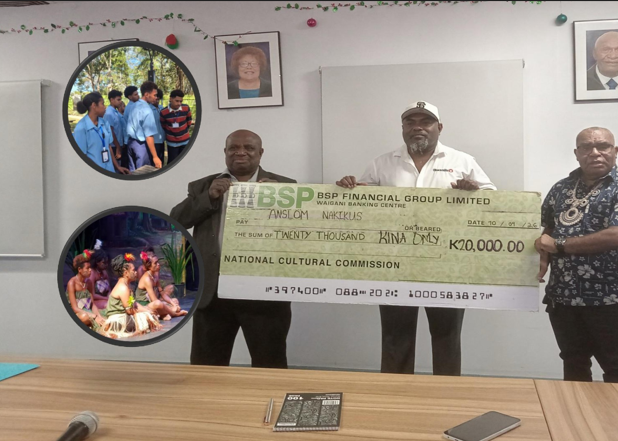
During the recent signing of a K20, 000 cheque to support PNG’s renowned reggae artist Anslom for his trip to Jamaica for an album development, the NCC addressed the trivializing of creative arts in Papua New Guinea.
Executive Director for the NCC Steven Enomb Kilanda, said that nobody is interested in studying the arts because they do not realize the economic potential of this area.
“Arts industry is where the money is. That's where the huge economic potential is for an emerging country like Papua New Guinea.”
“Other countries believe in the artistic potential of Papua New Guinea but not us.”
He added that one of the possibilities of this attitude is due to Papua New Guinea being a developing nation, hence a lot of emphasis is placed on other areas of study.
“When other resources are depleted, the alternative is the arts.”
He challenged young people to think outside the box and not limited themselves in seeking out common forms of employment.
“There’s very few students, taking up arts courses – roughly six or seven students.” “Think seriously – take a different direction.”
He added that he’s seen arts students get jobs and create jobs for themselves.
“Arts students are already employed both locally and internationally, that’s because arts courses are demanded at an international level as well.”
David Taim, Executive Manager for Festival, Marketing, Cultural Development, and Art Industry, explained that under the current leadership of Mr. Kilanda, the NCC formulated the National Cultural Policy, 2023-2032, that captured NCC to work in collaboration with education in terms of reintroducing the creative arts courses in the schools.
“I believe creative arts subjects were scrapped during the introduction of the outcomes-based education, from primary to secondary levels.”
He added that it was also a legacy issue, as Papua New Guinea lacked policy or legislation 50 years ago to protect artists and manage their royalties and benefits. Addressing these systemic legislative and policy gaps will ensure that true economic benefits reach local practitioners and their families, ultimately attracting more talent to the sector.
Over the next 50 years, the national government must refocus its priorities to fully capitalize on the economic potential of the country's creative and cultural arts industry.
Meanwhile, Anslom said that art gives people identity and as a Papua New Guinean artist he is proud of his art and his identity.