
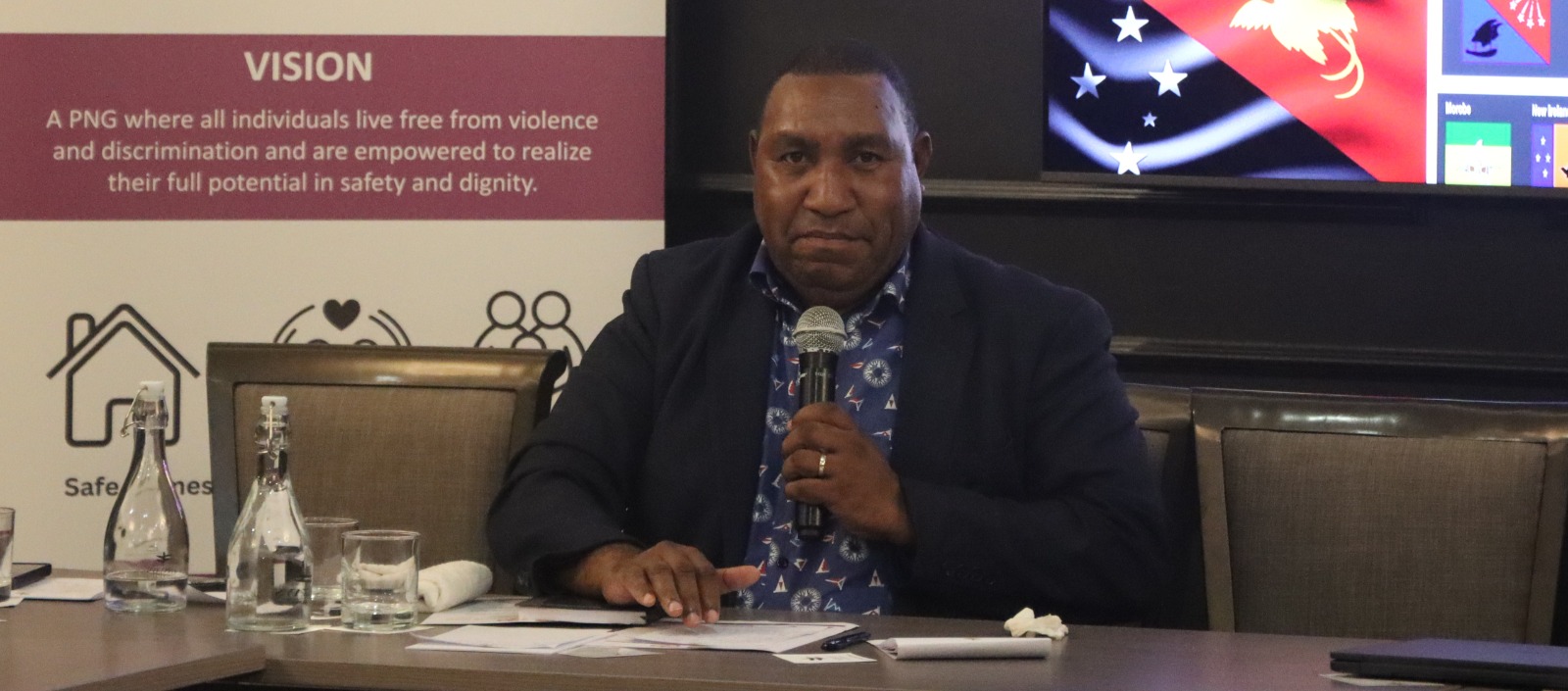
Department for Community Development and Religion Secretary, Jerry Ubase, has urged provincial governments and civil society organizations (CSOs) to unite and convert gender-based violence (GBV) priorities into tangible action.
Secretary Ubase made the call today as he closed the three-day Second GBV Workplan Plenary Workshop at the Airways Hotel in Port Moresby, which focused heavily on strategic planning and financing frameworks to prevent and respond to GBV.
He noted that the three days of intense discussions reaffirmed that GBV is far more than an isolated human rights issue; it remains a profound social, economic, and development roadblock for Papua New Guinea.
“Gender-based violence undermines the safety, dignity, and wellbeing of individuals and families. It affects children’s futures, limits economic participation, and places immense pressure on our health, justice, and social services," Secretary Ubase stated. He added that widespread violence fractures community cohesion and lowers productivity, directly hindering the country’s broader sustainable development milestones.
Secretary Ubase stressed that managing GBV cannot be treated as the standalone burden of a single department or agency. Instead, it demands deep political will, synchronized institutional actions, robust prevention initiatives, accessible frontline support infrastructure, and sustainable funding structures.
“Commitment must be reflected not only in our policies and plans, but also in the resources we allocate and the actions we take,” he emphasized.
He identified the newly revised National GBV Strategy (2026–2035) as the country's updated roadmap for the next decade. He insisted that the strategy must be rigorously backed by sufficient national and provincial funding to protect frontline services and effectively reach the vulnerable women, girls, and rural communities bearing the brunt of violence. He welcomed the strategy's dedicated implementation planning scheduled for 2027, noting it instills vital stakeholder confidence.
The plenary workshop offered provincial and district representatives a transparent platform to present their localized requirements, helping to uncover hidden funding gaps and direct resources precisely where communities need them most.
Secretary Ubase emphasized that provincial administrations must take the driver's seat in steering sub-national GBV initiatives. To do this effectively, he called for clear operational boundaries, transparent resource allocations, structured baseline reporting, and firm accountability mechanisms. He thanked provincial teams for their tireless efforts, acknowledging that high-level national strategies depend completely on accurate field data collected from local communities.
Secretary Ubase highly commended National GBV Secretariat Director, Ms. Kambani, and her small team for their exceptional orchestration of the plenary. He specifically highlighted the direct state grants provided to 23 frontline civil society organizations (CSOs), charging provincial administrations to forge immediate operational ties with these grassroots service providers.
“The grants they are receiving are from the government, and you are part of the government. It is your responsibility to work with them and help ensure that the services reach the communities they are intended to support," he told provincial delegates.
He called for immediate, proactive collaborations across provincial entities, national bodies, CSOs, and international development partners to close the systematic gaps exposed during the sessions.
Closing the plenary, Secretary Ubase called for a completely united and long-term front to eliminate GBV across Papua New Guinea.
“No single agency can address GBV alone. Through greater collaboration, shared responsibility, and coordinated action, we can close the gaps we are experiencing today. I look forward to seeing our shared provincial priorities translated into impactful, visible action in 2027 and beyond," Secretary Ubase concluded.