
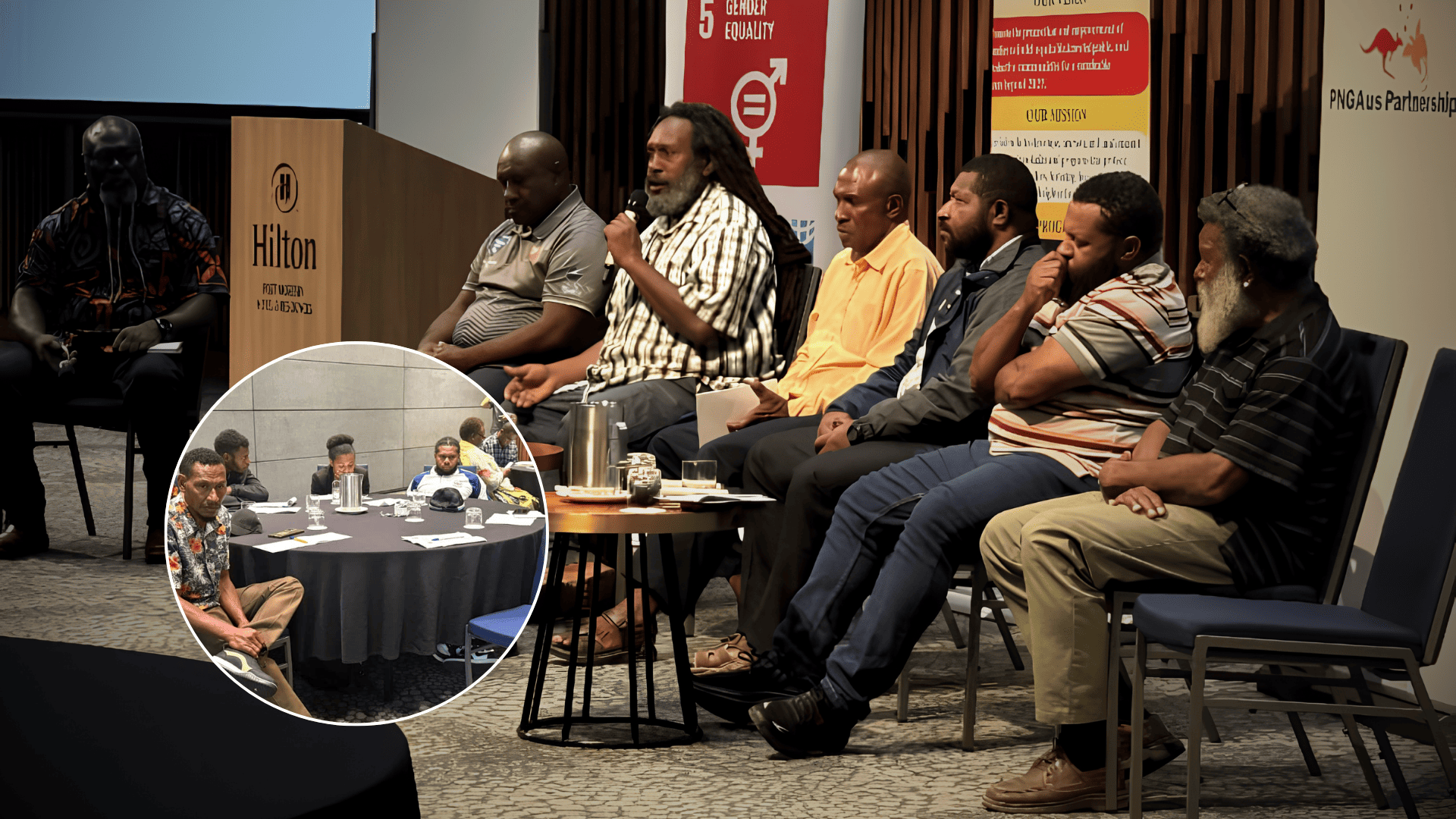
Papua New Guinea (PNG) is taking steps towards developing a National Men and Boys Engagement in Gender Equality Strategy aimed at strengthening the role of men and boys as active partners in promoting gender equality and addressing persistent social challenges, including gender-based violence.
A three-day regional consultation which started on Wednesday and ending today at Hilton Hotel in Port Moresby, brought together participants representing the Momase, Highlands and Southern regions.
The initiative facilitated by the Office for the Development of Women (ODW), supported by the UN Women and PNG-AUS Partnership has brought together government representatives, traditional and community leaders, faith-based organisations and other stakeholders to develop a national strategic framework that encourages men and boys to work alongside women, families, communities and institutions in advancing gender equality.
According to a Regional Consultations Concept Note prepared by the Office for the Development of Women (ODW), the proposed strategy seeks to translate existing national gender equality commitments into practical actions that address inequalities affecting women and girls across the country.
The concept note identifies unequal access to education, employment and decision-making, as well as high rates of gender-based violence, as continuing challenges facing Papua New Guinea.
While the country has established policy frameworks, including the Gender Equality and Women's Empowerment Policy and the Gender Equity and Social Inclusion Policy, the document highlights the need for stronger engagement of men and boys to ensure these commitments are implemented effectively.
The strategy is intended to provide a coordinated approach to changing harmful attitudes and behaviours, strengthening community participation and promoting shared responsibility for achieving gender equality.
The Regional Consultations follow a Men's Forum on Gender Equality convened in August 2025, which helped establish the initial framework for engaging men and boys in promoting gender equality.
The office is also preparing for a regional gathering planned for July 2027, when Pacific Island countries are expected to attend.
The consultations will therefore provide an opportunity for stakeholders to consolidate the work already undertaken and develop a strategy that reflects the realities of communities throughout Papua New Guinea.
The primary purpose of the consultations is to co-develop a Men and Boys Engagement in Gender Equality Strategy that strengthens men's role as active partners in advancing gender equality.
The proposed approach recognises that achieving meaningful change requires the involvement of men and boys alongside women and girls, rather than treating gender equality as an issue for women alone.
The strategy is expected to identify practical ways to encourage positive male leadership within families, communities, churches, educational institutions and government organisations.
It will also examine the social and cultural factors that contribute to harmful forms of masculinity and the barriers preventing men and boys from participating constructively in gender equality initiatives.
Through the consultations, participants will review lessons, challenges and opportunities identified during the previous Men's Forum and determine how these can inform the development of a more effective national framework.
The process will also consider how the strategy can be grounded in family values, cultural traditions and community realities while remaining consistent with national policies and international commitments.
The concept note outlines five major objectives to guide the consultations and the development of the strategy.
The first is to reflect on the outcomes of the Men's Forum on Gender Equality and consolidate the lessons, challenges and opportunities identified during the initial discussions.
The second is to validate the proposed framework's key pillars, including family-centred approaches, culturally grounded interventions, community and institutional engagement, and alignment with government policies.
The third objective is to define strategic priorities focusing on youth, education, leadership, faith partnerships, capacity-building and governance.
The fourth is to jointly develop a draft strategic roadmap outlining objectives, proposed interventions and accountability mechanisms to guide implementation.
The fifth is to establish stronger regional networks and secure commitments from stakeholders to support the implementation of the strategy.
These objectives are intended to ensure that the final framework moves beyond policy discussions and provides a clear direction for action at national, provincial and community levels.
The consultations are expected to produce several key outcomes that will guide the strategy's implementation.
These include a shared vision of the role men and boys should play in advancing gender equality, a draft framework with validated pillars and strategic priorities, and a strategy roadmap supported by proposed interventions and accountability mechanisms.
Participants are also expected to strengthen partnerships across government agencies, civil society organisations, churches, youth groups and development partners.
Another anticipated outcome is the establishment of a network of male champions across different sectors and provinces who can promote positive attitudes, challenge harmful practices and encourage greater participation by men and boys in gender equality initiatives.
Such networks could provide a platform for sharing experiences, coordinating activities and encouraging local leadership in addressing gender-related challenges.
The development of accountability mechanisms will also be important in ensuring that commitments made during the consultations translate into measurable progress.
The consultations will use participatory and activity-based methods designed to encourage collective ownership of the proposed strategy.
One of the methods will be problem-tree analysis, which will help participants identify the root causes of harmful masculinities and the barriers that prevent progress towards gender equality.
World Café discussions will provide opportunities for stakeholders to examine and validate the proposed framework's pillars and strategic priorities.
Group work and action planning will then be used to develop strategic pathways, proposed interventions and accountability mechanisms.
The process will conclude with a plenary session to consider and adopt the draft roadmap.
This approach is intended to ensure that participants contribute directly to shaping the strategy and that the resulting framework reflects a broad range of experiences and perspectives.
The proposed strategy is expected to align with Papua New Guinea's national development priorities and its international commitments to gender equality and social inclusion.
The concept note specifically identifies the Convention on the Elimination of All Forms of Discrimination Against Women (CEDAW), the Beijing Platform for Action and the United Nations Sustainable Development Goals as important reference points.
The relevant Sustainable Development Goals include Goal 5 on gender equality, Goal 10 on reducing inequalities and Goal 16 on peace, justice and strong institutions.
Alignment with these frameworks is intended to ensure that Papua New Guinea's approach to engaging men and boys contributes to wider efforts to eliminate discrimination, strengthen inclusive institutions and promote equal opportunities.
The strategy will also need to reflect the country's social and cultural context to ensure that proposed interventions are practical, relevant and capable of being implemented across diverse communities.
The development of the National Men and Boys Engagement in Gender Equality Strategy represents an opportunity to strengthen collaboration between government, communities and other stakeholders in addressing persistent gender inequalities.
However, the effectiveness of the strategy will ultimately depend on how its recommendations are translated into action, supported by adequate resources and monitored through clear accountability arrangements.
The proposed roadmap is expected to provide direction for interventions, partnerships and implementation responsibilities, while the establishment of male champions across provinces could help sustain community engagement.
By encouraging men and boys to take a more active role in promoting respectful relationships, supporting women's participation and challenging harmful social attitudes, the strategy aims to build a stronger foundation for gender equality in Papua New Guinea.
The three-day regional consultations in Port Moresby are expected to help consolidate the existing framework and establish a shared direction for the country's next phase of work on engaging men and boys.
The broader objective is to ensure that men and boys become constructive partners in creating safer families, stronger communities and a more equal society for women, men, girls and boys throughout Papua New Guinea.