


Papua New Guinea should introduce stronger oversight of artificial intelligence tools used across government agencies, as concerns grow over data privacy, accountability and the offshore processing of sensitive information.
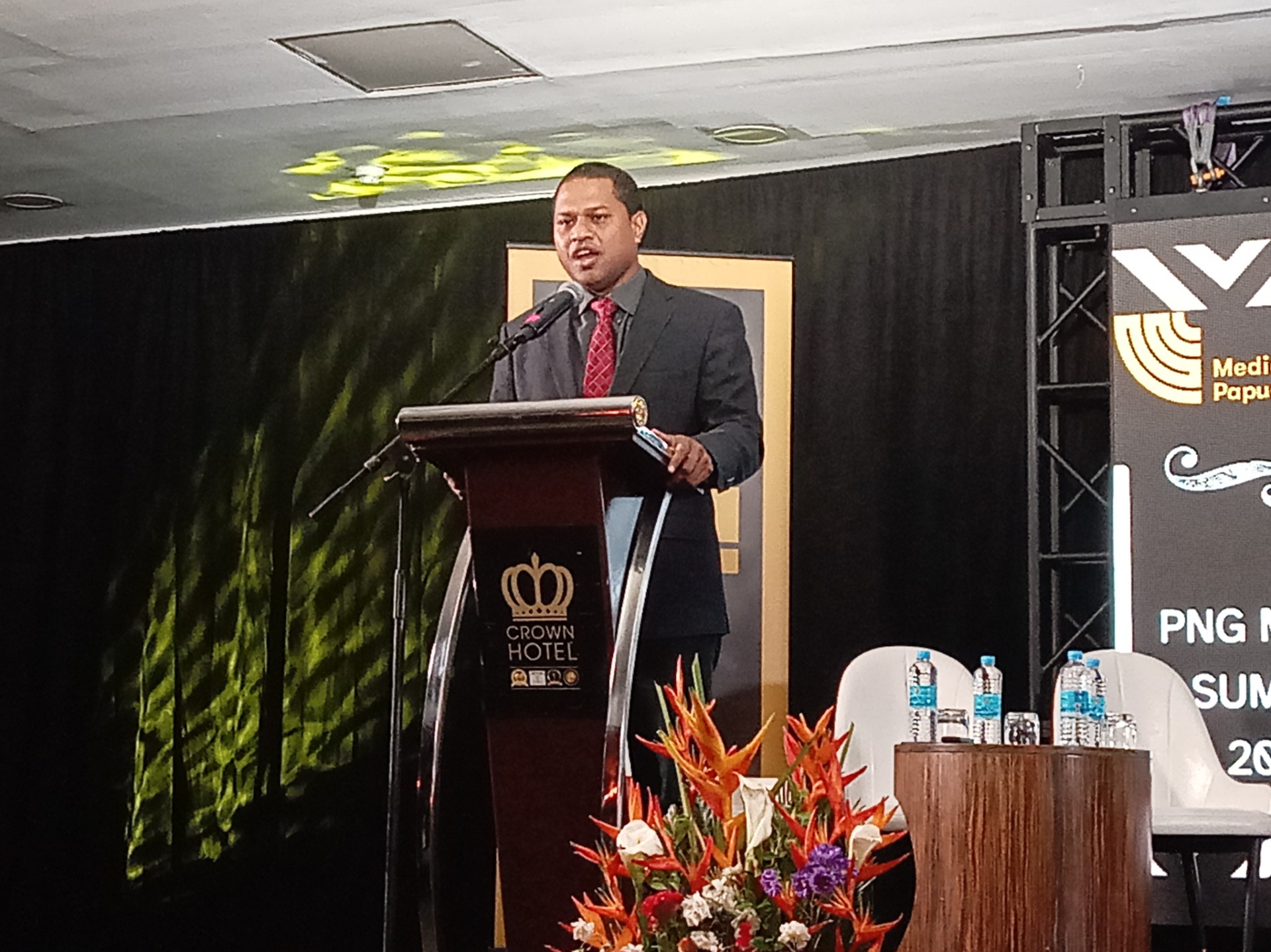
Speaking during a panel discussion at the PNG Media Summit 2026, Steven Matainaho, Secretary for the PNG Department of Information and Communications Technology, said governments and institutions using AI systems must understand what data is being entered into external platforms and how that information is handled.
“We did propose that government maintains a register of all models being used, not only models but all AI tools being used.”
He said one of the major risks for governments and organizations adopting AI tools such as ChatGPT is data governance, particularly when sensitive or citizen-related information is uploaded into cloud-based systems hosted offshore.
“When you’re pushing data into ChatGPT, whose data are you pushing in? And where is that data now being processed? Somewhere offshore, because we are consumers of it. We don’t have our own models in-country.”
Matainaho said many users are unaware that some AI platforms offer settings allowing user inputs to be used to improve models, potentially incorporating uploaded information into broader machine learning systems.
He said this makes it critical for government agencies, media organizations and private institutions to ensure they have legal rights to use the information they input into AI systems and understand how those systems process and retain data.
“You’ve got to be responsible for making sure that you have the rights to use that information, and then you’ve got to ensure that the protection of citizen rights is in place.”
Matainaho said PNG’s proposed AI adoption framework currently focuses heavily on protecting data that enters AI models, while broader sovereign AI ambitions remain a longer-term strategy.
He noted that full AI sovereignty would require Papua New Guinea to control the entire AI value chain, including local data centres, compute power, undersea cable connectivity, technical expertise and model development capabilities.
“That’s already going into billions.”
For now, Matainaho said most countries, including PNG, are likely to remain users of AI systems developed overseas while implementing protective measures around their use.
The discussion comes as governments, media organizations and businesses across the Pacific increasingly explore AI tools for productivity, research and information dissemination, while grappling with concerns around privacy, misinformation and digital sovereignty.