

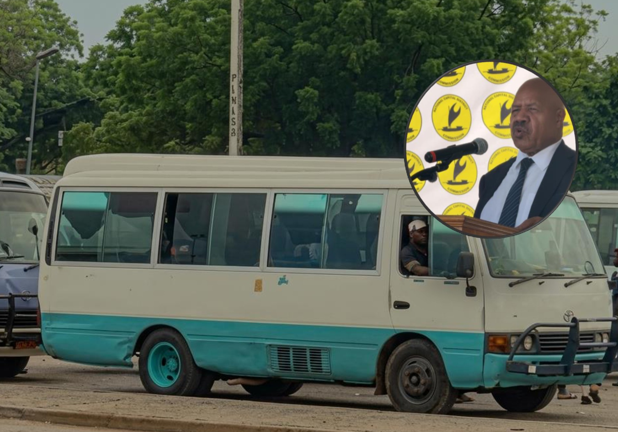
National Capital District Governor Powes Parkop has challenged the city's municipal authority to radically rethink its public transport strategy. He raised urgent concerns over unreliable Public Motor Vehicle (PMV) services, rising traffic congestion, and the pressing need for safer, cleaner, and more dependable commuting options for residents.
Speaking during the demolition commissioning of the old National Capital District Commission (NCDC) engineering division building at Tarpot, Governor Parkop stressed that the city must act immediately to plan for the transport demands of future generations.
The Failure of the Current PMV System
Governor Parkop questioned whether residents should remain at the mercy of an unreliable PMV sector, particularly during sudden operator strikes.
"Will they continue to have this type of unreliable PMV bus service anytime operators go on strike?" he asked, urging planners to develop a robust, dependable alternative.
As Port Moresby’s population grows rapidly, the Governor warned against a future heavily reliant on private vehicles, noting that unchecked car ownership would inevitably paralyze the city with persistent traffic jams. The sustainable solution, he argued, is a transition to a high-quality municipal network where residents can confidently choose clean and safe public transit over private cars.
Looking ahead, the Governor questioned whether Port Moresby's existing iconic infrastructure—including its four-lane roads and the Kookaburra flyover—would be enough to sustain future demands. He suggested that upcoming urban designs may need to incorporate:
- Underground tunnels
- Strategic underpasses
- Additional overpasses and flyovers
Governor Parkop linked these structural and logistical challenges directly to the NCDC’s Vision 2040, which aims to transform Port Moresby into an inclusive, prosperous, and highly livable city.
"The demand will increase and increase," Parkop stated. "We need smarter people—very innovative staff who are going to think about not just the present, but the future."