


The country’s Civil Aviation department is laying the ground-work for a major transformation of its aviation sector, with plans to establish civil aviation as an independent department while rolling out nationwide infrastructure upgrades.
The initiative is being delivered under the Civil Aviation Development Investment Program Phase Two (CADIP II), supported by the Asian Development Bank, targeting key airports and systems across the country.
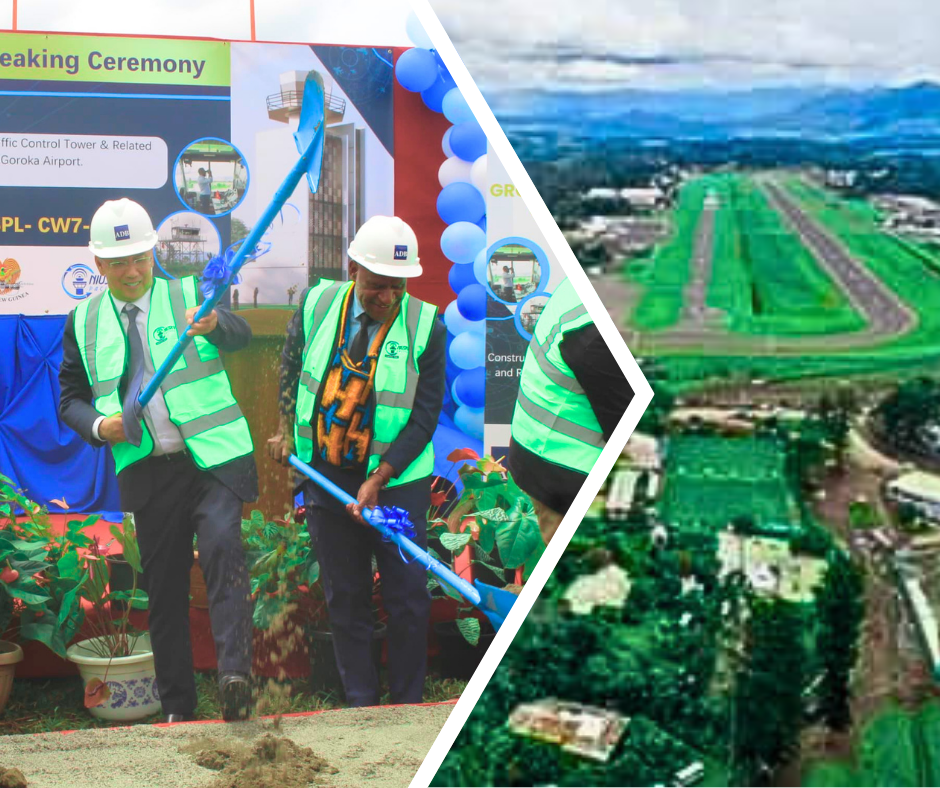
The recent ground-breaking of a new air traffic control tower in Goroka, marks just one phase of a broader strategy aimed at improving safety, efficiency, and national connectivity.
Minister for Civil Aviation Wake Goi, said the government is focused on delivering tangible results rather than maintaining the status quo.
“We want to see things moving; we don’t want to stay and have nothing happen,” he said.
He said the project forms part of a wider national development agenda aligned with Papua New Guinea’s Medium-Term Development Plan.
The Minister also outlined a broader vision for the sector, including potential multi-billion-kina investments to modernise Jacksons International Airport and the continued rollout of future CADIP phases across the country to decentralise aviation infrastructure.
As part of ongoing reforms, the government is also pursuing the establishment of civil aviation as a standalone department, separate from the wider transport sector, to drive specialised growth, faster decision-making, and stronger regulatory oversight.
Industry leaders say modernising aviation systems is critical for a country like Papua New Guinea, where air transport is not a luxury but a lifeline connecting remote communities, businesses, and essential services.