
NEWS SPORTS BUSINESS ENTERTAINMENT
Posts by Paula David | PNG Haus Bung
POSTS BY AUTHOR
Paula David

Paula David

STUDENT CLASH LEAVING SEVERAL INJURED STUDENT CLASH LEAVING SEVERAL INJURED
Several students were injured today following a violent clash at Paglum Adventist Secondary School (PASS) in the Mul-Baiyer-Lumusa District of Western Highlands Province.The confrontation reportedly broke out at around 7am and escalated before police units arrived and brought the situation under control.According to preliminary reports, the incident stemmed from a dispute between student groups.Unconfirmed reports from the scene allege that the conflict began after students discovered a firearm reportedly brought onto the school campus. Attempts to confiscate the weapon allegedly triggered the violence. These claims have not yet been officially verified by police or school authorities.Provincial Police Commander Chief Superintendent John Sagom confirmed that police responded to the incident and successfully contained the situation.While official casualty figures are still being confirmed, reports indicate that three male students sustained major injuries during the clash.One student is reportedly awaiting a CT scan, while two others have been treated and discharged. Several other students suffered minor injuries and received medical attention before being sent home.The unrest reportedly spilled beyond the school grounds, with reports suggesting that groups of students gathered near Koibuga Gate and stopped passing vehicles amid fears of further retaliation and concerns over weapons.Police remain deployed in the area to maintain law and order and prevent any further disturbances.Parents and guardians have been urged to contact their children and ensure their safety, while members of the public travelling through the Koibuga area have been advised to exercise caution.Authorities are continuing to assess the situation, and further information is expected once official statements are received from police and school administration.
Published on June 10, 2026
HUNTERS BUILDING STRONGER PATHWAY TO PNG NRL FRANCHISE, SAYS BARKER HUNTERS BUILDING STRONGER PATHWAY TO PNG NRL FRANCHISE, SAYS BARKER
SP PNG Hunters CEO Scott Barker says discussions with the incoming PNG Chiefs NRL franchise are progressing well as the club positions itself as a key development pathway for future professional players.Barker revealed the Hunters have been engaged in discussions with officials connected to the PNG NRL project for more than a year, with regular meetings already taking place between club and franchise representatives."We started some work about 12 months ago around what that affiliation might look like," Barker said."We've had a number of meetings and there is open dialogue between our coaching staff and their coaching staff. They're certainly taking an interest in what we're doing."Barker said the relationship is expected to strengthen as the PNG Chiefs NRL franchise continues to build towards its anticipated entry into the competition in 2028.The Hunters have long been regarded as the pinnacle of Papua New Guinea's rugby league pathway, but Barker believes the arrival of the NRL franchise creates even greater opportunities for local players."For a long period of time, the Hunters were at the top of the pathway. Now the franchise becomes the top of the pathway, and our role is to prepare players for that next level."Barker said the club is already working closely with franchise officials to identify and develop talent capable of earning positions in the future NRL squad.The Hunters CEO also addressed the progress of former Hunters players currently based in England with the London Broncos system.While acknowledging the standard of competition may not be as strong as some players had hoped, Barker believes the overseas experience remains invaluable."I wanted to see them go and experience what it's like to live and play in London. The Hunters' development is not just about what happens on the field, it's about personal growth off the field as well."Should those players return to Papua New Guinea before securing long-term opportunities in the United Kingdom, Barker said they would be welcomed back into the Hunters system."I'd love to see them come back, strengthen the Hunters and then push for a spot with the PNG franchise in 2028."Barker also confirmed the club remains open to recruiting experienced players from Australia or elsewhere if suitable opportunities arise and salary cap regulations permit."To build a pathway for our young players, you also need experienced players around them. If the right player becomes available and it fits within our rules and salary cap, it's certainly something we would look at."As the Hunters continue their rebuilding phase, Barker said the long-term objective remains clear: developing players capable of succeeding at the highest levels of the game and creating a sustainable pathway into Papua New Guinea's future NRL team.
Published on June 10, 2026
SP PNG HUNTERS OUTCLASSED BY TWEED SEAGULLS IN R12 CLASH SP PNG HUNTERS OUTCLASSED BY TWEED SEAGULLS IN R12 CLASH
The SP PNG Hunters were unable to overcome a fast-starting Tweed Seagulls outfit, falling 34-18 in their QRL Hostplus Cup R12 clash at the Preston Building Sports Complex in Piggabeen, Australia.The Seagulls capitalised on early momentum and maintained control for large periods of the match, scoring six tries to three to secure a strong home victory, while the Hunters were left to rue defensive lapses and missed opportunities in key moments.The home side struck early through Jett Liu in the third minute, with Lindon McGrady adding the conversion to give the Seagulls a 6-0 lead.The Hunters responded through centre Bruce Bawase, who finished off a strong attacking movement in the ninth minute. Halfback Trevor Solu added the conversion to level the scores at 6-6.However, the Seagulls quickly reasserted dominance, with tries to Adam Christensen and Sunny Kama helping them regain control. McGrady’s accuracy off the tee and a penalty goal further extended the margin, sending the Seagulls into halftime with a commanding 20-6 advantage.Any hopes of a Hunters comeback were dealt an early blow after the break when the Seagulls crossed twice in quick succession through Kyle Pickering and Christensen’s second try of the afternoon, pushing the score to 30-6.To their credit, the SP PNG Hunters continued to fight, with Bruce Bawase crossing for his second try in the 54th minute. Solu’s conversion reduced the deficit and briefly lifted visiting hopes.But the Seagulls sealed the result in the 67th minute when Jack Smith crossed to restore a comfortable buffer and shut down any remaining chance of a comeback.The Hunters finished strongly when Limbi Henry scored in the dying stages, with Solu maintaining his perfect kicking record with a third successful conversion.Bawase was a standout for the SP PNG Hunters, scoring two tries and consistently threatening the defensive line with strong carries. Solu also impressed, finishing 3-from-3 with the boot.For the Seagulls, Christensen scored a double, while Liu, Kama, Pickering and Smith all crossed in a polished attacking display. McGrady contributed 10 points and played a key role in controlling field position throughout the match.The result sees the SP PNG Hunters return home looking to regroup as the Hostplus Cup season continues.Match SummaryTweed Seagulls 34Tries: Jett Liu, Adam Christensen (2), Sunny Kama, Kyle Pickering, Jack SmithGoals: Lindon McGrady 4/6Penalty Goals: Lindon McGrady 1/1 SP PNG Hunters 18Tries: Bruce Bawase (2), Limbi HenryGoals: Trevor Solu 3/3Halftime: Tweed Seagulls 20-6 SP PNG HuntersVenue: Preston Building Sports Complex, Piggabeen
Published on June 8, 2026
KANDES HOLD OFF MURUKS TO STAY ON TOP OF LADDER KANDES HOLD OFF MURUKS TO STAY ON TOP OF LADDER
Digicel ExxonMobil Cup competition leaders, the Kandes, strengthened their grip on the top spot with a hard-fought 22-14 victory over PRK Mendi Muruks at the National Football Stadium (NFS) in Port Moresby over the weekend.In a clash between two of the competition’s top contenders, Kandes crossed for four tries to three and converted three of their four attempts to secure an important win that keeps them at the summit of the ladder after nine rounds.Kandes opened the scoring in the 17th minute when second-rower Ames John crashed over for the first try of the afternoon.Halfback Charlie Simon added the extras to give his side an early advantage.The competition leaders extended their lead just before halftime through centre Jayden Nuampo, who crossed in the 38th minute.Five-eighth Gwenemba Gaffie converted to send Kandes into the break with momentum firmly on their side.Kandes continued their strong start to the second half when hooker Stenza Tandoa touched down in the 53rd minute.Gaffie again made no mistake with the conversion as the they built a commanding lead.The Muruks refused to surrender and hit back through centre Levai Andrew in the 58th minute.Winger Finley Peter then crossed six minutes later to bring the visitors back into contention.With the match still in the balance, Andrew grabbed his second try of the game in the 78th minute to give Muruks hope of a late comeback.Halfback Francis Sam converted, reducing the deficit to eight points.However, Kandes sealed the result in dramatic fashion when second-rower Joseph Martin scored in the dying stages of the match in the 84th minute, ensuring the ladder leaders walked away with the two competition points.Kandes finished with four tries from Ames John, Jayden Nuampo, Stenza Tandoa and Joseph Martin, while the Muruks replied through Levai Andrew (2) and Finley Peter.The victory sees the Kandes remain on top of the ladder with 14 competition points from nine matches, having recorded six wins, two draws and only one defeat this season.They have scored 192 points while conceding 150 for a points differential of +42.Despite the loss, PRK Mendi Muruks remain firmly in the premiership race in third place on 12 points, level with second-placed Moni Plus NCDC Port Moresby Vipers but behind on points differential.Top Five Ladder Standings After Round 9Kandes – 14 points (6 wins, 2 draws, 1 loss)Moni Plus NCDC Port Moresby Vipers – 12 pointsPRK Mendi Muruks – 12 pointsKroton Hela Wigmen – 11 pointsENB Agmark Gurias – 11 pointsWith the season approaching its halfway stage, the Kandes continue to set the pace while the Muruks remain well placed among the competition’s leading contenders despite Sunday’s defeat.
Published on June 8, 2026
GEREHU SECONDARY USES SRC ELECTION TO PREPARE FUTURE VOTERS FOR NGE GEREHU SECONDARY USES SRC ELECTION TO PREPARE FUTURE VOTERS FOR NGE
Gerehu Secondary School in Port Moresby is using its Student Representative Council (SRC) election as a practical lesson in democracy, giving students firsthand experience of the electoral process ahead of Papua New Guinea’s next National General Election (NGE). School Principal Mr. Saju Francis said the initiative is particularly significant this year as many students will become eligible voters by the time the country goes to the polls next year. “Gerehu Secondary School is one of the largest secondary schools in the country and the largest in the city, with almost 3, 000 students,” Mr. Francis said. “While SRC elections are held in schools every year, this year’s election carries greater importance because the national election is coming up next year.” Mr. Francis said the school aims to teach students key democratic principles, including freedom of choice, fairness, respect for different opinions, and the value of every vote. To strengthen the learning experience, officers from the PNG Electoral Commission attended the election and provided demonstrations on how national elections are conducted. “The students will witness how a general election should be conducted and learn the importance of democracy and the power of citizens in a democratic country.” The election is being conducted using the Limited Preferential Voting (LPV) system, the same voting method used in PNG’s national elections. Students cast their votes in an organized process at the school assembly hall, where polling booths have been established, and election officials appointed. Mr. Francis explained that only students who will remain at the school next year are eligible to vote. Grade 10 and Grade 12 students are excluded because they will leave the school at the end of the academic year. Instead, students from Grades 7, 9, and 11, are voting to elect the school’s Head Boy and Head Girl for the following year. This year’s candidates are drawn from Grade 11 students, with three candidates contesting for Head Boy and four candidates contesting for Head Girl. “We have declared the writ in the normal way during assembly and will close the writ after counting is completed next Monday.” According to Mr. Francis, the election serves as a practical lesson that extends beyond classroom learning. “We want to showcase to parents and the public how we teach democracy in the school, not only through textbooks but through real experiences.” “In a small population such as a school, sometimes one or two votes can determine the winner. That teaches students how important every single vote is.” He stressed that the exercise is especially important because many students are approaching voting age. “Most of our students are now 17 or 18 years old. By the time the national election arrives, many will be eligible to vote for the first time.” “They are excited, and this election helps prepare them for that responsibility,” he concluded.
Published on June 5, 2026
DIGITAL PUBLIC INFRASTRUCTURE CLOUD TO TRANSFORM PNG’S MEDIA INDUSTRY DIGITAL PUBLIC INFRASTRUCTURE CLOUD TO TRANSFORM PNG’S MEDIA INDUSTRY
Digital Public Infrastructure (DPI) could play a major role in strengthening Papua New Guinea’s media sector and restoring public trust in information, according to the Department of Information and Communications Technology. Deputy Secretary Flierl Shongol said Digital Public Infrastructure is emerging globally as the foundation for trusted digital interactions between governments, citizens, businesses, and institutions. He identified three key pillars of DPI which include digital identity, digital payments, and secure data exchange platforms. “Together, these create a trusted digital ecosystem,” Shongol said, noting that digital identity systems could help verify journalists and media organizations, reducing fake accounts, and improving the credibility of information online. Meanwhile, digital payment systems could help media companies develop new revenue streams through online subscriptions, memberships, and micro-payment models. “Traditional ways of making money are being challenged. DPI can help media organizations diversify their income sources and improve sustainability.” Shongol also said secure data exchange systems would improve media access to government information, open data, and real-time statistics, enhancing transparency and journalism quality. During emergencies and natural disasters, he said trusted digital systems could help citizens identify reliable sources of information and reduce the spread of rumors and fake news. He further revealed that the government had recently issued a license to Starlink, a move expected to improve internet connectivity and expand digital access across the country. He said improved connectivity, combined with stronger digital infrastructure, would help ensure more inclusive access to information for rural communities, women, youth and persons with disabilities. “DPI has the potential to significantly strengthen media interactions across Papua New Guinea and the Pacific.”
Published on June 5, 2026
GOVT WORKING TO REFORM LENGHTY ILG REGISTRATION PROCESS: ROSSO GOVT WORKING TO REFORM LENGHTY ILG REGISTRATION PROCESS: ROSSO
Deputy Prime Minister and Minister for Lands, Physical Planning, and Urbanisation John Rosso, has acknowledged that Papua New Guinea’s Incorporated Land Group (ILG) registration process remains lengthy and unmanageable, assuring Parliament that reforms are being developed to improve accessibility and reduce abuse within the system. The issue was raised in Parliament this week by Talasea MP Freddie Kumai, who highlighted concerns from customary landowners about delays, high costs, and administrative challenges associated with registering ILGs. Kumai said the registration process often involves extensive community mobilization, preparation of family genealogies, verification of birth certificates through the National Identification (NID) system, and the submission of applications to the Registrar of ILGs. He noted that many applicants are required to make repeated trips to Port Moresby to resolve administrative issues, creating significant financial burdens for rural communities. The Talasea MP questioned why many ILG applications continue to take more than 12 months before registration certificates are issued and sought information on the number of applications currently awaiting processing. He also asked whether the government plans to decentralize ILG registration services to provincial lands offices and establish an integrated digital system linking the Department of Lands, the National Identification system and other relevant agencies to streamline the process. Responding on behalf of the government, Rosso agreed that the current ILG registration process is overly complex and requires reform. “I agree it is a very long, cumbersome process,” Rosso told Parliament. He said the Department of Lands is currently working on legislative amendments aimed at making the registration process easier and more accessible for customary landowners. Rosso also raised concerns about the misuse of the existing system, saying loopholes have enabled some individuals to take advantage of customary landowners during land registration and development processes. “The ILG process that we currently use, although it is meant for a good purpose, has been constantly abused by a lot of learned individuals taking advantage of the system and abusing the rights of many customary landowners.” According to Rosso, some landowners have been persuaded to sign documents without fully understanding their implications, while others have been sidelined during negotiations involving land development projects. He said the Department of Lands is consulting with relevant stakeholders and reviewing recommendations from parliamentary committees to identify improvements to the current system. In addition, he also assured Parliament that the government is committed to either reforming the existing ILG framework or exploring alternative mechanisms that better protect customary landowners while making land registration more efficient. “Land is very sensitive, and we need to approach it in a way that makes it accessible and easier for our landowners to register, survey and ensure that they benefit from the land that they own.” The Deputy Prime Minister also invited Kumai to submit his questions in writing to allow the government to provide more detailed responses, including information on application backlogs and ongoing reform measures. The issue of ILG registration has remained a key concern for customary landowners across the country, particularly as landowners seek greater participation and benefits from agriculture, resource projects and other development activities.
Published on June 5, 2026
HEALTH MINISTER CLARIFIES PMGH CLASSIFICATION HEALTH MINISTER CLARIFIES PMGH CLASSIFICATION
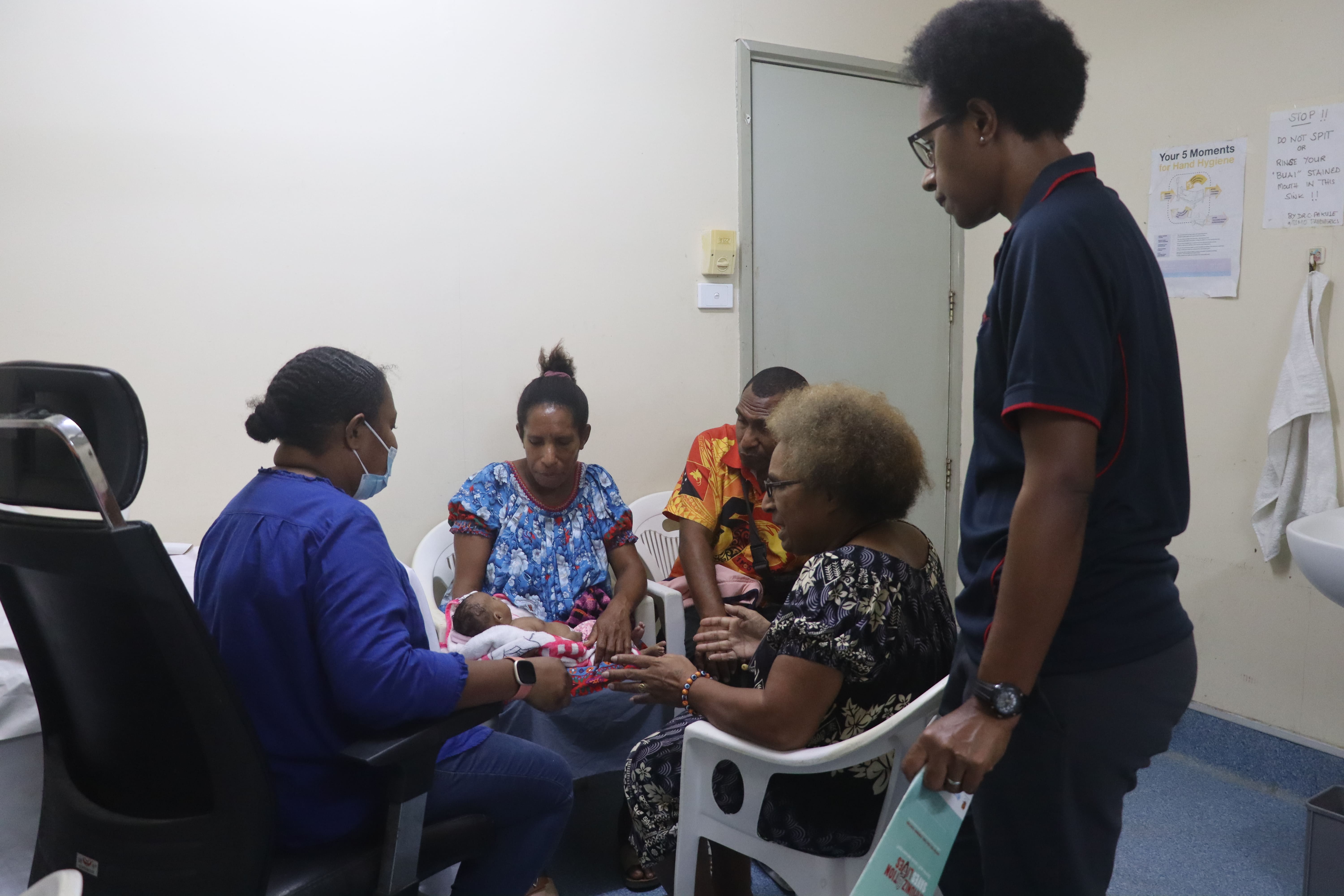
Health Minister Elias Kapavore has clarified that Port Moresby General Hospital (PMGH) is now classified as a Level Six National Referral Hospital under Papua New Guinea's National Health Service Standards.The clarification was made in Parliament yesterday after Abau MP Sir Puka Temu questioned whether the government had changed the classification of PMGH, which had previously been regarded as the country's Level Seven national referral hospital. Sir Puka raised concerns that references to PMGH as a Level Six facility could create confusion within the health sector and affect referral pathways across the country. In response, Kapavore explained that Papua New Guinea's health system now operates under a six-level structure introduced through the National Health Service Standards in 2021. "Under the new standards there are only six levels of health facilities," he told Parliament. "PMGH is now Level Six and serves as the National Referral Hospital and super-specialist hospital." The minister outlined the six levels of healthcare facilities, ranging from level one being the Health Posts with three health officers, to level two which is a Community Health Post with up to five community officers stationed there, level three has Health Centres, Level four has District Hospitals and level six is a National Referral Hospital where the Port Moresby General Hospital comes under. He said the reforms were designed to strengthen lower-level health facilities and ensure more patients receive treatment closer to home. Kapavore said PMGH's role is increasingly focused on delivering highly specialised services that are unavailable elsewhere in the country. He highlighted recent advances at the hospital, including successful kidney transplant procedures and the introduction of advanced cardiac services. The minister also pointed to the government's investment in specialist healthcare, including a K200 million commitment to upgrade cancer treatment services. "Our aim is to ensure Papua New Guineans can access specialist treatment here at home instead of travelling overseas," he said. Kapavore said the government's broader health reform agenda seeks to improve services at every level of the health system while allowing PMGH to concentrate on complex and specialised care.
Published on June 4, 2026
SIR PUKA RAISES PMGH OVERCROWDING CONCERNS IN PARLIAMENT SIR PUKA RAISES PMGH OVERCROWDING CONCERNS IN PARLIAMENT
Health Minister Elias Kapavore told parliament on the 3rd of June 2026, that the National Government is strengthening urban health facilities across Port Moresby in an effort to reduce overcrowding at Port Moresby General Hospital (PMGH). Responding to questions from Abau MP Sir Puka Temu, the minister acknowledged the growing pressure on the country's premier referral hospital, which is serving a population far larger than it was originally designed to accommodate. Kapavore said PMGH was built in the 1980s to cater for around 300,000 people, but the National Capital District's population has now grown to more than one million. He said, "Today, PMGH is delivering about 17,000 babies every year, which is around 60 births every day. The pressure on the hospital continues to increase because many patients who could be treated at lower-level facilities are still seeking treatment at PMGH." Sir Puka raised concerns about overcrowding in the hospital's emergency, surgical and maternity wards, citing information indicating that a significant number of patients attending PMGH do not require specialist care. He told Parliament that studies had shown category three emergency patients account for around 60% of emergency department presentations and that extending emergency services at Six Mile had previously reduced emergency cases at PMGH. The Abau MP also said normal deliveries occupy the majority of maternity beds at PMGH and argued that expanding maternity services at urban clinics would significantly reduce pressure on the hospital. In response, Kapavore said the government was already investing in lower-level health facilities to provide more services closer to communities. He said upgrades were underway at Six Mile and Gerehu clinics, while Metoreia Urban Clinic had already been upgraded and now offers maternity delivery services. "More mothers are now delivering outside of PMGH because of these improvements," he said. The minister also pointed to ongoing health projects in NCD, Central and Gulf provinces aimed at strengthening primary healthcare services and reducing unnecessary referrals to PMGH. Kapavore said the government's long-term objective is to ensure lower-level facilities handle routine healthcare needs while PMGH focuses on specialist and complex medical services. "PMGH should be concentrating on higher-level healthcare services and specialist treatment," he said. The minister also highlighted recent improvements in specialist services at the hospital, including kidney transplant procedures and expanded cardiac care. While outlining the government's efforts to ease pressure on PMGH, Kapavore did not directly address Sir Puka's questions on whether the department had conducted studies into surgical and obstetric bed shortages, nor did he provide details on the status of a reported K12 million allocation approved by the National Executive Council in 2025 for additional maternity beds in NCD clinics. Sir Puka also recommended the establishment of additional Level Four and Level Five hospitals in Port Moresby, Central Province and surrounding districts as part of a long-term solution to overcrowding at PMGH.
Published on June 4, 2026
CENTRAL GOVERNOR CHALLENGES HEALTH MINISTER OVER HOSPITAL FUNDING CENTRAL GOVERNOR CHALLENGES HEALTH MINISTER OVER HOSPITAL FUNDING
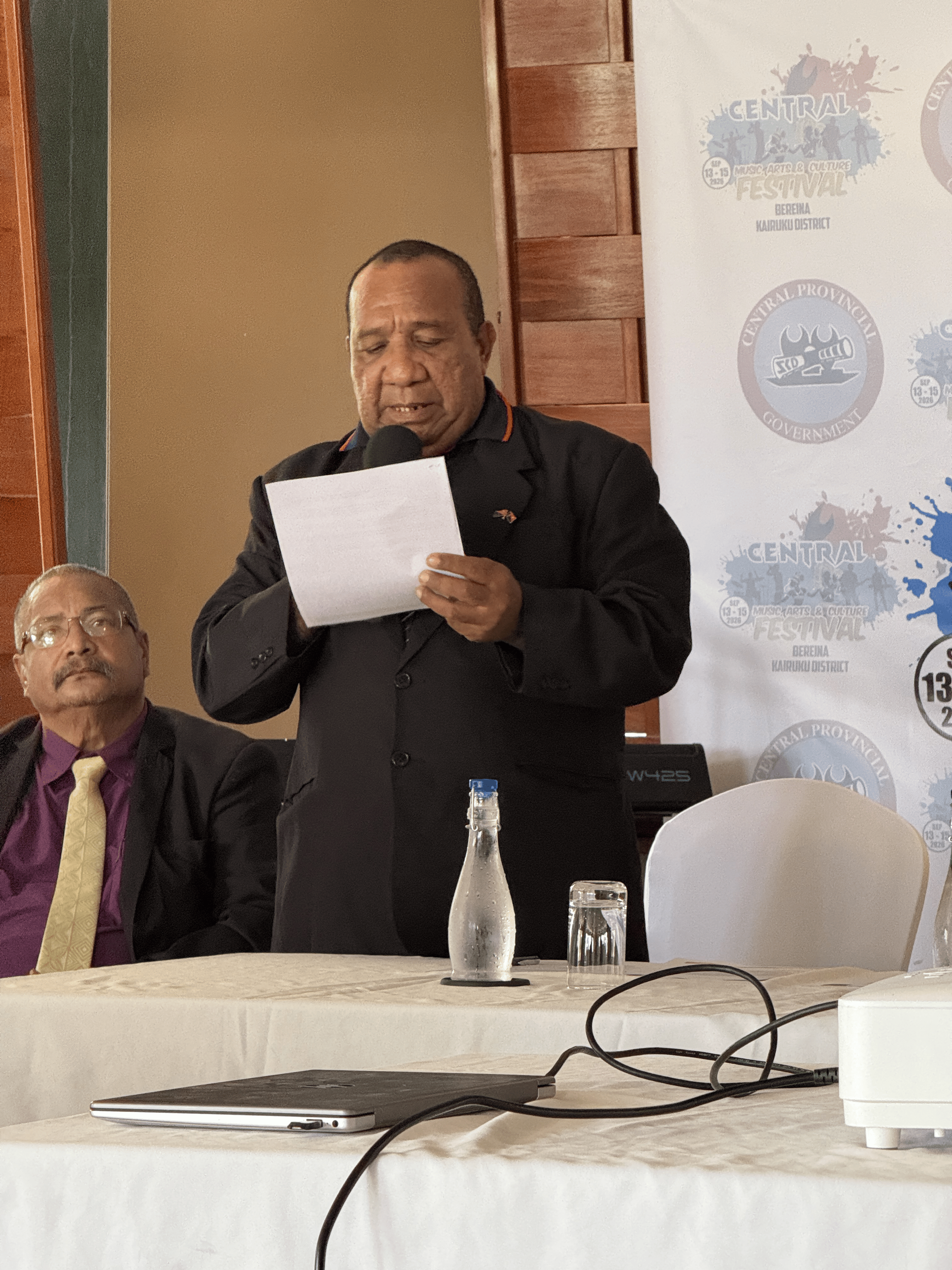
Central Governor Rufina Peter has challenged Health Minister Elias Kapavore, over delays in releasing funds earmarked for the Central Provincial Health Authority (CPHA), questioning whether health allocations approved by Parliament are reaching the province.The issue was raised during Question Time in Parliament when Governor Peter said funding appropriate for the CPHA had largely failed to materialize despite repeated budget commitments. “In the years that I have been in office as Governor of Central Province, there is only one time that I signed for an amount of K15 million to be disbursed to the CPHA,” Governor Peter said. “All the other years that the appropriation has been given for Central Health Authority, none of those funding’s were made available to the CPHA.” The Governor said there was a disconnect between funding announced by the Government and money actually reaching provincial health authorities. “It is very easy to stand here and say money is going, but it is not getting down to wards. It is not translating into cash in the operational accounts of these PHAs,” she said. Governor Peter questioned the status of previous allocations, including K50 million approved for provincial health authorities and a further K25 million allocated in the 2026 Budget for the Central Provincial Hospital project. She said the PHA was still waiting for the release of the funds. In addition, the exchange prompted support from Abau MP Sir Puka Temu and Deputy Opposition Leader Keith Iduhu, who both raised points of order seeking clarification on whether the funds had actually been released. Sir Puka told Parliament the question was straightforward and centered on whether appropriate funding had reached the intended recipient. Meanwhile, Iduhu further questioned whether efforts had been made to secure the release of funds, arguing that only a small portion of previously allocated money had been disbursed. In response, Minister Kapavore said the K50 million formed part of broader government support provided to provincial health authorities and that the government remained committed to supporting the Central Provincial Hospital project. However, he did not provide a specific date for when the K25 million allocation would be released to the CPHA and further stated that when work commences, than funds will be released. The parliamentary exchange highlighted ongoing concerns among Central Province leaders over funding delays affecting major health infrastructure projects and service delivery in the province.
Published on June 4, 2026
K25 MILLION ALLOCATED TO KICKSTART CENTRAL PROVINCIAL HOSPITAL PROJECT K25 MILLION ALLOCATED TO KICKSTART CENTRAL PROVINCIAL HOSPITAL PROJECT
Health Minister Elias Kapavore has reaffirmed the Government's commitment to the long-awaited Central Provincial Hospital, telling Parliament that K25 million has been allocated in the 2026 Budget to progress the project and will be released only when work commences for the Central Provincial Hospital.The Minister made the announcement while responding to questions from Central Governor Rufina Peter regarding health funding and hospital development in the province. Kapavore said the funding was specifically intended to advance the establishment of the Central Provincial Hospital and was not meant for operational expenses. "That funding is allocated to start the work of the Central Provincial Hospital. It is not to be used for any other purpose," he told Parliament. The Minister said the funding would support the initial stages of the project, including design and preparatory works, which must be completed before construction can proceed. He stressed that the Government was committed to strengthening health infrastructure across the country through its broader health sector development strategy. Kapavore also highlighted staffing challenges within the Central Provincial Health Authority, claiming the authority had only filled around 30 per cent of its required workforce positions. He urged provincial health administrators to continue recruitment efforts while working closely with the National Department of Health. The Minister said improving provincial health infrastructure was critical to easing pressure on major referral hospitals and ensuring healthcare services were available closer to communities. The proposed Central Provincial Hospital is expected to become a major healthcare facility for the province and help improve access to specialist medical services for residents. Once completed, the hospital is expected to reduce the burden on healthcare facilities in the National Capital District while supporting growing populations in Central Province.
Published on June 3, 2026
PNG DEVELOPING AI STRATEGY TO TACKLE MISINFORMATION PNG DEVELOPING AI STRATEGY TO TACKLE MISINFORMATION
The Papua New Guinea Government is developing a national Artificial Intelligence (AI) strategy to address the growing risks posed by misinformation and AI-generated content. Deputy Secretary for the Department of Information and Communications Technology (DICT), Flierl Shongol, revealed the initiative while addressing media representatives from the pacific and within the country recently in Port Moresby city. Shongol said AI presents significant opportunities for development but also poses serious risks if left unchecked. "We realise AI has the potential to benefit the country, but it also has the potential to break apart our families and societies. That is why we need a framework in place," he said. He said the increasing use of AI-generated content has created new challenges for governments, media organisations and the public, particularly in identifying false information and preventing the spread of misinformation. According to Shongol, Papua New Guinea's culture of readily accepting information shared on social media makes the country particularly vulnerable to misinformation campaigns. "Anything people see on social media, they believe it. It is very easy for misinformation and disinformation to spread panic and fear among our people," he said. The proposed AI strategy will focus on transparency, accountability, and safeguards against the misuse of artificial intelligence technologies. Shongol said the media industry will play a critical role in helping verify information and combat the spread of false content in the digital era. He also highlighted the need for greater AI literacy among journalists and citizens to help identify AI-generated material and apply effective verification techniques.
Published on June 3, 2026