

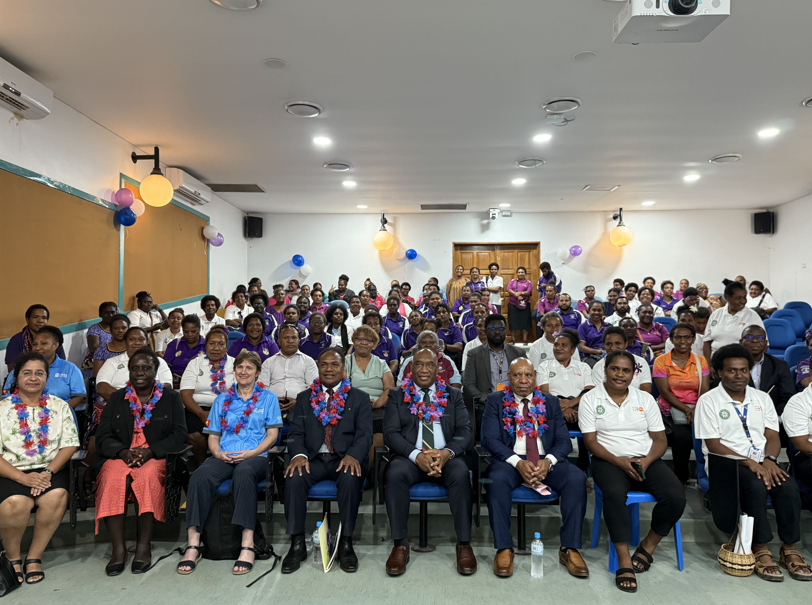
To commemorate International Midwife Day with the theme: “One Million More Midwives”, a common call was made today to increase the investment in midwifery training and workforce development to tackle the country’s high maternal and child mortality rates.
Papua New Guinea’s Health Minister, Mr. Elias Kapavore, has called for urgent reforms to strengthen the country’s midwifery workforce, warning that delays in policy implementation have cost valuable time in addressing maternal and child health challenges.
Speaking at the International Day of the Midwife event, Minister Kapavore acknowledged midwives and their tireless contributions to saving lives across the country while also stating that outdated policies must be reviewed immediately and translated into action within weeks—not years.
“We have lost four years. Let’s not take another four years—let’s take four weeks,” he told attendees, urging stakeholders to meet and update key policy documents to reflect current health priorities.
The Minister emphasized that a clear and updated policy framework must guide workforce development, focusing on training, recruitment, and strengthening health systems.
“If we have a clear policy and strategic plan, it makes implementation easier and allows us to secure the necessary funding,” he said, noting that all health plans carry significant financial implications requiring government approval.
Meanwhile, Health Secretary, Mr. Pascoe Kase has called for increased investment in midwifery training and workforce development to tackle the country’s high maternal and child mortality rates.
Kase said one of the country’s most pressing challenges remains the number of mothers and young children dying from preventable causes.
“One of the biggest challenges that we face in our country today is high maternal mortality. Our policies and plans must focus on training the workforce to respond directly to these challenges.”
Kase emphasized that health workforce training should be aligned with the realities faced across the country, particularly in maternal and child health.
“If young mothers and their babies are dying during childbirth or before the age of five, then our attention must be on training health workers to deal with those issues,” he said.
He highlighted the importance of targeted investment in midwives, noting their critical role in delivering frontline care, often in difficult and resource-limited environments.
“Midwives continue to provide essential services under challenging conditions. Their work requires skill, commitment and endurance, and they serve where they are needed most,” he said.
Kase said it was vital to recognize and support midwives through improved training, better working conditions, and clear professional development pathways.
Both Health leaders also acknowledged the role of all development partners, including UNFPA and UNICEF, DFAT, Marie Stopes for their ongoing collaboration with the National Department of Health, the PNG Midwifery Society, PNG Nurses Association and training institutions.
Furthermore, Minister Kapavore noted that global calls for “a million more midwives” align with Papua New Guinea’s own priorities to strengthen its health workforce and improve service delivery nationwide.
Despite these challenges, the Minister noted improvements in key health indicators, including reductions in maternal mortality rates over time. He credited frontline health workers, particularly midwives, for these gains.
“Because of people like you, our statistics are improving. Now we must support you more and provide a clear pathway forward,” he said.