

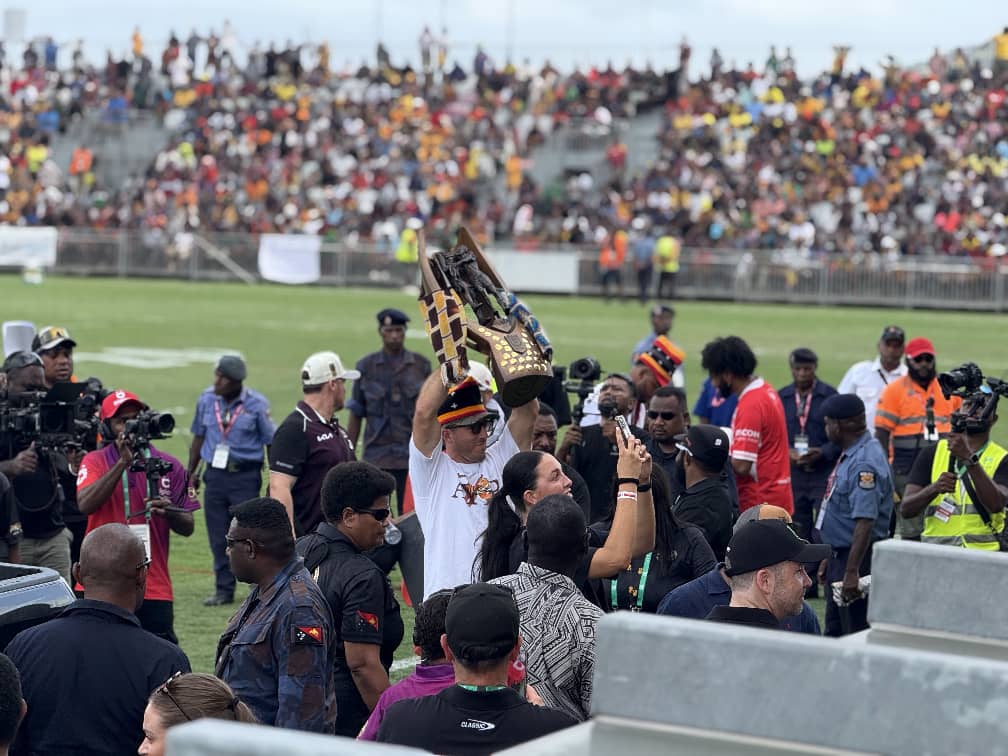
As Papua New Guinea prepares to enter the National Rugby League (NRL) competition in 2028, attention has largely focused on the headline figures surrounding Australia's $600 million (approximately K1.86 billion) commitment to the project.
However, those closely following recent developments say the investment represents far more than the establishment of a professional rugby league team.
During a recent tour that included training sessions, media engagements and discussions with rugby league stakeholders, it was noted that much of the public conversation has centred on the game's on-field prospects. Yet behind this lies a broader strategy aimed at strengthening sporting systems and creating long-term opportunities across Papua New Guinea and the Pacific.
The funding package, spread over ten years, is not solely dedicated to the future PNG franchise. Approximately $250 million has been allocated to development pathways, grassroots rugby league programs and community initiatives throughout the region. Additional funding will support the establishment and operation of the franchise, as well as infrastructure and licensing requirements necessary for entry into the NRL competition.
Industry observers say the investment should be viewed as an investment in systems, people and opportunity rather than sport alone.
Beyond the future PNG Chiefs team, which will be the most visible outcome of the project, significant opportunities are expected to emerge across multiple sectors of the sporting industry.
These include roles for coaches, trainers, administrators, broadcasters, content creators, event managers and marketers. The development is also expected to create career pathways for young Papua New Guineans who may not play professional rugby league but can contribute to a growing sports industry.
Those involved in recent discussions highlighted the importance of development pathways, high-performance programs, administration, media operations, commercial partnerships and infrastructure as key elements required to ensure the long-term success of the franchise.
Papua New Guinea (PNG) has long been recognised as a nation passionate about rugby league. Supporters of the project believe the country's NRL entry presents an opportunity to demonstrate its ability to build a professional sporting organisation that reflects the resilience, passion and potential of its people.
At the same time, stakeholders acknowledge that a project of this scale will attract public scrutiny. Calls for transparency, accountability and measurable outcomes are expected as the investment progresses.
While the PNG franchise is set to make its NRL debut in 2028, many believe the true success of the initiative will not be measured by its launch, but by the long-term benefits it delivers to communities, industries and future generations.
Ultimately, they argue, the biggest story is not the $600 million investment itself, but what Papua New Guinea chooses to achieve with it.
