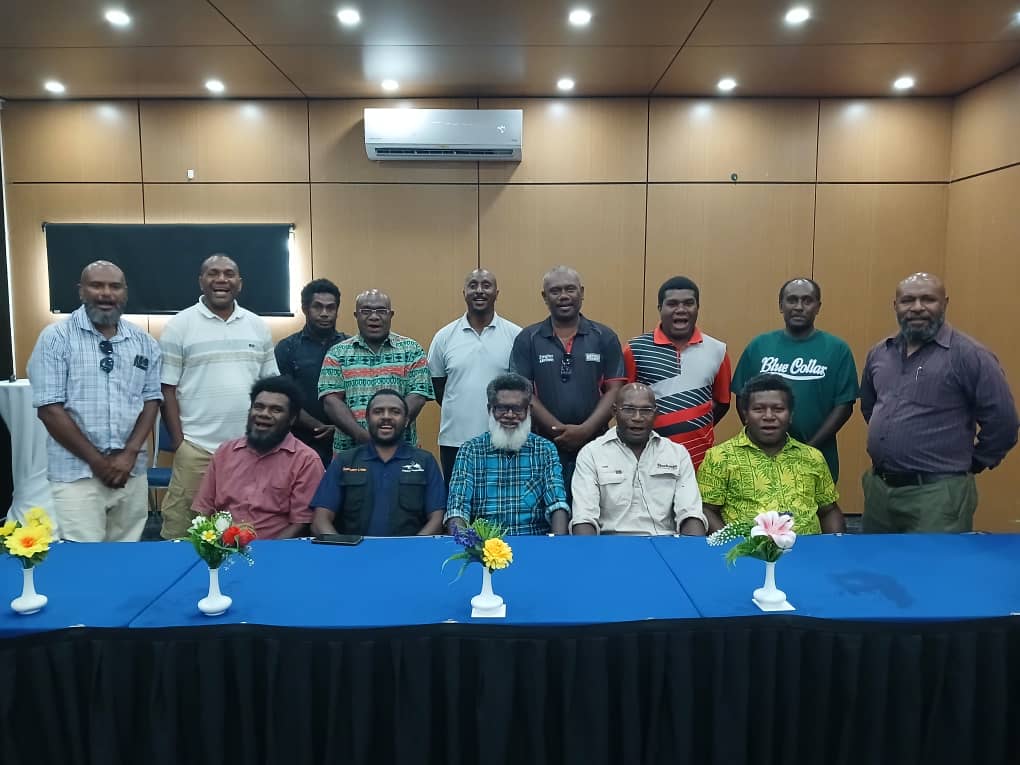


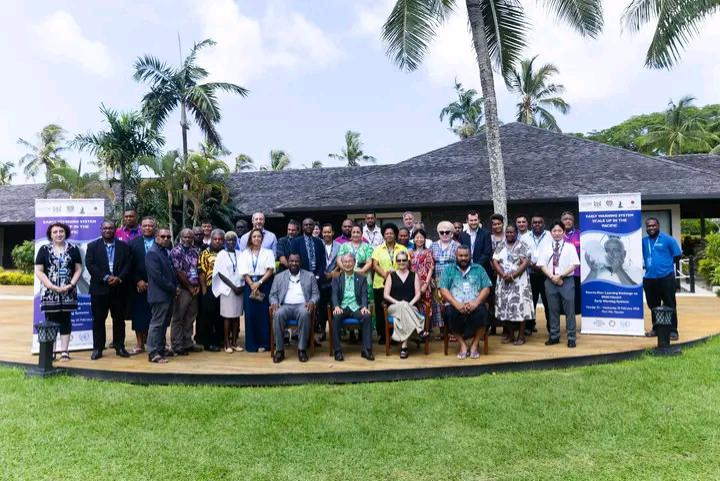
A delegation from the Government of Papua New Guinea (PNG) recently participated in the Peer‑to‑Peer Learning Exchange on Multi‑Hazard Early Warning Systems, held in Port Vila, Vanuatu, from 23 to 25 February 2026.
The delegation included representatives from the National Weather Service (NWS) and the Autonomous Bougainville Government (ABG), where the learning exchange brought together government officials from PNG, Solomon Islands, Vanuatu, Fiji, and the Kingdom of Tonga.
The event was facilitated by the International Organization for Migration (IOM) and funded by the Government of Japan under the project Strengthening Early Warning Systems in the Pacific.
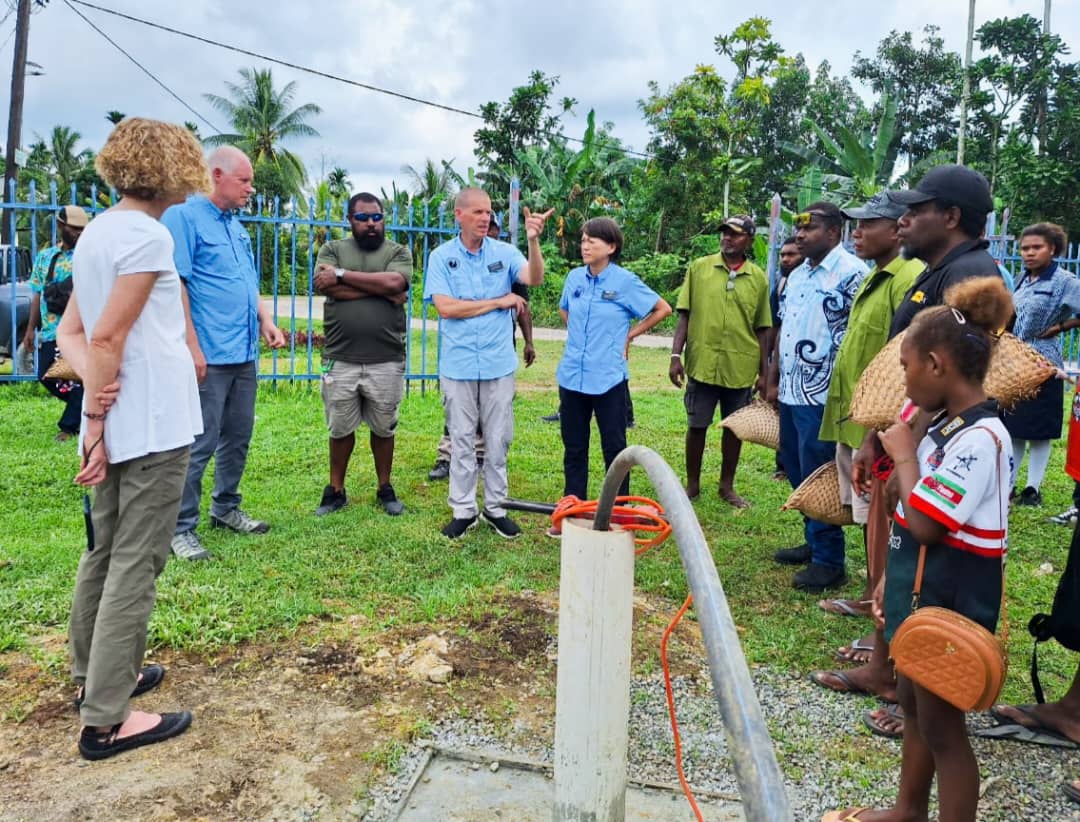
In PNG, the project has strengthened coordination among state and non-state actors involved in early warning systems and continues to provide technical and material support to local authorities and at-risk communities.
Assistance includes the development of community early warning plans and systems that integrate disaster risk reduction, upgrades to emergency operations centers, and improvements to National Weather Service facilities to enhance the country’s multi-hazard early warning capabilities.
Equipment supported through the project includes VHF two‑way radio communication for areas without mobile or internet coverage, localized weather stations, volcano monitoring equipment for Mount Balbi in the Autonomous Region of Bougainville, and sea‑tide monitoring gauges.
The project has also partnered with Digicel PNG to expand early warning broadcast messaging and television communications nationwide.
Pacific island countries remain highly exposed to hydro-meteorological hazards such as tropical cyclones, floods, and droughts, as well as geophysical hazards including earthquakes, tsunamis, and volcanic activity. These events continue to drive economic losses, infrastructure disruption, and displacement, particularly in remote and rural communities.

Under the Government of Japan–funded Early Warning System Scale‑Up in the Pacific, IOM is supporting PNG, Fiji, and Vanuatu to strengthen multi‑hazard early warning systems.
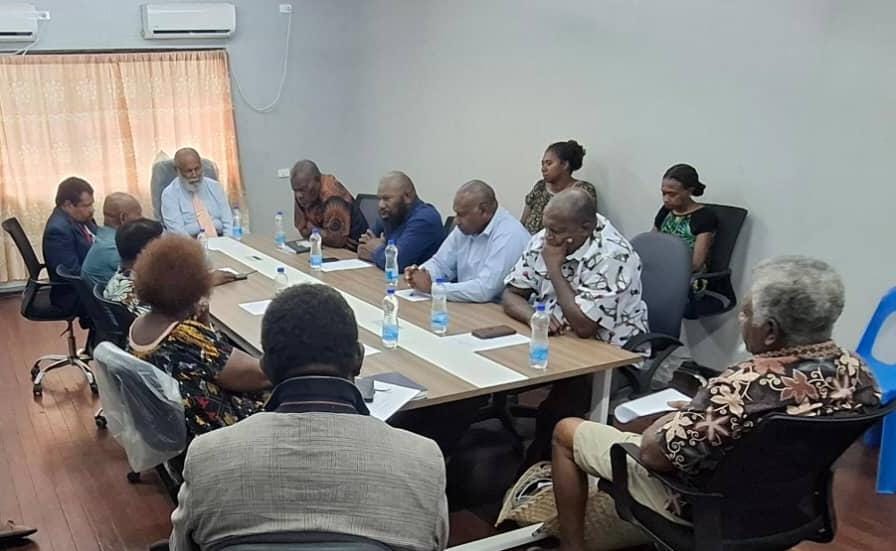
The workshop brought together senior representatives from meteorological services, local government authorities, civil society organizations, and regional technical agencies to compare progress, identify gaps, and share lessons learned across the three countries.
Participants worked to strengthen interoperability and institutional cooperation, deepen their shared understanding of the Early Warnings for All (EW4ALL) pillars and investment priorities, and engage in practical exercises on early warning, notification technologies, and emergency operations centre procedures.
The workshop also discussed the development and implementation of country‑level action plans to accelerate the strengthening of multi‑hazard early warning systems.
This regional exchange contributes to the broader EW4ALL goal of ensuring that every person in the Pacific is protected by an effective early warning system by 2027.
The workshop’s overall objective was to enhance cross-country collaboration, technical capacity, and institutional coordination to accelerate the development of robust multi-hazard early warning systems in Fiji, PNG, and Vanuatu.