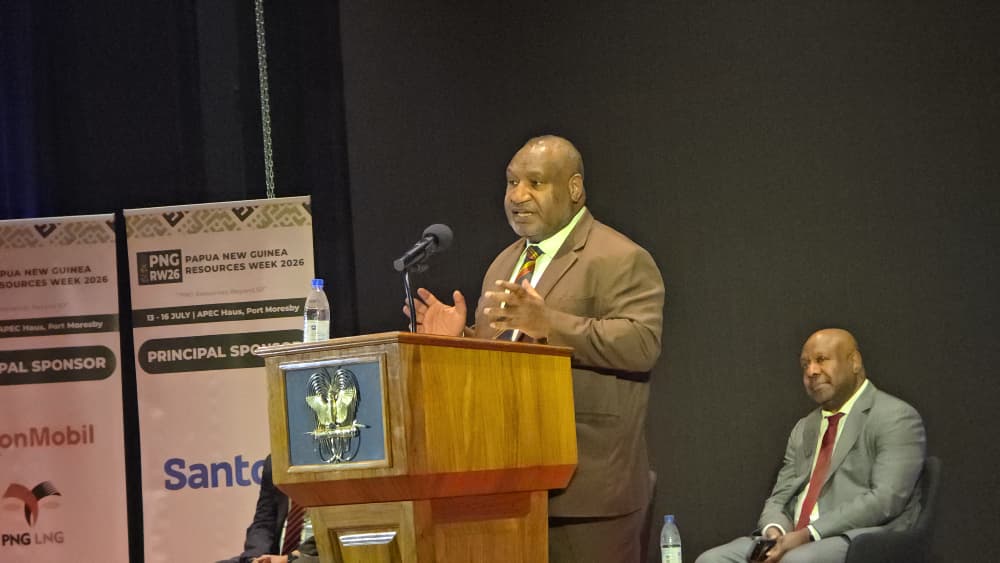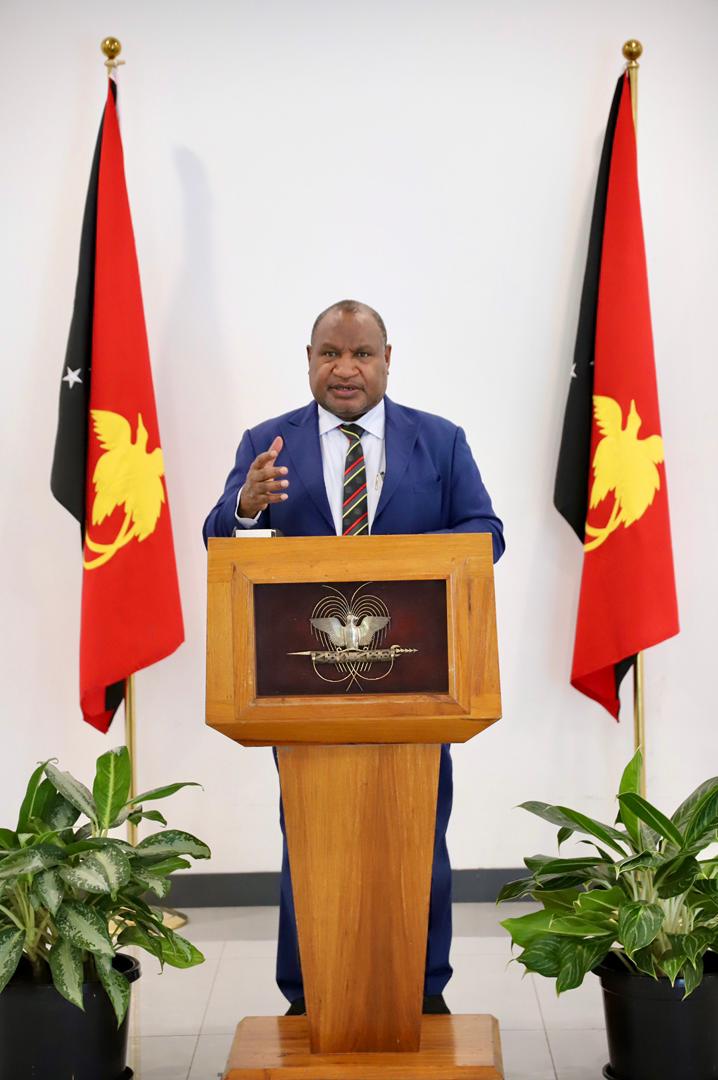


Prime Minister James Marape says PNG is entering a new phase of resource development, with several major mining and petroleum projects advancing toward key milestones that could shape the country's economy over the next two decades.
Addressing industry representatives at the 2026 PNG Resources Week, PM Marape provided updates on a range of flagship projects, including Pogera, Pasca, P'nyang LNG Project, Papua LNG and Wafi-Golpu.
He said the Pogera Gold Mine has resumed operations under a new agreement that delivers more than 53% of overall project benefits to the State and Papua New Guineans over the life of the mine.
PM Marape also highlighted the Pasca gas project, describing it as an agreement that will deliver approximately 70% of total project benefits to Papua New Guinea through state participation and other economic returns.
For the P'nyang gas project, he said negotiations with ExxonMobil had resulted in an agreement that would provide around 60 % total benefits to the country, with implementation expected alongside other major developments.
On Papua LNG, Mr. Marape acknowledged delays but rejected suggestions that the government had slowed progress.
He said escalating construction costs and commercial negotiations required careful consideration to ensure the project remained financially viable while protecting national interests.
According to the Prime Minister, the government resisted calls to provide additional fiscal concessions and instead worked with project partners to reach commercially acceptable terms.
He said discussions were now nearing completion and expressed confidence that the project could move toward a Final Investment Decision (FID) in 2026.
Marape also pointed to continued exploration activities as evidence of investor confidence, noting that TotalEnergies is undertaking significant drilling activities while ExxonMobil continues exploration work in offshore areas.
Beyond petroleum, he said several mining projects are progressing, including Wafi-Golpu, Tolukuma, Misima and projects in Oro Province and East New Britain.
Marape stressed that environmental protection would remain a key consideration, particularly for projects such as Wafi-Golpu, where the government is carefully assessing environmental impacts before granting final approvals.
He also outlined plans to increase downstream processing within Papua New Guinea, including opportunities in the nickel industry through partnerships involving state-owned Kumul Minerals Holdings.
The Prime Minister said Papua New Guinea currently has 19 mining and petroleum projects at various stages of regulatory approval, providing a strong pipeline for future economic growth.
He reaffirmed the government's commitment to streamlining regulatory processes while ensuring resource developments deliver long-term benefits for landowners, businesses and the broader economy.
"The next 20 years are exciting for our country," Marape said.
"We know exactly what we're doing, and these projects will deliver better returns for Papua New Guinea while remaining attractive to investors."