


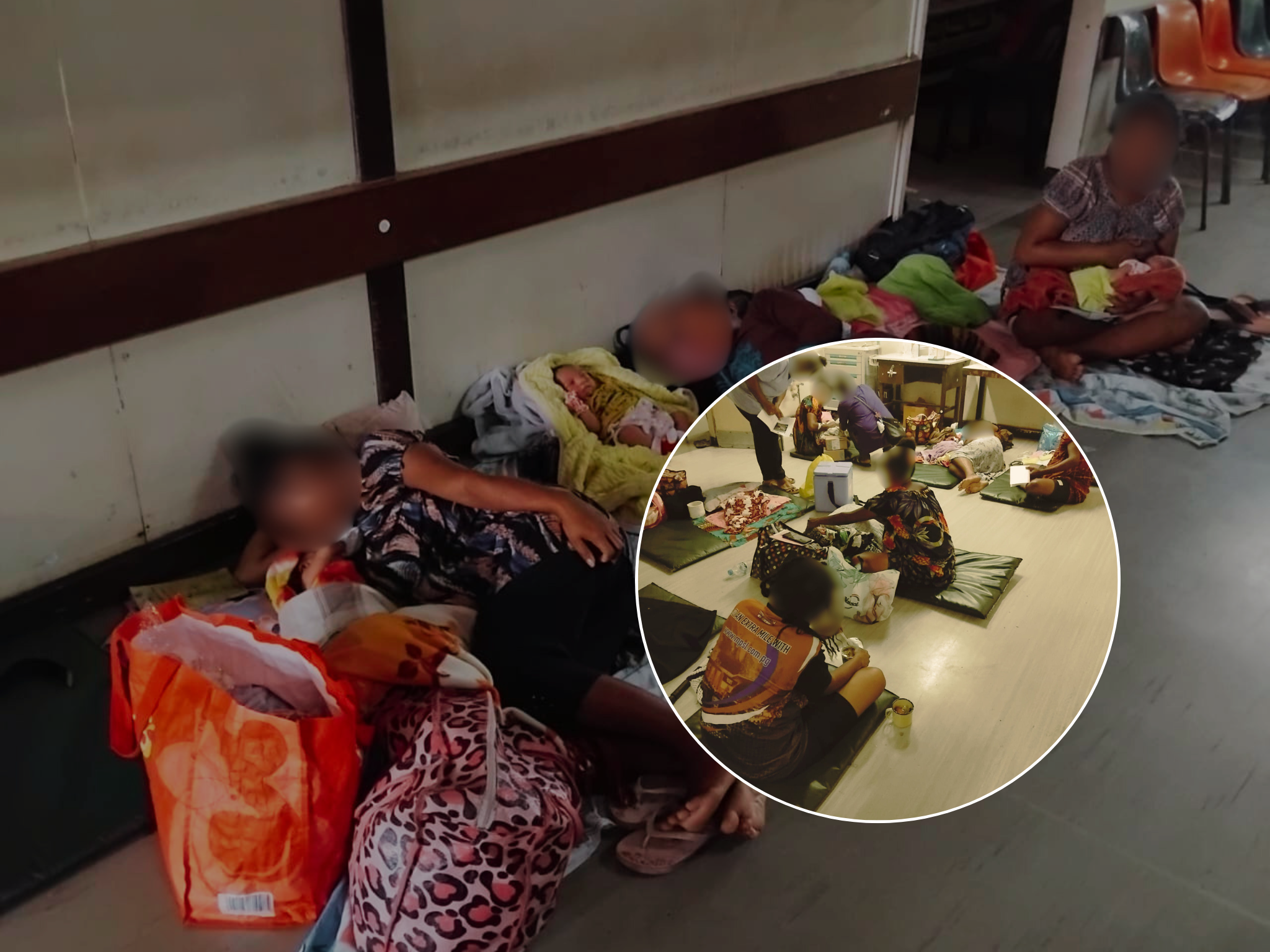
Head of Obstetrics and Gynecology at the School of Medical and Health Sciences, Professor Glen Mola, says the overcrowding situation at the Port Moresby General Hospital (PMGH) maternity ward, may continue indefinitely unless urgent action is taken to expand facilities and strengthen family planning programs.
Professor Mola said one of the main causes of the growing pressure on maternity services is the increasing inward migration of young people into the National Capital District (NCD) from other parts of Papua New Guinea, particularly Bela in Mt Hagen, Western Highlands and Enga province.
He said the rising population has placed enormous strain on the hospital’s maternity ward and frontline healthcare workers.
When asked how long the crisis situation could continue, Professor Mola said, “It will continue indefinitely.”
He stressed that immediate intervention is needed from both the government and hospital management to reduce overcrowding, including the construction of additional maternity wards.
Professor Mola confirmed that there are plans underway to expand maternity services at PMGH and revealed that the Prime Minister has offered funding support for an additional maternity ward to be called the “Mama Ward”.
He also warned that overcrowding in maternity wards creates serious health risks for both mothers and babies.
“Deadly, especially the serious spread of infections,” Professor Mola said.
Professor Mola encouraged ordinary citizens to support overworked doctors and midwives by practicing family planning and delaying pregnancy where possible.
He recommended contraceptive implants as one of the most effective family planning methods for women and couples in the NCD and the wider community at this time.
For women who are already pregnant and unable to afford private healthcare, Professor Mola has advised them to seek antenatal care as early as possible.
He also encouraged couples who already have two children, to consider permanent family planning methods such as tubal ligation or vasectomy.
Looking at long-term solutions, Professor Mola stated that stronger awareness on planned pregnancies and smaller family sizes is needed to prevent similar situations in the future.
“Plan every pregnancy and limit family size to two.”
Professor Mola added that the Health Department has responded to concerns he raised earlier this year and called on policymakers to continue supporting women’s health specialist doctors and midwives working on the frontline of maternal healthcare.