

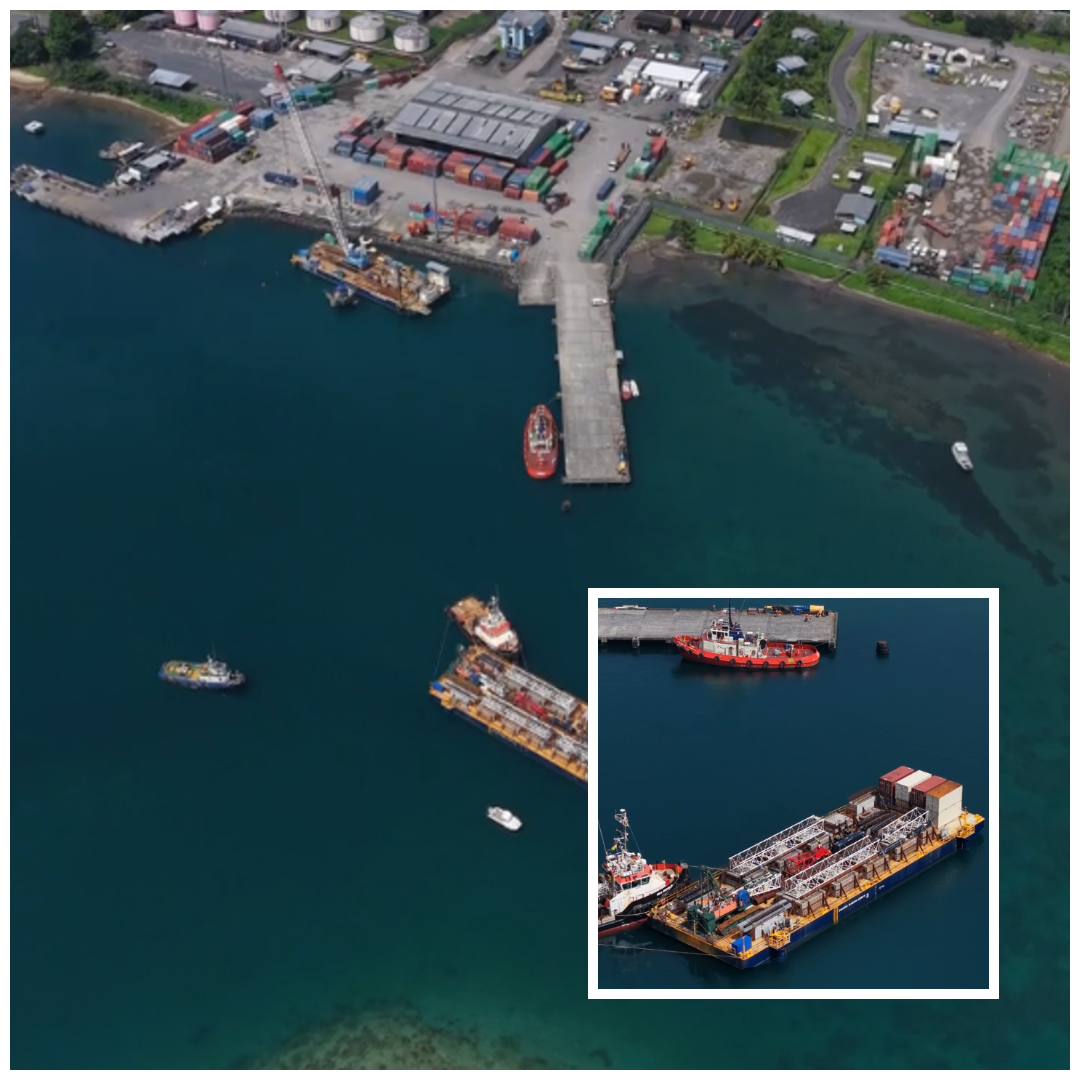
The work on the improvements to the Kimbe Port in the West New Britain province is progressing quiet well with the support of the Australian Government.
Just recently a barge carrying the critical equipment and materials for the work, arrived at the Kimbe Port.
The barge last week delivered heavy machinery, precast concrete elements and specialized materials essential for the next phase of construction. This included a 180-tonne crawler crane, a 180-foot barge for ground stabilization works and over 500 tonnes of precast concrete for the new wharf extension.
The Kimbe port upgrade is being delivered as part of the Ports Infrastructure Investment Program. The project is funded by the Australian Infrastructure Financing Facility for the Pacific (AIFFP) and delivered in partnership with the Government of Papua New Guinea and PNG Ports Corporation Ltd (PNG PCL) under a Joint Implementation Unit (JIU).
Works include the demolition and reconstruction of sections of the existing wharf, with new piles to extend the wharf to 120m in length.
Ms. Cate Rogers, the Australian High Commission Minister Counsellor Economics and Infrastructure, said this investment reflects Australia’s long-term commitment to working with Papua New Guinea to strengthen essential infrastructure.
“Progress at the port in Kimbe is creating local jobs and helping improve the flow of goods and services, supporting the business and commercial needs of local communities,” she said.
PNG PCL Senior Civil Engineer - Major Projects and JIU Lead Mr. Denmark Gimiseve said, “PNG Ports is pleased with the progress as works move beyond the halfway point. The arrival of this equipment supports the next phase of construction, with local contractors and workers continuing to play an important role in delivery.”
Construction has now moved beyond the halfway point, with major marine works taking shape on site.
Once completed, these improvements will support safer and more reliable port operations and strengthen Kimbe’s role as a key maritime gateway for West New Britain. Allowing the port to accommodate larger vessels, improving berth capacity, and operational efficiencies.