

Papua New Guinea’s first narrative feature film, Tukana- Husat I Asua, made its return more than forty years after its initial release in 1982.
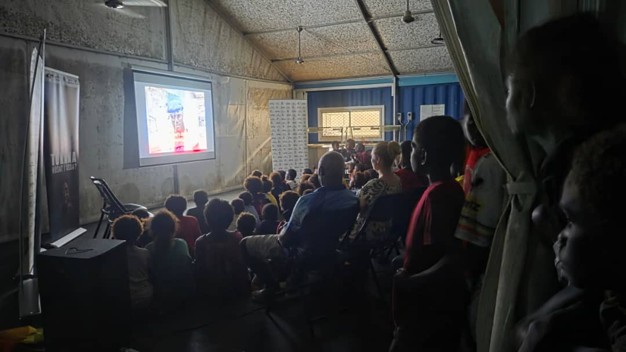
Communities across Bougainville celebrated after the film returned in late July and early August with community screenings in Tinputz, Buka, Arawa, and Buin.
Supported by the Autonomous Bougainville Government through the Bougainville Arts, Culture and Tourism Authority, and Australia, the screening tour brought communities together to revisit a film that remains an important part of Bougainville’s cultural history.
The film was restored with the assistance of Australia’s National Film and Sound Archive (NFSA) in partnership with Spectrum Films, with support from the Australian Government.
Madeleine Moss, Australian High Commission Minister-Counsellor said the restoration would help preserve an important piece of Bougainville’s heritage.
“The restoration of Tukana safeguards a crucial part of Bougainville’s cultural history, allowing its story to continue educating, inspiring and connecting communities for future generations.”
A tour was also held led by Head of the Australian Development Office in Buka, Ms. Greer Smith, which began in Tinputz, home of the late Albert Toro, the film’s writer, director, and lead actor.
Family members, friends, and community members met at Bougainville Technical College to honour his legacy and celebrate his contribution to storytelling in Bougainville.
Willie Oscar, one of the attendees to the film’s screenings, said the film’s message remains relevant in the present time.
“After watching Tukana, the message for young people today is to respect and listen to our parents and elders, so we can learn from their experiences and build a better future.”
He added that the film also taught the importance of education, respecting culture, and traditions, pursuing aspirations, and staying connected to one's roots.
Tukana – husat i asua is generally recognized as one of the country’s first feature films and a milestone in the nation’s cinematic history.
The restored version was gifted to Papua New Guinea’s National Film Institute as part of the country’s 50th Independence celebrations.