

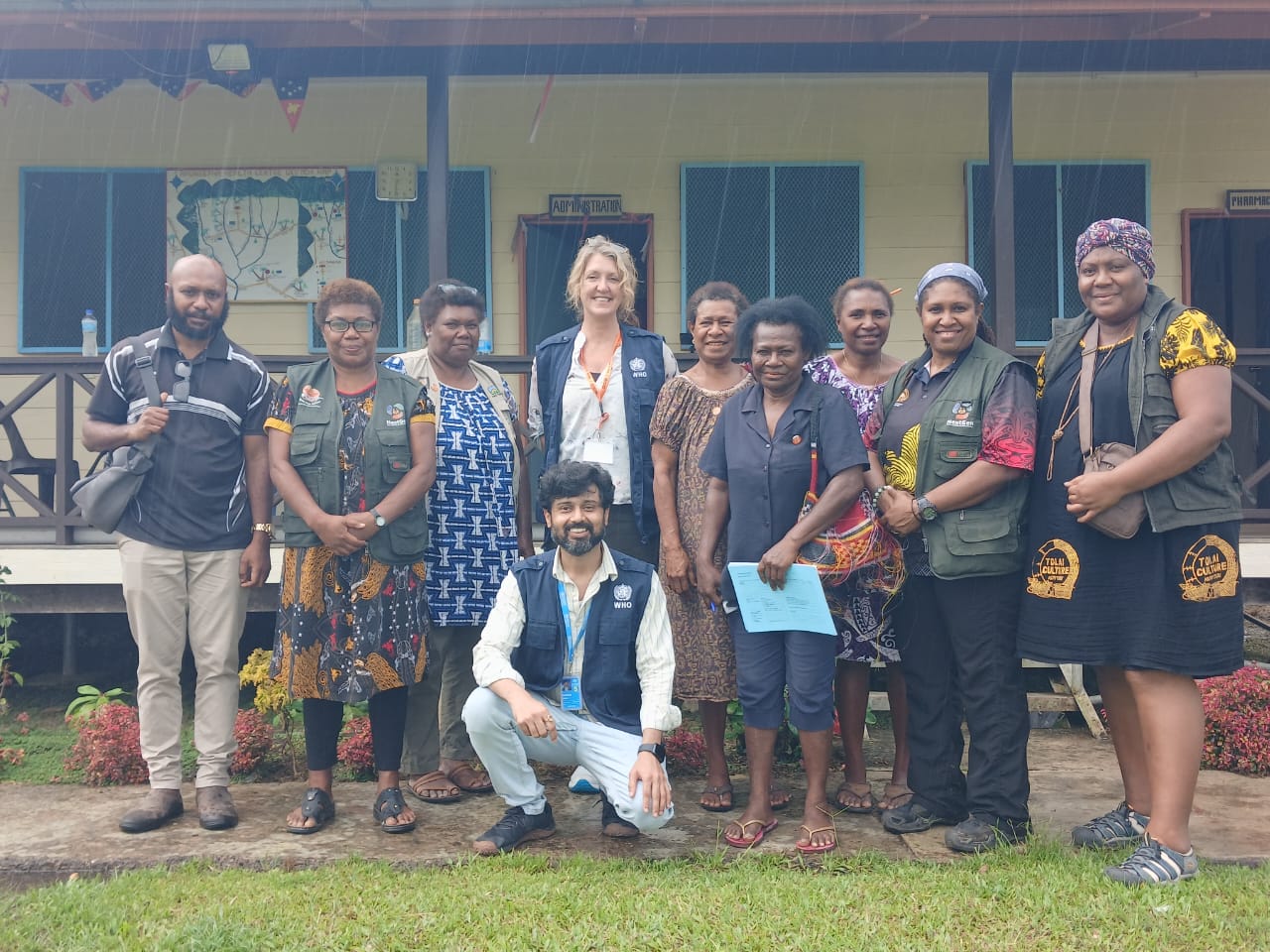
The Global Outbreak Alert and Response Network (GOARN) has completed its report following the aftermath of the recent Maila Cyclone disaster, highlighting several areas to improve the Provincial Health Authority’s (PHA) Rapid Response Team (RRT).
To strengthen the province’s existing disease surveillance, the World Health Organisation (WHO) deployed two GOARN officers to the region.
Dr. Tambri Housen, an experienced field epidemiologist with a strong track record in applied public health and operational research, alongside Dr. James Flint, an expert in field epidemiology and emergency response with substantial experience supporting rapid response teams, focused their efforts on four priority areas including, surveillance system strengthening, data management and analysis, outbreak investigation support, and RRT mentoring.
In response to identified gaps in post-cyclone disease surveillance and rapid response capacity, Incident Manager Dr. Simberi Jojoga, noted that joint teams from the PHA and GOARN conducted field visits to the Rabaul Town Clinic, Livuan Day Clinic, Napapar Health Centre, and Raunsepna Health Centre.
“Officers in Charge (OIC) of each facility, consistently have identified high reporting burdens and a need for feedback on data they submit.”
“Further, discussions with the surveillance team identified the provincial RRT as not yet functioning as a multi-disciplinary team, and district-level rapid response capacity as a key gap.”
To address these challenges, Dr. Jojoga explained that plans are underway to conduct phase three training with the East New Britain provincial multidisciplinary RRT in August this year, which will be followed by district-focused training and a one-day simulation exercise.
“The strengthening of the province’s capacity is to detect, verify, and respond to public health threats in the recovery period.”
The response teams also held discussions with the Child Nutrition and Social Protection (CNSP) team regarding the integration of Village Health Assistants (VHA) into the syndromic surveillance system to help detect epidemic-prone diseases at the community level.
This integration has been identified as a priority action for the post-deployment period, which will require formalizing VHA roles and conducting sensitization training.