

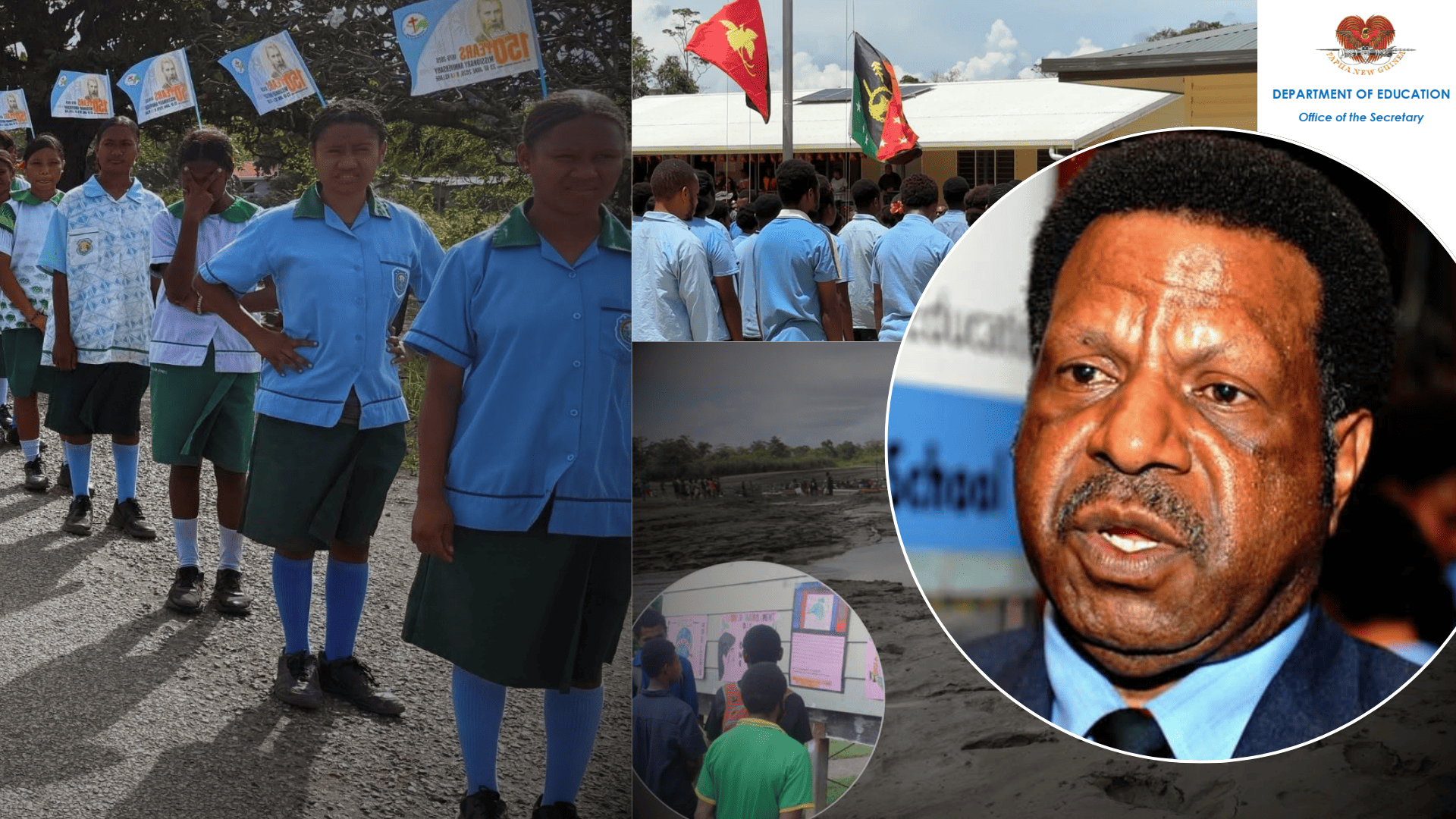
The Department of Education has issued emergency guidelines to schools across Papua New Guinea as the prolonged El Niño drought continues to affect communities.
The guidelines are contained in Secretary’s Circular No. 11 of 2026, issued by Secretary for Education Dr Uke Kombra.
The measures are aimed at protecting students while ensuring schools continue operating despite the worsening drought conditions.
Under the guidelines, schools are required to implement measures covering water safety, adjusted school hours and special protections for students sitting the 2026 national examinations.
Impact Scale Across Schools


Drought Critical is described as a severe emergency stage requiring substantial resource cutbacks, strict limitations on outdoor activities, comprehensive schedule adjustments and prioritised distribution of safe drinking water.
Drought Alert is a heightened stage where mandatory water conservation measures are implemented, non-essential water use is restricted, and schedule modifications or half-day classes may be considered to protect students from heat.
Drought Watch focuses on early awareness, encouraging water conservation and increasing educational outreach about potential water shortages.
Neutral represents normal operating conditions, with standard monitoring of weather and water supplies.
Key Operational Measures
Schools have been instructed to implement reduced timetables to avoid peak heat periods, prepare home-use study packs and suspend active outdoor activities such as sports, work parades and excursions where necessary.
Priority will also be given to securing safe drinking water, particularly for boarding schools and schools located in high-risk areas.
The Department says infrastructure installed as part of the drought response will remain with schools to support long-term climate resilience.
Special emergency measures will also focus on maintaining suitable examination venues and water access for Grade 8, Grade 10 and Grade 12 students until the 2026 national examinations are completed.
The Department says school closures should only be considered as a last resort.
Any suspension lasting more than two weeks requires direct approval from the Secretary for Education.
School administrators, teachers and parents have been urged to conserve water, monitor students’ hydration and follow provincial directives to maintain a safe learning environment during the drought.