

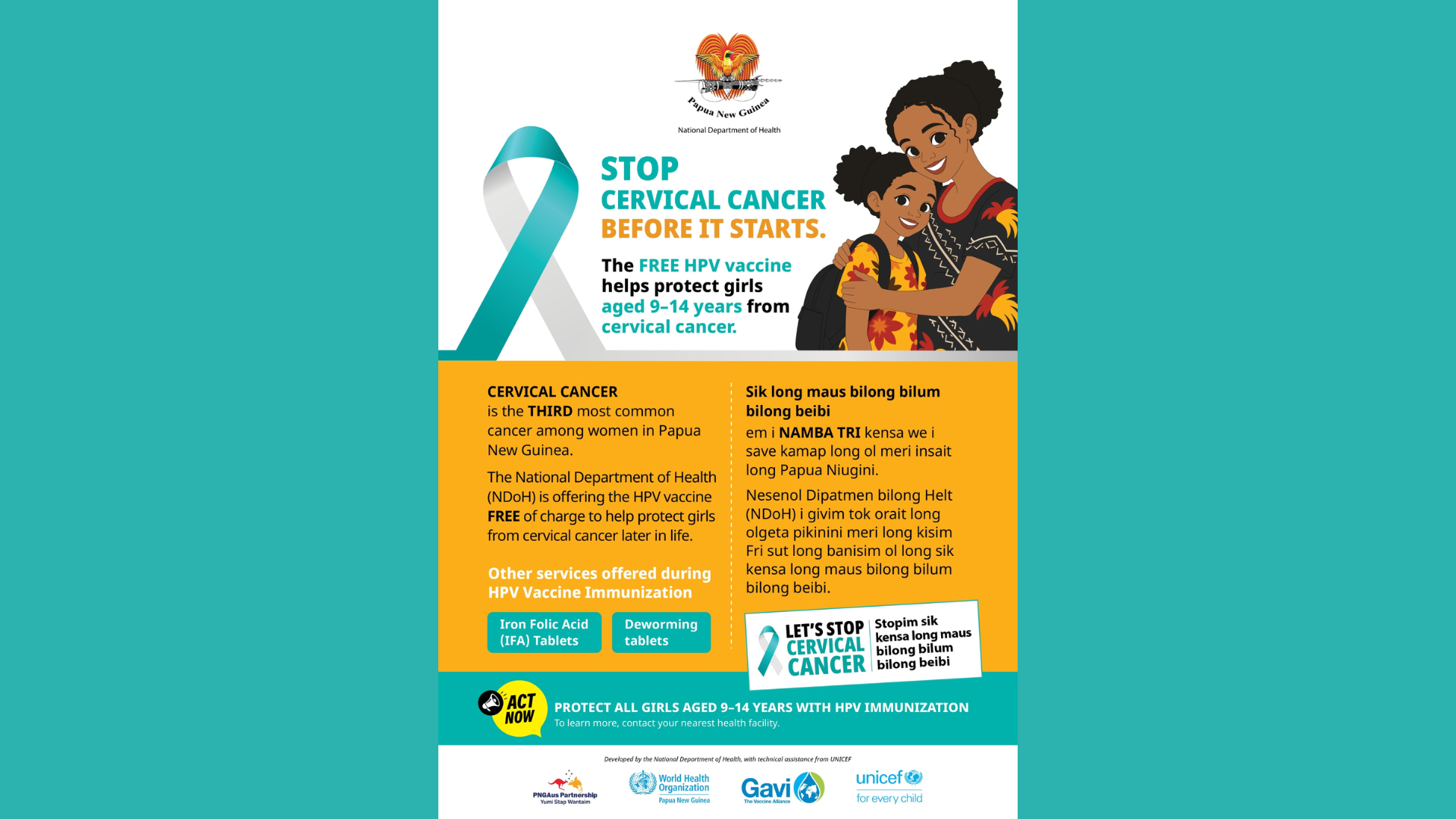
The true burden of cervical cancer in Papua New Guinea may be far greater than official figures show, with health experts warning that many cases go undetected because hospitals and health facilities lack the capacity to diagnose cancer.
The World Health Organization (WHO) estimates that there are over 1,000 new cervical cancer cases and more than 650 deaths each year in PNG.
However, WHO says the actual number is likely much higher due to limited cancer screening and diagnostic services across the country.
"Cervical cancer is probably being underestimated because many hospitals cannot diagnose cancer," WHO Team Lead Immunization, Glenda Gonzales says during an advocacy meeting on the introduction of the Human Papillomavirus (HPV) vaccine.
The warning comes as Papua New Guinea prepares to roll out free HPV vaccinations for girls aged 9 to 14 years, beginning in the National Capital District on November 9.
Health Experts say the vaccine offers one of the most effective ways to prevent cervical cancer before it develops.
HPV is a common virus that can cause cervical cancer years after infection, often without obvious symptoms during the early stages.
UNICEF Papua New Guinea Chief of Health and Nutrition Dr Budhi Setiawan says cervical cancer is already the second leading cause of death among women in PNG and remains one of the most preventable forms of cancer.
"We are preventing cancer before it starts," Dr Setiwan says.
According to WHO, the HPV vaccine can provide up to 99 per cent protection against the HPV strains responsible for most cervical cancer cases when given before exposure to the virus.
The vaccine targets HPV types 16 and 18, which account for around 70 per cent of cervical cancer cases worldwide.
The national campaign aims to vaccinate about 900,000 girls aged 9 to 14 years with a single dose of the HPV vaccine.
Health experts say this age group develops the strongest immune response to the vaccine and gains long-lasting protection.
The vaccination programme will help reduce future cases of cervical cancer, particularly at a time when many women are diagnosed only after the disease has reached an advanced stage.