

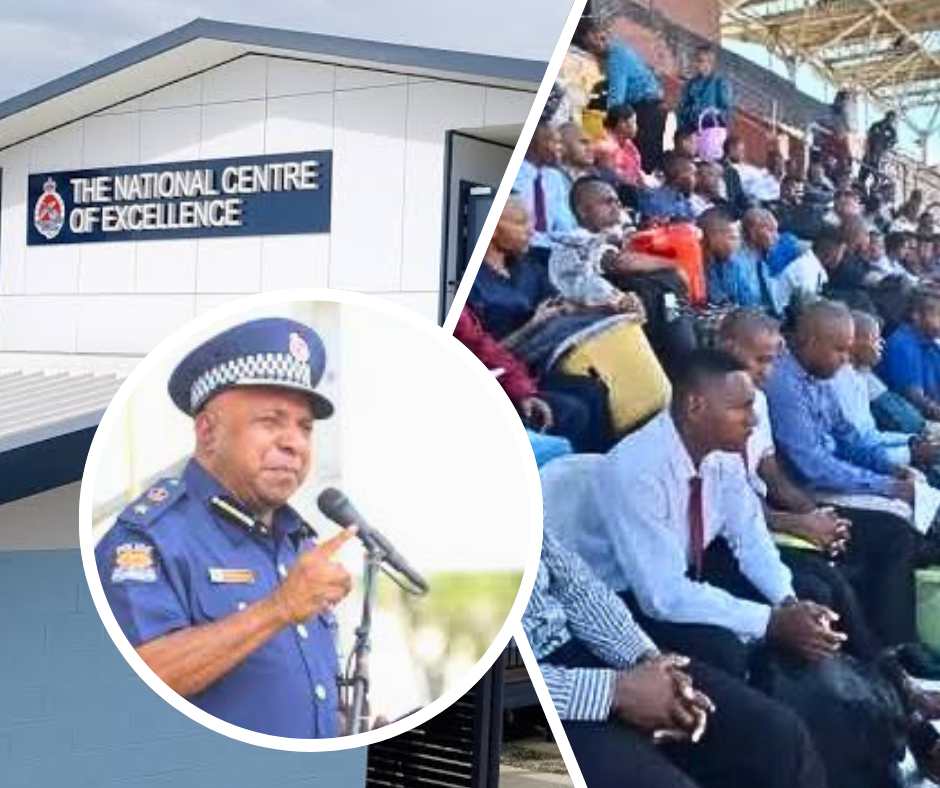
The Royal Papua New Guinea Constabulary National Centre of Excellence (NCOE) at Bomana, is preparing to commence training for its largest recruit intake in history, with 666 recruits expected to begin their six-month training program on Monday, May 18, 2026.
Acting Assistant Commissioner of Police for Training and Commandant of the National Centre of Excellence, Silva Sika, confirmed the intake during an interview with PNG HAUSBUNG.
Sika noted that the recruit training program will officially be opened by Deputy Commissioner for Administration Dr. Philip Mitna on Monday.
He said the recruitment process was conducted by the Human Resource Division under the direction of senior police management led by Commissioner of Police David Manning.
The original intake number exceeded 700 recruits before the final figure was reduced following medical screening processes and other compliance requirements.
“Some complied, who were waiting for the recruitments, maybe they got offers in other areas and other professions, and also our medical determinations,” Sika said.
This current intake is the largest recruit concentration undertaken by the college compared to previous years, where recruit numbers normally ranged between 240 and 300.
“It is the first time in the history to have this big number concentration.”
The increase is part of the government’s Vision 2030 target, which aims to increase police manpower to more than 10, 000 personnel by the year 2030.
“We decided to take this to implement the vision of the government, which wants us to increase the number in the force by 2030 to at least 10, 000 plus,” he said.
He said the college has expanded its training structure from the usual six to eight squads to a total of 16 squads to accommodate the large intake.
“We increased up to 16 total squads or platform squads. Each instructor with the guidance officers and everyone has been put into the infrastructure of the recruit training wing to deliver the training.”
Despite logistical and infrastructure challenges, Sika said the training administration remains confident in managing the large intake successfully.
“We are very optimistic with our intent. We want to train this human capital inside the police department to contribute to the development of the country.”
Sika also acknowledged support from development partners, including the Australian Federal Police, as well as support from within government towards estate management and infrastructure improvements at the training facility.
“We would comfortably say that we are capable enough to manage and deliver these courses successfully.”
The current recruit batch is expected to complete training and pass out before the end of the year, subject to training schedules and operational requirements.
“Otherwise, they should pass out before the end of the year,” Sika concluded.