NEWS SPORTS BUSINESS ENTERTAINMENT
Posts by Tasminnie ISIMELI | PNG Haus Bung
POSTS BY AUTHOR
Tasminnie ISIMELI

Tasminnie ISIMELI

POLICE HUNT 23 SUSPECTS OVER WEWAK AIRPORT INCIDENT POLICE HUNT 23 SUSPECTS OVER WEWAK AIRPORT INCIDENT
Police in East Sepik are continuing investigations into the weekend incident that led to the temporary closure of Wewak Airport with authorities now pursuing at least 23 suspects believed to be involved.East Sepik Provincial Police Commander Christopher Tamari confirmed that investigations are progressing with officers gathering statements and identifying key suspects connected to the disturbance. Superintendent Tamari said one of the main persons of interest has already provided a confession to police, which helped investigators identify others believed to have been involved. “The investigation is ongoing. We are getting all the statements together, and one of the prime persons of interest has given a confessional statement revealing the names of others who were present during the incident,” Tamari said. Police have since begun working with communities to track down and apprehend those implicated in the attack. “As we speak, officers are out working with communities to apprehend about 23 prime suspects,” he said. The police commander said the incident was allegedly carried out in retaliation after police shot a suspected gang leader during a previous operation. According to Tamari, the destruction of public infrastructure such as the airport is unacceptable and those responsible, will face the full force of the law. “Public infrastructure is for everybody. Whoever thinks they are fit enough to destroy what belongs to the public will face the full blunt of the law,” he said. Tamari urged residents of Wewak and surrounding communities to help police with information that could assist investigations. He said most community members support law enforcement efforts, while only a small minority are responsible for criminal activities. The police commander also highlighted broader concerns about crime in the province, including hold-ups along the highway near Wewak and ongoing tensions between rival settlement groups. He attributed much of the rising crime to youth unemployment and lack of opportunities urging young people to seek productive livelihoods rather than resort to criminal activities. “Crime does not pay. People should take up opportunities available to them, work the land, and engage in small businesses instead of resorting to crime,” Tamari said. Despite challenges such as limited manpower and a growing population, Tamari said police remain committed to managing crime in the province. He called on the public to work together with law enforcement to ensure the safety of the provincial capital and surrounding communities. “Help us ensure we have a better and safer province” he said.
Published on March 6, 2026
SPECIAL DOCUMENTARY HIGHLIGHTING WOMEN’S CONTRIBUTIONS TO PNG SPECIAL DOCUMENTARY HIGHLIGHTING WOMEN’S CONTRIBUTIONS TO PNG
The launch of the documentary Voices of Change: The Journey of Women in Papua New Guinea since 1975 has highlighted the leadership, resilience and contributions of Papua New Guinean women over the past five decades.The documentary was launched ahead of International Women’s Day and National Women’s Day celebrations, bringing together government representatives, development partners and advocates for gender equality. Acting Deputy Head of Mission at the Australian High Commission, Dr. Kate Rogers, said the documentary provides an important opportunity to reflect on how women have shaped Papua New Guinea. She acknowledged the women featured in the film, commending their strength, determination and ambition to lead change in communities and across the country. “We honour your strength and determination, your resilience and your ambition to lead change in both visible and everyday ways,” Dr. Rogers said. Dr. Rogers congratulated the Minister and the Department of Community Development and Religion for their commitment to empowering women and girls, describing the documentary as a testament to their ongoing work. She stressed that progress toward gender equality can only be achieved when women and girls are included in decision-making processes and have equal voice alongside men. Dr. Rogers also highlighted Australia’s support through the PNG Women Lead initiative, a $55 million partnership with the PNG Government, civil society organisations and the private sector. The program focuses on elevating women’s leadership, promoting respectful relationships, preventing violence against women and girls and supporting women’s economic empowerment. She encouraged communities across the country to watch and share the documentary to spark conversations and inspire action towards greater gender equality. Providing an overview of the film, Director of the Office for Women’s Development, Ms Nancy Kavop, said the documentary tells an important national story by capturing the voices and achievements of Papua New Guinean women since independence in 1975. Ms Kavop said the documentary highlights women from various backgrounds, including grassroots leaders, advocates, professionals and pioneers who have contributed to shaping communities and the nation. “It reminds us that women have always been central to the development of Papua New Guinea,” she said. She noted that the themes highlighted in the documentary reflect the priorities of the Papua New Guinea Gender Equality and Women’s Empowerment Policy 2025–2035, which was endorsed by the Government in December last year. According to Ms Kavop, the documentary showcases women breaking barriers and taking leadership roles, contributing to economic growth through entrepreneurship and innovation, while also highlighting ongoing challenges such as gender-based violence and unequal access to opportunities. She said the project also demonstrates the importance of partnerships between the PNG Government, the Australian Government through the PNG Women Lead program, civil society organisations and other advocates working to advance gender equality. “The documentary is more than just a film. It is an advocacy and educational tool that will inspire young women and girls, inform communities and encourage greater support for women’s leadership and participation in national development,” Ms Kavop said. She also acknowledged the teams and partners involved in producing the documentary, including the PNG Women Lead team, Tribe Media and the Office for Women’s Development staff. Ms Kavop said the documentary serves as a reminder that the future of Papua New Guinea depends on the full participation, leadership and empowerment of women and girls. The documentary was officially launched by the Minister for Community Development, Youth and Religion before its screening.
Published on March 6, 2026
SPORTING EVENTS DRIVE TEAM SPIRIT AHEAD OF ARMY'S MAIN ANNIVERSARY CELEBRATION SPORTING EVENTS DRIVE TEAM SPIRIT AHEAD OF ARMY'S MAIN ANNIVERSARY CELEBRATION
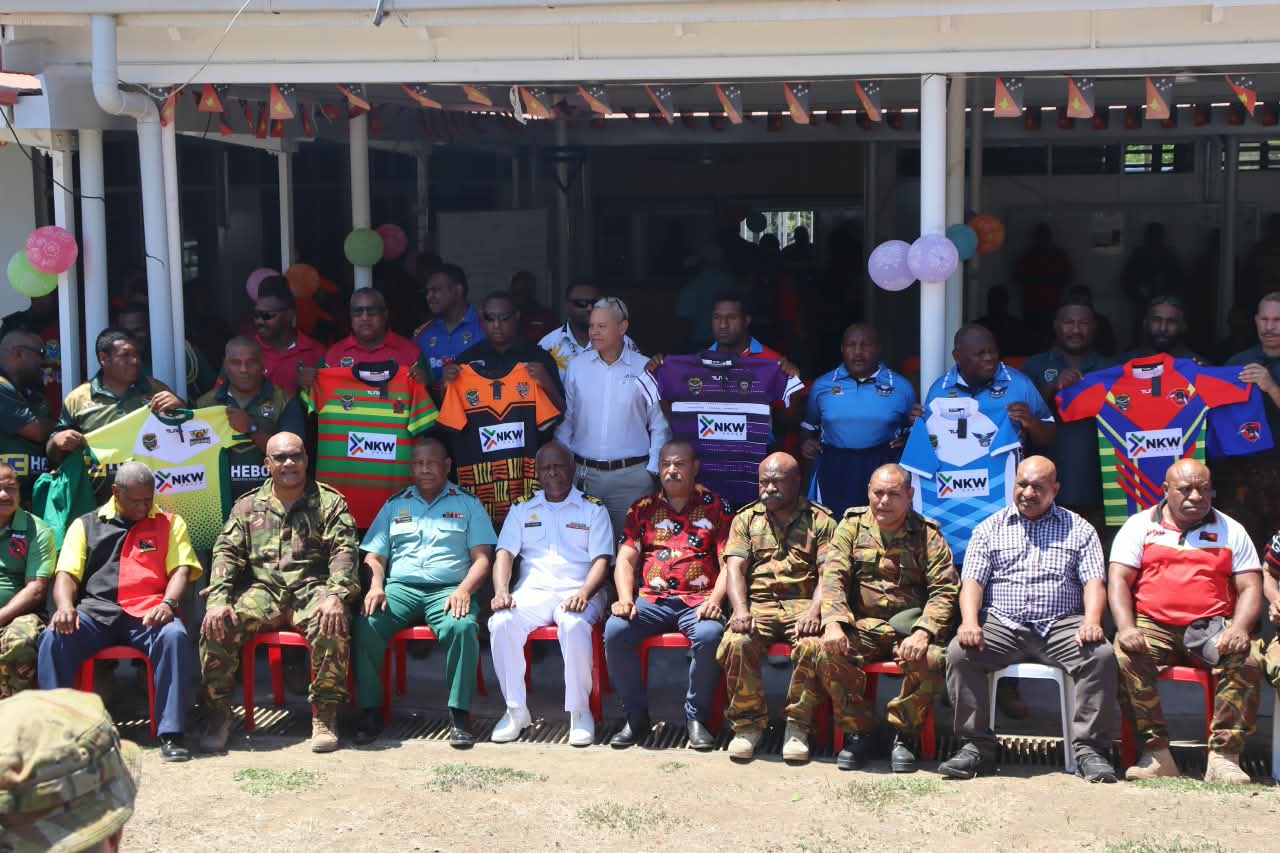
Sporting competitions are taking centre stage in the lead-up to the main 75th anniversary celebrations of the 1st Royal Pacific Islands Regiment (1RPIR), helping to build morale, teamwork and pride amongst troops.The Diamond Jubilee celebrations are being observed over several weeks, with a range of activities organized to mark the milestone, culminating in the Trooping of Colors parade on March 11th. Speaking to PNGHAUSBUNG, Media Liaison Officer Captain Roderick Kambual said sporting events are a long-standing tradition within the regiment and play an important role in the overall celebrations. “Traditionally, the company that performs best across all sporting events and activities is recognized as the champion company and is given the honor of trooping the colors on the regiment’s birthday,” he said. Trooping the colors is a ceremonial highlight, where soldiers carry the regimental and sovereign colors in a formal parade, symbolizing pride, unity and military heritage. However, Captain Kambual explained that this year’s celebrations have been adjusted due to operational demands and limited troop numbers. “With many of our troops currently deployed on operations, we are short in manpower. So instead of full companies competing, each company has provided sections to take part,” he said. He said this means the competition will recognize a “champion section” rather than a full company, and the Trooping of Colors will be performed by a combined group drawn from across the battalion. Captain Kambual also outlined the structure of the battalion, explaining that a section is made up of around 10 soldiers, with three sections forming a platoon and three platoons forming a company. The battalion itself consists of Alpha, Bravo, Charlie and Delta companies, which are infantry units as well as Support and Admin companies, which include specialists such as medics, radio operators, drivers and other essential personnel. Despite the adjustments, he said participation in the sporting events has been strong with troops showing enthusiasm and commitment throughout the three-week program. “The response has been very positive. The troops have been excited and have really enjoyed the activities,” he said. He added that beyond competition, the events are helping to strengthen relationships among soldiers. “These activities promote teamwork and team bonding in a more relaxed and enjoyable environment which is different from our usual military routines. It brings soldiers closer together and builds that team spirit,” he said. Finals for the sporting competitions were held today, with winners to be formally announced during a reaffirmation parade scheduled for next week Tuesday. Captain Kambual also encouraged members of the public to attend the remaining activities and the main parade, saying it is a rare opportunity to engage with soldiers and learn more about the regiment.
Published on March 3, 2026
1RPIR MARKS 75 YEARS OF SERVICE & MILITARY HERITAGE 1RPIR MARKS 75 YEARS OF SERVICE & MILITARY HERITAGE
The 1st Royal Pacific Islands Regiment is marking 75 years of service with commemorations highlighting its rich history and enduring role in protecting Papua New Guinea (PNG).The milestone anniversary, also known as the Diamond Jubilee, is significant not only for the regiment but for the nation, as its origins pre-date the country’s independence. Speaking to PNG HAUSBUNG, Captain Roderick Kambual the Media Liaison Officer, described the anniversary as a time for reflection and recognition. “At 75 years, this is a very important milestone. The regiment is older than the country itself, so it gives us time to reflect on our history and honor those who have contributed to building this nation,” he said. The regiment’s history dates back to World War II, with the formation of the Papuan Infantry Battalion in 1940 and the New Guinea Infantry Battalion in 1942. These units played a key role alongside Allied forces during the war before being disbanded and later re-established. In 1951, the two units were merged to form the Pacific Islands Regiment, laying the foundation for what would later become the Papua New Guinea Defence Force. Captain Kambual said the regiment remains central to the country’s security and development. “Our role is to protect the sovereignty of Papua New Guinea, but we also contribute to nation-building and support during times of need,” he said. He said one of the key aims of the anniversary celebration is to help the public better understand the military’s history and role. “A lot of people see the uniform, but they don’t know the story behind it. This is an opportunity for people to learn about where we came from and what we do,” he said. Among the activities planned is the GEAI Cup, a military skills competition designed to showcase the capabilities and training of soldiers. The event will include obstacle courses, weapon handling drills and other exercises that demonstrate how troops are prepared for operations. “It’s a chance for the public to see firsthand the level of training and discipline that goes into being a soldier,” Captain Kambual said. Preparations are also intensifying for the Trooping of Colors parade on March 11th, with troops currently undertaking daily rehearsals to ensure precision and discipline on the day. Captain Kambual, who has served in the Defence Force for 12 years said the anniversary has also prompted personal reflection on his own service. “It makes you think about how you can contribute meaningfully to the organization and the country. We don’t just want to serve and leave, we want to make an impact,” he said. He added that the milestone is not only about celebration but also about honoring the sacrifices and legacy of those who came before. “This is about remembering our history, honoring our soldiers, and looking ahead to how we continue to serve the nation." 
Published on March 3, 2026
PNG URGED TO TAP CARBON MARKET THROUGH CLIMATE-SMART COFFEE POLICY PNG URGED TO TAP CARBON MARKET THROUGH CLIMATE-SMART COFFEE POLICY
A leading researcher has called for Papua New Guinea to unlock new income streams for its coffee industry through carbon trading, as part of efforts to revive declining production and support rural livelihoods.Speaking at the Climate Smart Coffee Policy Validation Workshop in Port Moresby, Dr. Mawe B. Gonapa, stressed that stakeholders must first understand the science and systems behind coffee production before advancing policy discussions. Dr. Gonapa said coffee, traditionally valued for products such as cherry, parchment, green beans and roasted coffee, also holds untapped potential through its ability to store carbon. He explained that coffee is a tree crop that qualifies for carbon trading under international frameworks, as it absorbs carbon dioxide and stores it as biomass both above and below ground. “Coffee sequesters carbon. That carbon can be measured, valued and traded, creating an additional income stream for farmers,” he said. According to Dr. Gonapa, the global demand for carbon-neutral coffee is growing, with major buyers such as Starbucks seeking millions of tonnes of certified supply. He noted that Papua New Guinea’s coffee industry currently generates approximately K1 billion annually and supports close to three million people with about 400, 000 farming households actively involved in production. Despite its importance, he said production has been declining since the 1980s due to factors such as poor infrastructure, limited extension services and price volatility. Dr. Gonapa compared PNG’s performance with countries like Vietnam, which has grown into one of the world’s top coffee producers over the same period. He said carbon trading could act as a catalyst to reverse this trend by incentivising farmers to plant more trees and rehabilitate aging coffee blocks. “Off-season, farmers can rely on carbon credits as an additional source of income, with trading periods lasting between 25 to 30 years.” The proposed policy focuses on three key areas: carbon measurement, policy alignment and capacity building for farmers. Dr. Gonapa highlighted that accurate measurement is critical, with methods such as allometric equations and chemical analysis being identified as feasible approaches for PNG. He added that aligning with international and national frameworks including mechanisms under the Intergovernmental Panel on Climate Change and REDD+ is essential to ensure credibility and compliance. The policy also places strong emphasis on smallholder farmers, who contribute up to 85 percent of PNG’s coffee output. Dr. Gonapa said improving shade-grown coffee systems would not only enhance quality but also increase carbon storage potential making the crop more valuable in both traditional and carbon markets. He pointed out that other coffee-producing countries, including Colombia, Kenya and India, have already been participating in carbon trading for years. “Why not PNG take up the challenge?” he asked. Dr. Gonapa further stressed the need to bridge the gap between science and policymaking in the country, noting that research findings are often not effectively integrated into policy development. “We have a lot of policies in PNG, but the interface with science is lacking.” Moreover, he proposed a cooperative-based model to help farmers participate in carbon markets, supported by government agencies, provincial administrations and international certification bodies. The workshop brought together stakeholders from government, industry and development partners to validate the proposed Climate Smart Coffee Policy, which aims to position PNG’s coffee sector as both economically resilient and environmentally sustainable.
Published on February 26, 2026
PNG COFFEE INDUSTRY PUSHES FOR CLIMATE SMART POLICY PNG COFFEE INDUSTRY PUSHES FOR CLIMATE SMART POLICY
Papua New Guinea’s coffee industry is seeing strong growth with higher prices, increased earnings, and rising production.Speaking at the Climate Smart Coffee Policy Validation Workshop today in Port Moresby city, Coffee Industry Corporation (CIC) Chief Operations Officer Steven Tumae said global demand is changing, with buyers now requiring coffee to be sustainably and environmentally produced. He said the workshop is the final stage of consultations to develop a Climate Smart Coffee Policy, which aims to guide the industry through these changes. Mr. Tumae highlighted that climate change is already affecting coffee-growing areas through unpredictable weather, pests, and diseases. He added that coffee is now being grown in new areas, increasing pressure on the industry. He said the policy will focus on improving productivity and quality, while helping Papua New Guinea meet international requirements, including the European Union’s deforestation rules. Mr. Tumae also pointed to opportunities in carbon trading, noting that coffee grown under shade trees can help absorb carbon and may create new income streams for farmers. He stressed the importance of strong partnerships between government agencies, provinces, exporters, and farmers to make the policy work. Mr. Tumae said while progress will take time, the policy is an important step toward building a more resilient, sustainable, and competitive coffee industry in Papua New Guinea.
Published on February 25, 2026
MVIL & FLY RIVER GOVT TEAM UP TO SIMPLIFY VEHICLE SERVICES IN WESTERN PROVINCE MVIL & FLY RIVER GOVT TEAM UP TO SIMPLIFY VEHICLE SERVICES IN WESTERN PROVINCE
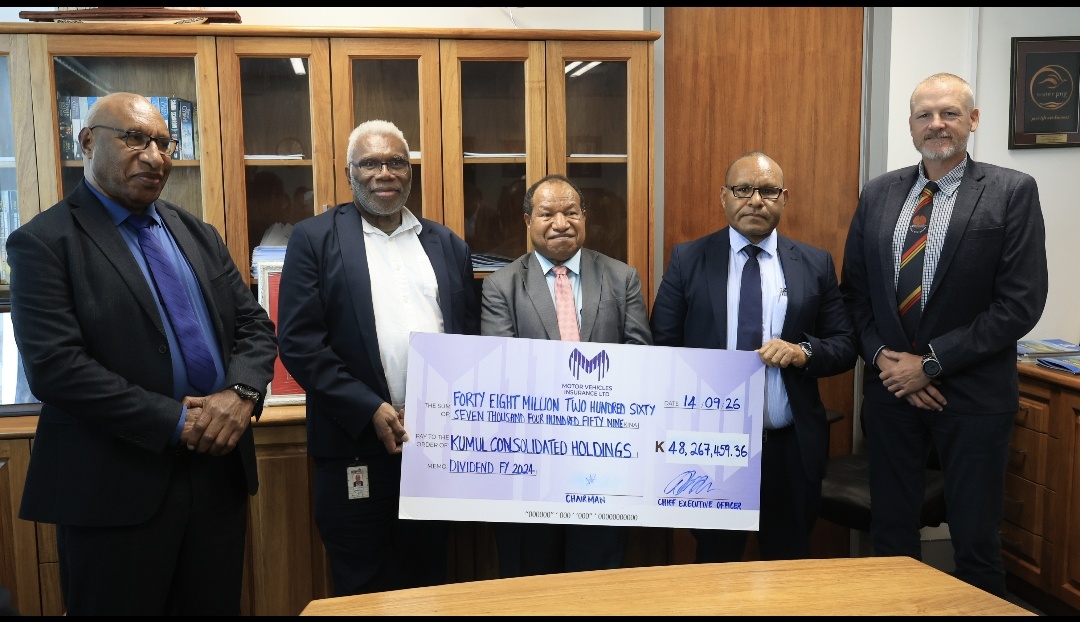
The Chief Executive Officer (CEO) of Motor Vehicle Insurance Limited (MVIL) Bafino Koi, has commended the ongoing partnership between MVIL and the Fly River Provincial Government describing it as a key driver in improving service delivery across Western Province.Mr. Koi highlighted the success of the “twin sticker agreement,” a collaborative arrangement that integrates vehicle registration, driver licensing and compulsory third-party insurance services under one system. Under the agreement signed today in Port Moresby city, the Provincial Government manages driver licensing and vehicle registration, while MVIL delivers insurance services. This setup allows motorists to access all essential services at a single point, improving efficiency and convenience. “This arrangement allows us to serve the same customers efficiently by combining registration, licensing, and insurance services under one roof,” Mr. Koi said. MVIL currently operates three branches in Western Province, located in Kiunga, Tabubil and Daru. While Kiunga and Tabubil cater to a larger customer base particularly from mining activities. Mr. Koi stressed that the Daru branch plays a vital role in serving remote communities. “Although the vehicle population in Daru is relatively small, establishing a presence there ensures that people do not have to travel long distances to access essential services,” he said. Since the partnership began in 2020, MVIL has remitted approximately K8.5 million in revenue to the Provincial Government. Mr. Koi attributed this to strong collaboration, with MVIL handling front-end collections while provincial authorities and traffic enforcement agencies ensure compliance and road safety. “The collaboration has strengthened revenue collection for both MVIL and the Provincial Government, while also improving compliance on our roads,” he said. Mr. Koi confirmed that both parties are now working towards renewing the agreement for another 10 years to ensure continuity of services. He also acknowledged the support of Governor and provincial officials including the Finance Manager and Provincial Administrator, for sustaining the partnership. “This is a win-win arrangement. MVIL continues to deliver efficient services, while the Provincial Government strengthens enforcement and compliance on the ground,” he said. Meanwhile, Western Province Provincial Administrator Alphonse Kaiyun reaffirmed the province’s commitment to strengthening partnerships that enhance service delivery and create value for communities. Speaking during the signing of a twin sticker Memorandum of Understanding (MOU), Mr. Kaiyun said collaboration between national agencies and provincial governments is essential for development. “This relationship is about adding value in how we serve our people,” he said. Mr. Kaiyun emphasized that formal agreements such as MOUs clearly define roles and responsibilities between stakeholders. “In these arrangements, we are not going to do your job, and you are not going to do our job. Each of us has a mandate, and for us, it is at the sub-national level,” he said. He described Western Province as geographically unique with key centres in Tabubil, Kiunga, and Daru, and noted that ongoing development particularly mining has led to an increase in vehicle numbers. “As we continue to develop and restore our towns, we expect the number of vehicles to increase, and that will require improved systems and services,” he said. Mr. Kaiyun also called for greater decentralization of services, urging national agencies to extend their presence into provinces, districts, and local-level governments. “People are not only in Port Moresby. Provinces, districts and local level governments must be the focus if we are serious about development,” he said. He added that partnerships with agencies like MVIL are strengthening internal revenue generation while improving compliance and enforcement across the province. Looking ahead, Mr. Kaiyun expressed confidence that the new 10-year MOU will support continued investment, enhance frontline service delivery, and improve support for officers working in remote areas. “This arrangement is about service, service to our people. And we are committed to working together to make that happen,” he said.
Published on February 23, 2026
SIX-PILLAR FRAMEWORK PROPOSED TO DRIVE CLIMATE ACTION IN PNG SIX-PILLAR FRAMEWORK PROPOSED TO DRIVE CLIMATE ACTION IN PNG
A six-pillar framework to strengthen gender equality and social inclusion is being advanced as part of Papua New Guinea’s updated climate commitment under NDC 3.0 with experts stressing the need to turn policy into practical action.Speaking during the CCDA consultations, social anthropologist Dr Jennifer Gabriel said the proposed framework is designed to ensure inclusion becomes a core foundation of the country’s climate strategy rather than an add-on. She explained that the plan focuses on six key areas: systemic mainstreaming, participatory leadership, inclusive finance, responsive analysis, institutional capacity building and data-driven accountability. Under the framework, gender considerations would be embedded across major climate sectors such as energy, infrastructure and agriculture. This includes targeted training for women and youth in renewable energy skills like solar installation and maintenance, particularly in rural and off-grid communities. Dr Gabriel said the approach also aims to move beyond symbolic consultation by giving women and young people meaningful roles in decision-making at national, provincial and community levels. She noted that women already play important informal leadership roles in areas such as water management, health and food security and these contributions should be recognized. Inclusive finance is another priority, with proposals for dedicated funding windows to help women- and youth-led small businesses access climate finance for mitigation and adaptation projects. The framework calls for gender- and youth-responsive analysis at the design stage of climate programs to ensure benefits reach vulnerable groups. It also emphasizes ongoing training to build a skilled workforce for the green economy, rather than one-off workshops. Improved data collection will be required to track the social impacts of climate initiatives, including the use of sex- and age-disaggregated data to meet transparency and reporting requirements. Proposed sector actions include appointing more women and youth to decision-making bodies in the energy sector, supporting women-led climate-smart agriculture initiatives and directing climate finance toward community-level health and nutrition programs. Faith-based organizations, NGOs and civil society groups are expected to play a key role in implementing and monitoring the initiatives at community level as Papua New Guinea works to ensure its updated climate commitments are inclusive and action-focused.
Published on February 16, 2026
CHURCH HEALTHCARE FIGHTS SORCERY-RELATED VIOLENCE IN PNG CHURCH HEALTHCARE FIGHTS SORCERY-RELATED VIOLENCE IN PNG
Beliefs in sorcery and witchcraft are very common in Papua New Guinea and accusations can lead to violence, fear and even death, something which organizations including the churches, are trying to seriously address.Church-run health facilities provide about half of rural healthcare and play an important role in helping people affected by sorcery accusation-related violence (SARV). Research from November 2023 to August 2024 looked at six church-run health centers in Enga, Simbu, and Eastern Highlands provinces. Researchers spoke with 122 people including doctors, nurses, church leaders and SARV survivors. They used interviews, group discussions, observations and reviewed previous studies. The study found that church health workers often provide emergency treatment, counselling and practical help to SARV survivors. Staff focus on medical care based on science not personal beliefs about sorcery. Clergy and community leaders help protect survivors and support ethical care. Some health centers show excellent practices. Yampu Health Center in Enga offers free treatment, safe recovery and ongoing support with the help of the Catholic Diocese. Mingende Hospital in Simbu and others provide compassionate care even with limited resources. Staff keep survivors safe, respect their privacy, and treat them with dignity. Priests and respected community members sometimes rescue people who have been accused, and explaining the medical cause of death helps prevent rumors about sorcery. Meanwhile, the children orphaned by SARV receive education and support. Br Martin Tnines, Director of the Melanesian Institute said, “Church healthcare workers are often the first line of protection for survivors of sorcery accusation-related violence. Their dedication to ethical, compassionate care not only saves lives but also helps restore dignity and hope to the affected communities.” There are still challenges. There is little SARV-specific data, not enough trained counsellors and many staff don’t know the relevant laws. Also, collaboration with other organizations is limited. The report recommends hiring staff who provide fair, science-based care, training specialist counsellors for SARV survivors, teaching staff about SARV and related laws. It also recommends working with police, local courts and community groups, visiting families to explain medical causes of death, advocating for SARV to be treated as a public health problem, offering free medical care and reports for SARV survivors, creating safehouses in high-risk provinces, keeping accurate, confidential SARV records and making written policies to guide care for SARV survivors.
Published on February 14, 2026
ESCAP BACKS PNG CLIMATE PLANS AT NDC 3.0 CONSULTATION ESCAP BACKS PNG CLIMATE PLANS AT NDC 3.0 CONSULTATION
The United Nations Economic and Social Commission for Asia and the Pacific (ESCAP) has commended Papua New Guinea’s progress on climate reporting and planning during the second national consultation on the country’s Nationally Determined Contribution (NDC 3.0).Speaking at the consultation, Lorenzo Santucci praised the Climate Change and Development Authority for successfully submitting Papua New Guinea’s first Biennial Transparency Report, describing it as an important milestone under the Paris Agreement. He also acknowledged the work underway to finalize the country’s updated NDC 3.0. Santucci said the region is at a critical point in addressing climate change, noting that Asia and the Pacific account for a large share of global greenhouse gas emissions. While recent reviews show some progress in climate ambition, emissions across the region are still rising. He stressed that continuing with business as usual is not an option and called for greener economic growth models to avoid deeper climate risks and inequality. ESCAP has been supporting Papua New Guinea in developing its climate commitments alongside partners including the United Nations Development Programme, the Commonwealth Scientific and Industrial Research Organization, the United Nations Environment Programme and the NDC Partnership. Support has included strengthening national capacity to improve greenhouse gas inventories and helping draft the updated NDC. Santucci said the consultation is an important step toward finalizing a strong NDC 3.0 that will guide Papua New Guinea’s climate and development work in the coming years. He thanked partners and participants for their active involvement, noting the strong turnout reflects the country’s commitment to climate action. He encouraged participants to provide input to help ensure the final NDC is inclusive, practical, and able to support Papua New Guinea’s long-term development and climate goals.
Published on February 13, 2026
UNDP CALLS FOR STRONGER, INCLUSIVE CLIMATE ACTION IN PNG UNDP CALLS FOR STRONGER, INCLUSIVE CLIMATE ACTION IN PNG
The United Nations Development Programme (UNDP) has called for strong, inclusive and well-funded climate plans as Papua New Guinea reviews its next round of Nationally Determined Contributions (NDC 3.0).Speaking at a national consultation workshop, Nicholas Booth, UNDP Resident Representative in Papua New Guinea, said the country must make climate action a part of all its development plans to cope with climate risks. He thanked the Climate Change and Development Authority and other partners for supporting the consultation and described the NDC review as an important step in shaping the country’s future. Booth said Papua New Guinea is very vulnerable to climate change and must make sure climate adaptation and mitigation are included in every sector. “Nothing is more important in a country where climate change affects daily life than making sure the NDCs give us the right plan,” he said. He added that the commitments must lead to real actions, policies, laws, funding, and clear ways to implement them. Participants were asked to check whether the proposed NDC 3.0 targets are realistic, properly funded, and match national priorities. Booth said energy access is one of the most important areas in the new plan. He said many countries are on track to provide everyone with reliable, affordable and renewable energy, but PNG is behind. The national grid only reaches a small part of the population. Renewable energy is key to reaching about 70 percent of people by 2030. Access to energy, he said, is important for schools, hospitals, businesses and daily life. He also welcomed the focus on gender equality, social inclusion and youth empowerment in NDC 3.0. Gender inequality, he said, is a major challenge in the country and women must have equal access to climate and energy programs. With 60 percent of the population under 25, youth inclusion and support for people with disabilities must also be included. Booth highlighted Papua New Guinea’s rich biodiversity and forests, saying they are important for nature-based climate solutions. He encouraged participants to ensure these solutions are included in plans and matched with funding and government support. He added that a green and blue economy could bring more opportunities for rural communities and make agriculture more climate resilient. He warned that the success of the NDCs depends on enough funding and support from the government, private sector and development partners. Participants were asked to give feedback to make sure the plans reflect the country’s needs and can be carried out successfully. Booth said the consultation will help build a strong framework for Papua New Guinea’s climate action and its contribution to global efforts under the Paris Agreement.
Published on February 13, 2026
NATIONAL WORKSHOP SHAPES PNG’S 2030 CLIMATE GOALS NATIONAL WORKSHOP SHAPES PNG’S 2030 CLIMATE GOALS
Papua New Guinea has begun national consultations on its next round of climate commitment with stakeholders meeting to review the draft Nationally Determined Contributions or NDC 3.0 ahead of submission under the Paris Agreement.The consultation workshop, hosted by the Climate Change and Development Authority (CCDA) with support from partners including UNDP and UN ESCAP, brought together government agencies, development partners, the private sector and technical experts to assess progress and shape the country’s climate targets through to 2030. Acting CCDA Managing Director Debra Sungi acknowledged the support of international partners and local stakeholders, noting PNG has made steady progress since submitting its first NDC in 2016. She said the draft NDC 3.0 outlines mitigation and adaptation targets across key sectors such as agriculture, forestry and land use, energy, transport, health and infrastructure. Under its mitigation commitments, PNG aims to reduce emissions by 10,000 gigagrams of CO₂ equivalent in the agriculture, forestry and land-use sector while also pursuing policy-driven changes in transport and electricity. Ms. Sungi said progress has been made in several areas particularly forestry and renewable energy, with PNG reportedly reaching its forestry mitigation target through work led by the PNG Forest Authority and partners. The government is also advancing energy reforms including plans to transition 16 provinces from diesel-generated power to renewable sources such as solar, hydro, wind and geothermal. She said the progress made so far provides a foundation to refine NDC 3.0 and ensure targets remain practical and achievable by 2030. However, significant challenges remain especially in adaptation. PNG estimates it will require about US$7.7 billion to implement its NDC targets with major funding gaps in climate-resilient infrastructure, early warning systems and health preparedness. Access to multi-hazard early warning systems targeted to reach 70 percent of the population by 2030 remains a key priority, with limited progress so far. The health sector was also identified as needing urgent support. While food security and sustainable land-use initiatives have received backing from the Green Climate Fund, Adaptation Fund and bilateral partners, further investment is needed across sectors. To strengthen climate finance, the government is working with the Bank of Papua New Guinea to develop a green taxonomy policy aimed at helping businesses access concessional funding for climate projects. Authorities are targeting at least US$100 million annually in climate finance mobilization. Looking ahead, PNG is considering new focus areas for NDC 3.0, including loss-and-damage financing and opportunities in blue carbon and carbon markets. Nine carbon market projects are currently under review following new regulations introduced last year. Ms. Sungi urged stakeholders to work collaboratively and align climate programmes with national priorities to ensure targets for 2030 can be achieved. The consultation workshop will help refine PNG’s updated climate commitments before they are finalized and submitted under the Paris Agreement.
Published on February 12, 2026