

POSTS BY AUTHOR

PNG Haus Bung
 KAPUTIN SHINES AMONGST WORLD CLASS ATHLETES IN TOKYO
Team PNG’s Long Jump queen, Rellie Kaputin was the last athlete to fly the red, black and gold as she took to the stage on Day 9 of the Tokyo2020 Olympic Games.
Kaputin was the last to compete for Team PNG on day 3 of the Athletics competition in Tokyo as she shone through a field of world class athletes.
Coming into the event as the lowest ranked (world ranking 69) athlete, Kaputin held her nerve to complete two of three jumps to record a best jump of 6.40m in three attempts.
She fouled in her first attempt and came back to record 6.30m in her second attempt followed by 6.40m in her final jump. She was just 2cms out from her season’s best jump of 6.42m, which was set in June this year.
Kaputin finished eleventh in Group A and finished 19th overall out of 30 athletes. Only 12 spots were available in the final with 6.75m the automatic qualifying mark required to advance to the final.
Eight of the 12 athletes qualified automatically with four of the next best jumps also qualifying. Australia’s Brooke Stratton was the last athlete to qualify for the final with a jump of 6.60m.
Coach, Phillip Newton was very proud of Rellie’s performance.
“Rellie was up against top athletes that compete regularly at diamond league level. She was the lowest ranked athlete and still out performed some of the more established athletes to finish 19th overall”.
Rellie was very happy with her performance after overcoming a disappointing performance at the Gold Coast 2018 Commonwealth Games where she had fouled in all her three attempts.
“I am really happy with my performance. I was nervous but I was able to pull off a 6.30m jump in my first successful jump and I was really happy with that. This was my second time to jump on the mondo track and is a track I’m not familiar with so to jump 6.40m is a really successful jump for me.”
“This gives me a lot of confidence with being able to compete with the best and I can take this confidence into the Commonwealth Games next year,” said a pleased Kaputin.
Kaputin returns to PNG before turning her attention to the Birmingham 2022 Commonwealth Games in July next year.
Published on August 2, 2021
 BSP REAFFIRMS SUPPORT FOR OPERATION OPEN HEART
In the bid to giving cardiac patients in PNG a new chance at life, BSP Financial Group Limited (BSP) continues to stand firm in supporting the Operation Open Heart’s (OOH) Training and Development program with a cheque of K100, 000.
The OOH program focusses on upskilling and building a sustainable way for PNG national doctors to become suitably qualified Cardiac Surgeons to provide lifesaving surgeries.
Encouragingly, the program equips doctors to providing professional Heart Medical Treatments to those who are unable to access these services due to the limitations of the health care system including yearly Open Heart Surgery and Screening.
BSP Area Manager for NCD, Dennis Lamus when presenting the cheque to OOH said, “The bank has been supporting the worthy cause for over 20 years and our continued support places emphasis on the organization’s drive to invest in professional development of this nation.”
[caption id="attachment_13112" align="aligncenter" width="946"] BSP NCD Area Manager signing the cheque while the POMGen Operation Open Heart teamlooks on.[/caption]
“Supporting a lifesaving profession like the OOH enhances a nation’s health system and wellbeing. It also enforces the ability to allocate local human resources efficiently in a country where health needs are the greatest,” stressed Lamus.
Operation Open Heart Coordinator and Deputy Chairlady of Port Moresby General Hospital Board, Kathy Johnson said, “Without the tremendous support of corporate organizations, OOH will not be a success. And especially for BSP, it is wonderful to see that our people’s bank continues to bank in the lives of its people.”
“This program is all about building capacity and capabilities of our PNG doctors, enabling them to develop skills and knowledge. We acknowledge that with skilled professional doctors and surgeon, many lives will be saved,” said Kathy.
BSP has not only been a strong supporter of the OOH, but also a contributor to other causes that are essential to health and wellbeing of the community through our community projects such as renovation to Health centers, supplying equipment’s and machineries and sanitation needs of healthcare facilities.
Operation Open Heart is a worthy cause that has given over a thousand Papua New Guineans a second chance at life through corrective heart surgery. To date BSP has spent over K2million since its support in 2000.
Published on August 1, 2021
 PNGOC TURNS 60 YEARS TODAY
The Papua New Guinea Olympic Committee (PNGOC) turns 60 years today 02nd of August 2021 since its inception in 1961.
Having had a long and colourful history through the years of growth, transformation and changes in its name to what it is now known:
The Papua New Guinea Olympic Committee, has one executive Board that deals with 3 international entities namely; the Pacific Games Council (1962), Commonwealth Games Federation (1962) and the International Olympic Committee (1974) with their respective games on a four year cycle of events.
Since its establishment in 1961, its main mission was to develop PNG Athletes and prepare them for participation in major international multi-sports events in the Pacific Games, Commonwealth Games and Olympic Games embodying and promoting the values and principles of friendship, respect, non-discrimination, solidarity and universality through sports.
PNGOC President Sir John Dawanicura in marking the occasion, said that, “As we look back on our impressive history over the last 60 years, we know we have so much to be proud of and so many reasons to celebrate this milestone”.
“In the 6 decades the membership has grown from a few sports to 40 affiliated National Federations today. This period has also witnessed PNG and Team PNG with representation at 11 Olympic Games, 14 Commonwealth Games, 16 Pacific Games, 9 Mini Pacific Games, 4 Youth Olympic Games and 4 Commonwealth Youth Games. The highlight of these would have been the hosting of 3 Pacific Games, with the recent 2015 Games in Port Moresby being the most spectacular and memorable. The hosting of these Games also capitulated the country forward in the development and establishment of sport facilities and structures on par within the region”, Sir John said.
Some key milestones achieved in the 60 years include;
Hosting 3 Pacific Games (1969, 1991 and 2015)
Opening of Olympic Haus in 2019
Visit of IOC President to PNG in 2019
Signing of MOU between PNGOC & PNGSF witnessed by IOC President & former Prime Minister – Peter O’Neil in 2019
“Most fundamental of the legacies was not only the capacity building of Team PNG (athletes & officials), and improvement of sporting facilities. An important cornerstone for this success is the contribution by countless volunteers who run the sports programs and in their various capacities as executives and committees on National Federations”, he said as he acknowledged the great contribution of many of our people to the growth of sports in the country”.
“Transformation at PNGOC also entailed inclusiveness in sport through the incorporation and promotion of gender equality and equal representation with the increased in sporting roles taken up by women as athletes, administrators, coaches and officials as part of the wider Olympic Movement values”.
“Development over these 6 long decades has seen us build strong relationships, good governance and best practises. We are a values based organisations built on Honesty, Excellence, Respect and Openness. We value our partners and key stakeholders who has been on this shared journey with us over many years.
As PNGOC commemorates 60 years of existence, this milestone has also presented an opportunity to re-energised and look into the future with a new vision.
A defining year, 2021 also heralds in an era of new beginnings while managing the expectations of living in the “new normal” in sports, the PNGOC has just launched its new direction with the charter of a new Strategic Direction 2021-2024 and Team PNG’s new Performance Strategy.
This is hoped to provide the scope of development and identification of sport specific talent in the 40 sporting national federation codes in PNG within the new term and beyond, for absolute success at future international multi-sports events.
While there will be a small significant celebration done to mark the anniversary today, the official celebrations to mark the event has been moved back to later in the year to be held after the 2021 Independence anniversary this year, as the focus is still on Team PNG taking part in the Tokyo Games, in Japan.
The organisation started with a one man show with John Dawanincura (now Sir John) recruited as the first official employee in 1984 after he’s participation with the PNG Team in the Montreal Olympic Games in 1976, to be what it is now. Today the PNGOC has a total of 17 permanent employees serving in various capacities.
Published on August 1, 2021
 TRUKAI FUN RUN T-SHIRT SALES RAFFLE DRAW WINNERS ANNOUNCED
The Papua New Guinea Olympic Committee (PNGOC) and Trukai Industries Ltd have announced today the 40 winners for the Trukai Fun Run T-shirt Sales Campaign raffles promotions.
The draw was conducted at the PNGOC Office at Olympic Haus Boroko, in the presence of representatives of Trukai Industries Ltd, TSI Security Personnel and PNGOC to witness the occasion.
PNGOC Corporate Manager Ian Leklek congratulated the winners and thanked them for supporting Team PNG through the purchase of Trukai Fun Run T-Shirts despite the tough economic times our country was facing. All Fund’s raised this year went towards supporting Team PNG to the Tokyo 2020 Olympic Games.
“We also acknowledge and thanked Brian Bell Group of Companies, Coral Sea Hotels and Theodist Limited for partnering with PNGOC to provide prizes for this campaign. Thank you very much for your wonderful support”, said Mr Leklek
“Thank you Trukai Industries for being one of our long standing partners with PNGOC through your Trukai sponsorship spanning over 22 years. As a non-profit organisation, we are indebted and grateful for your continued support”, he said.
Despite the non- staging of the actual Trukai Fun Run event due to restrictions brought on by the pandemic, the organising committee still managed to sell K250, 000 worth of t-shirts which indeed was a great outcome despite the challenges faced.
Trukai Industry, Marketing Manager, Maryanne Tom also thanked each individual and organization who bought a t-shirt during this Sale.
“Each time a Trukai Fun T-Shirt was purchased during this Sale, Team PNG was being supported to represent our country”
Trukai is proud to support the PNGOC and Team PNG and is motivated by the great show of support given by individuals, corporate and business houses alike in this Trukai Fun Run T-shirt Sales Campaign.
Meantime, the Raffle winner’s will be notified via print and social media, as well as contacted through the contact details provided on the raffles ticket butts.
Published on August 1, 2021
 ELON MUSK’S BRAIN COMPUTER START-UP RAISES $205 MILLION FROM GOOGLE VENTURES AND OTHERS
Elon Musk’s brain-machine interface company, Neuralink, has raised $205 million from investors including Google Ventures, Peter Thiel’s Founders Fund, and OpenAI CEO Sam Altman.
The series C round, announced in a blogpost Thursday, was led by Dubai-based Vy Capital.
It comes two years after Neuralink raised $51 million. Total investment in the company now stands at $363 million, according to start-up tracker Crunchbase.
Founded in 2016, Neuralink is trying to develop high-bandwidth brain implants that can communicate with phones and computers.
The company is targeting its first devices at quadriplegics — who are unable to interact with many of today’s devices — and it is working toward human trials.
“The first indication this device is intended for is to help quadriplegics regain their digital freedom by allowing users to interact with their computers or phones in a high bandwidth and naturalistic way,” it wrote.
So far, the technology has been trialed on pigs and a monkey that was able to play the video game Pong with its mind.
The company said its first product, known as the N1 Link, will be “completely invisible” once implanted and transmit data via a wireless connection. Musk, who is CEO of Neuralink as well as Tesla and SpaceX, has previously described Neuralink as a Fitbit in your skull with tiny wires that go into your brain.
“The funds from the round will be used to take Neuralink’s first product to market and accelerate the research and development of future products,” Neuralink said.
Keeping up with A.I.
Neuralink said Thursday that its mission is to “develop brain-machine interfaces that treat various brain related ailments, with the eventual goal of creating a whole brain interface capable of more closely connecting biological and artificial intelligence.”
AI is only going to get smarter and Musk has previously said that Neuralink’s technology could one day allow humans to “go along for the ride.”
People are in effect already “cyborgs” because they have a tertiary “digital layer” thanks to phones, computers and applications, he said during a Clubhouse discussion in February.
“With a direct neural interface, we can improve the bandwidth between your cortex and your digital tertiary layer by many orders of magnitude,” said Musk. “I’d say probably at least 1,000, or maybe 10,000, or more.”
The cortex is a part of the brain that plays a key role in memory, attention, perceptual awareness, thought, language, and consciousness. The digital layer he refers to could be anything from a person’s iPhone to their Twitter account.
Long term, Musk claims that Neuralink could allow humans to send concepts to one another using telepathy and exist in a “saved state” after they die that could then be put into a robot or another human. He acknowledged that he was delving into sci-fi territory.
Several other companies are also developing brain-computer interfaces including Blackrock Neurotech, which has been backed by Thiel and his friend Christian Angermayer.
Elsewhere, scientists at the University of Melbourne have already had some success with brain-computer interfaces.
A study out of the university in October showed two humans controlling a computer through thought using a stentrode (a small stent-mounted electrode array) developed by Australian biotech firm Synchron without having to shave the skull and drill through it.
The stentrode brain-computer interface allowed two people with amyotrophic lateral sclerosis — a rare neurological disease — to type, text, email, do online banking and shop online through thought.
Published on August 1, 2021
 BACON MAY DISAPPEAR IN CALIFORNIA AS PIG RULES TAKE EFFECT
Thanks to a reworked menu and long hours, Jeannie Kim managed to keep her San Francisco restaurant alive during the coronavirus pandemic.
That makes it all the more frustrating that she fears her breakfast-focused diner could be ruined within months by new rules that could make one of her top menu items — bacon — hard to get in California.
“Our number one seller is bacon, eggs and hash browns,” said Kim, who for 15 years has run SAMS American Eatery on the city’s busy Market Street. “It could be devastating for us.”
At the beginning of next year, California will begin enforcing an animal welfare proposition approved overwhelmingly by voters in 2018 that requires more space for breeding pigs, egg-laying chickens and veal calves. National veal and egg producers are optimistic they can meet the new standards, but only 4% of hog operations now comply with the new rules. Unless the courts intervene or the state temporarily allows non-compliant meat to be sold in the state, California will lose almost all of its pork supply, much of which comes from Iowa, and pork producers will face higher costs to regain a key market.
Animal welfare organizations for years have been pushing for more humane treatment of farm animals but the California rules could be a rare case of consumers clearly paying a price for their beliefs.
With little time left to build new facilities, inseminate sows and process the offspring by January, it’s hard to see how the pork industry can adequately supply California, which consumes roughly 15% of all pork produced in the country.
“We are very concerned about the potential supply impacts and therefore cost increases,” said Matt Sutton, the public policy director for the California Restaurant Association.
California's restaurants and groceries use about 255 million pounds of pork a month, but its farms produce only 45 million pounds, according to Rabobank, a global food and agriculture financial services company.
The National Pork Producers Council has asked the U.S. Department of Agriculture for federal aid to help pay for retrofitting hog facilities around the nation to fill the gap. Hog farmers said they haven't complied because of the cost and because California hasn't yet issued formal regulations on how the new standards will be administered and enforced.
Barry Goodwin, an economist at North Carolina State University, estimated the extra costs at 15% more per animal for a farm with 1,000 breeding pigs.
If half the pork supply was suddenly lost in California, bacon prices would jump 60%, meaning a $6 package would rise to about $9.60, according to a study by the Hatamiya Group, a consulting firm hired by opponents of the state proposition.
At one typical hog farm in Iowa, sows are kept in open-air crates measuring 14-square-feet when they join a herd and then for a week as part of the insemination process before moving to larger, roughly 20-square foot group pens with other hogs. Both are less than the 24 square feet required by the California law to give breeding pigs enough room to turn around and to extend their limbs. Other operations keep sows in the crates nearly all of the time so also wouldn't be in compliance.
The California Department of Food and Agriculture said that although the detailed regulations aren't finished, the key rules about space have been known for years.
“It is important to note that the law itself cannot be changed by regulations and the law has been in place since the Farm Animal Confinement Proposition (Prop 12) passed by a wide margin in 2018," the agency said in response to questions from the AP.
The pork industry has filed lawsuits but so far courts have supported the California law. The National Pork Producers Council and a coalition of California restaurants and business groups have asked Gov. Gavin Newsom to delay the new requirements. The council also is holding out hope that meat already in the supply chain could be sold, potentially delaying shortages.
Josh Balk, who leads farm animal protection efforts at the Humane Society of the United States, said the pork industry should accept the overwhelming view of Californians who want animals treated more humanely.
“Why are pork producers constantly trying to overturn laws relating to cruelty to animals?” Balk asked. “It says something about the pork industry when it seems its business operandi is to lose at the ballot when they try to defend the practices and then when animal cruelty laws are passed, to try to overturn them.”
In Iowa, which raises about one-third of the nation's hogs, farmer Dwight Mogler estimates the changes would cost him $3 million and allow room for 250 pigs in a space that now holds 300.
To afford the expense, Mogler said, he’d need to earn an extra $20 per pig and so far, processors are offering far less.
“The question to us is, if we do these changes, what is the next change going to be in the rules two years, three years, five years ahead?” Mogler asked.
The California rules also create a challenge for slaughterhouses, which now may send different cuts of a single hog to locations around the nation and to other countries. Processors will need to design new systems to track California-compliant hogs and separate those premium cuts from standard pork that can serve the rest of the country.
At least initially, analysts predict that even as California pork prices soar, customers elsewhere in the country will see little difference. Eventually, California’s new rules could become a national standard because processors can’t afford to ignore the market in such a large state.
Kim, the San Francisco restaurant owner, said she survived the pandemic by paring back her menu, driving hundreds of miles herself through the Bay Area to deliver food and reducing staff.
Kim, who is Korean-American, said she’s especially worried for small restaurants whose customers can't afford big price increases and that specialize in Asian and Hispanic dishes that typically include pork.
“You know, I work and live with a lot of Asian and Hispanic populations in the city and their diet consists of pork. Pork is huge,” Kim said. “It’s almost like bread and butter.”
Published on August 1, 2021
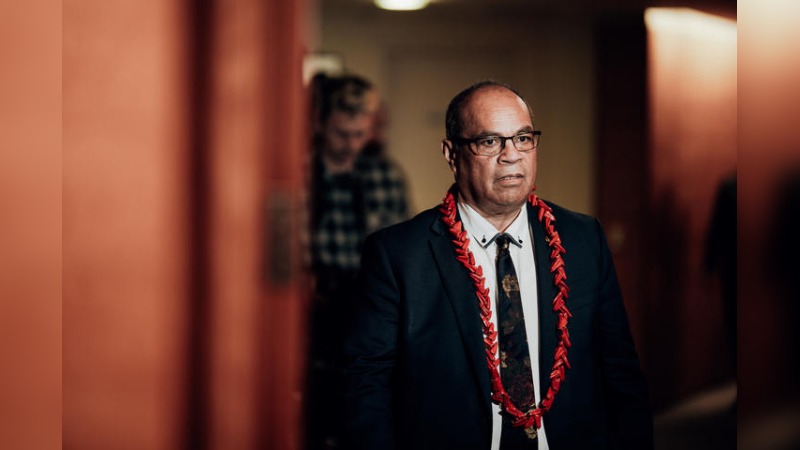 ONE-ON-ONE WITH AUPITO WILLIAM SIO BEFORE DAWN RAIDS APOLOGY
The New Zealand Government will today formally apologise for the Dawn Raids, in a cultural ceremony at Auckland's Town Hall.
RNZ Pacific sat down with the Minister for Pacific Peoples Aupito William Sio, in his only radio interview before standing alongside Prime Minister Jacinda Ardern, as she says sorry for the racist immigration policy that tore Pasifika families apart.
Understandably with the long work programme this apology has required of him (there has only ever been two formal government apologies meeting human injustice criteria), a number of portfolios and a pandemic continuing to ravage the Pacific, Aupito said he was nervous for today's proceedings.
"I feel the weight of responsibility from the government but also the weight of responsibility from our communities," he said. "So, all of that, I feel."
A formal request for an apology was made to the orime minister's office from the Polynesian Panthers early last year, Aupito said.
His office was then made known, to which discussions between the Panthers and the Pacific Peoples Ministry began, on the apology's exact terms.
He said it was an easy task to convince his caucus colleagues that a Dawn Raids apology was important to make under this term of government.
"You have people like myself and others of Māori heritage, who use their cultural lens, cultural intelligence," he said.
However, there have been brief moments where he has sat in his office, alone, pondering how significant this moment will be.
"I suppose it's an emotional thing for me," he said.
"One, having lived through that period and two, looking at some of the staff that are in the public sector who haven't through that period.
"So it can be quite lonely, just sort of reflecting on the past."
In June, the apology was finally announced in a tearful press conference at Parliament.
Aupito broke down as he revealed his own family was raided, during the 1970s clamp down on Pacific immigration by the Labour and successive National governments.
"I wasn't so much nervous," he said going into the announcement. "I was more worried about controlling my emotion.
"I was trying to figure out 'how do I support the prime minister in the media stand-up and not lose it?'"
During research the Ministry for Pacific Peoples had conducted to evaluate how Pasifika communities felt about an apology, he came across dozens who were traumatised to this day about the Dawn Raids.
"I found invariably those directly affected, their eyes would water up," he said.
"They'd become quite emotional and teary eyed and we would end up all crying about it, without saying anything."
He said those affected including himself, would be scarred for life. Although he hopes today's apology will lift a huge weight off the shoulders of most.
"The harm that was caused on a proud people was wrong," he said.
"We now know that this was racism of the worst kind.
"Huge numbers of overstayers from Europe and America were basically left untouched.
"It was wrong then, it is wrong today, it will always be wrong - racism, discrimination, prejudice - whatever form it takes is wrong."
When asked if he could guarantee that racist acts committed by the government against Pasifika would never happen again, Aupito said he could not control what happens in the future.
"But it is my hope and aspiration," he said.
One topic of contention has been where the apology will be held, at the Auckland Town Hall.
Many have argued the town hall is too far distant from where the majority of Pasifika now live in Auckland, south of the city.
Aupito explained there is historical significance of holding the apology in a "symbol of power" in which the town hall has come to be known for.
"Up a little bit from the town hall is K Road," he said. "That was the shopping mall of the Pacific communities in the 1970s.
"Where you go down, buy taro or green bananas, and ask the butcher for pig's head and ask the fish shop for fish heads, they gave it away.
"Further down is the PIC church, further down the road is the St Joseph's Catholic."
Aupito said both churches were instrumental in supporting Pasifika families who had settled in suburbs such as Grey Lynn, Ponsonby and Parnell.
Aupito's final remarks going into the apology are simple, may nothing like the Dawn Raids ever happen again in Aotearoa.
"I just think for our Pacific communities, I hope it begins the process of healing," he said poignantly.
"I hope it begins the process of restoring their mana and dignity as a proud people."
"For the rest of New Zealand, I hope it helps them to better understand why it's such a big deal to Pacific communities," Aupito said.
"Why it's such a big deal to the Polynesian Panthers, [Ngā] Tamatoa, CARE organisation, the people who championed human rights in that time.
"I just hope that we can better understand that racism that form cannot happen again.
"We can't tolerate it as a nation."
SOURCE: RNZ NEWS
Published on August 1, 2021
 PNG CHAMBER OF MINES AND PETROLEUM COMMENDS EITI ON 2019 REPORT RELEASE
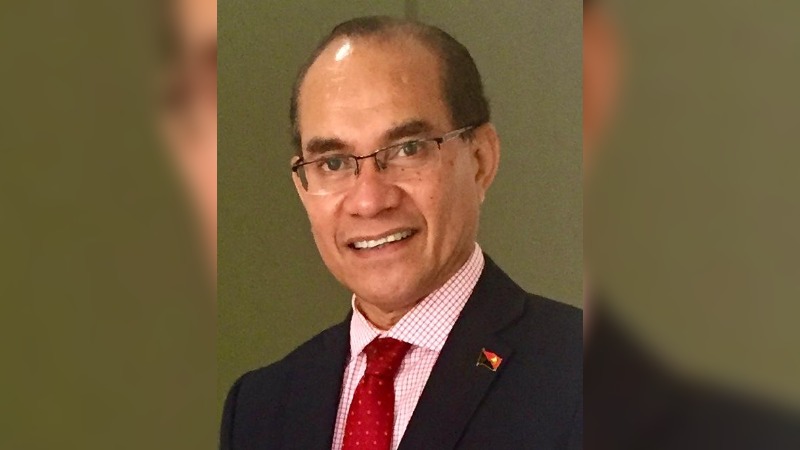
The PNG Chamber of Mines and Petroleum congratulates and also expresses its support to the PNG Extractive Industry Transparency Initiative (EITI) on the release of the 7th Papua New Guinea Extractive Industries Transparency Report which details the industry’s mandatory payments to government in 2019.
The Chamber notes with satisfaction the full participation of the extractive industry operating projects in furnishing information required to compile the 2019 Report.
We are pleased that the current report provides a more comprehensive information from industry and government of the revenue derived from the resource projects and also noting the enormous voluntary contribution in community infrastructure projects and flow-on socio-economic benefits such as community health and education programs as well as spin-off business opportunities.
Some highlights from the report include:
• Over 6 billion Kina of contributions from the extractive industry to PNG• Contributed 28% of government revenue
• Responsible for 28% of PNG’s GDP, and this does not include the multiplier effect from contributions by all the contractors and subcontractors who support our industry
• Contributed nearly 450M kina in cash and in-kind social expenditures, mostly voluntary, for such things as community infrastructure projects, community health and education programs, as well as spin-off business opportunities supporting SMEs.
Present at the release of the EITI report was Mr Richard Kassman, Senior Vice President of the PNG Chamber of Mines and Petroleum. Mr Kassman reiterated that while matters of reconciliation were not unusual, strides were being made to ensure that those matters were minimized.
“I want to assure the public that this is a work in progress, that the industry, together with the regulators together and reporting entities of government remain committed to minimize this.”
Mr Kassman added “The whole concept and the intention of the concept of EITI is that we in the industry report various streams of revenue that we pay to the state and that on the other side, the state agencies confirm what we say we’ve paid is correct.”
The Extractive Industry Transparency Initiative has continued to provide an invaluable insight into the operations of the resource sector, particularly the extractive industry in Papua New Guinea, the contributions of current extractive production operations and accountability of Government in terms of revenue receipt.
With the contributions of the sector playing a significant role in the economy of the country, the PNG Chamber of mines and Petroleum commends the efforts of EITI in the compilation and dissemination of the 2019 report which promotes revenue transparency and accountability in the extractive sector.
The release of the report took place at 11am on Friday 30th of July at the Treasury Building in Port Moresby.
Published on July 31, 2021
 JUDITH MEAURI TAKES ON THE WORLD
Judith Meauri took to the pool on Friday night in the 50m freestyle event with over 80 swimmers taking part amongst 10 heats.
Meauri is a second time Olympian having raced in the London Olympic Games in 2012.
Her swim tonight of 27.56 seconds beat the time she set back in London of 27.84. Meauri won heat 4 of the 11 heats in the event.
Speaking after the race, Meauri said she was very happy with the race and that she was excited to compete but felt she had faced the race calmly and achieved everything she had set out to do.
“This was the best race I have ever swum in an actual meet and I am happy with the time. This is only the second competition I’ve competed in, since the start of the pandemic”.
The 50m freestyle is the most competed event on the swimming programme as over 150 athletes swam in the men and women’s events.
Chef de Mission, Tamzin Wardley stated that every country competing at the Olympics is invited to send two swimmers to the Games, and most swim in this event, making it possibly the most global event at the Olympics.
“Sitting in the stands, cheering Judith on, we were literally surrounded by the world”.
The fastest time of the night, for the event, went to Australian Emma McKeon who set an Olympic World record, of 24.02 seconds in the second last heat.
“Judith has been training in Thailand at an extended FINA sponsored camp for over 18 months.
“She left for the camp before the pandemic hit our shores and was originally going to remain until May 2021 but it was better for her preparations to remain in Thailand right through to the Olympic Games.
“The training camp had to close for a while and pool training stopped but luckily it managed to reopen.
With the travel restrictions in place, Meauri has only had the chance to compete at two meets in the last two years.
Swimmers based in PNG did not have it as lucky as the Taurama Aquatic Centre was closed for much of last year as the centre was utilised as part of the health response in Port Moresby.
Meauri and Team PNG swimmer, Ryan Maskelyne, will both be heading back into training, after their quarantine period is over, in the lead up to the World Short Course Championships, in Abu Dhabi, in December, followed by the 2022 Commonwealth Games, in Birmingham.
Published on July 31, 2021
 BSP KICKS OFF WITH K40,000 FOR RABAUL SCHOOL SELECT SIDE RUGBY LEAGUE TEAMS
On a path to picking out young talents at an early age and preparing them onto the right path to achieve the bigger dreams, BSP Financial Group Limited (BSP) presented K40,000 to Rabaul Rugby Football League (RRFL) School Rugby League Competition in East New Britain Province today.
The K40,000 support will go towards the Rabaul Select Side, U/14 boys, U/16 boys and U/18 boys and girls teams. The funds will cover four sets of jerseys worth K20,000, equipment at K10,00 and an added K10,000 to upgrade the sports field.
BSP Rabaul Branch Manager Kalat Tiriman announced this saying, “participation in sports has a significant positive impact on our young people. Sports plays an important role in helping children and youths, especially students to engage in healthy activities in a safe and supported environment.
[caption id="attachment_13083" align="aligncenter" width="934"] BSP Rabaul Branch Manager Kalat Tiriman passes the ball to Michael Marum[/caption]
“At BSP, we believe in supporting communities through health, sports and education, and this support is a significant investment, supporting our Rabaul Community in developing not just the game of rugby league but in developing our youngsters in the social and community level,” said Tiriman.
In receiving the K40,000 sponsorship, RRFL President Michael Marum thanked BSP noting that; “this competition is the first of its kind for Rabaul with 12 schools gearing towards participating in the competition that kicked off today (Friday 30th July 2021) at the Queens Park Oval, Rabaul.
“We are anticipating over 1,400 students to participate in the competition.”
[caption id="attachment_13082" align="aligncenter" width="964"] Rabaul Rugby Football League (RRFL) School Rugby League Competition in East New Britain kick offs[/caption]
“Taking part in sports enhances values including teamwork, respect, discipline and sportsmanship that can be translated into positive youth behavior.”
BSP prides itself in supporting sport at all levels, especially with the Junior Rugby League development for both females and males in the East New Britain Province.
Published on July 31, 2021
 SAILING COMPETITION ENDS
Papua New Guinea’s sailing duo Teariki Numa and Rose-Lee Numa hit the water, on Friday, for the final day of the preliminary Laser racing event.
Conditions were completely different to the strong winds and large swells experienced over the prior 4 days of racing, with messy waves and winds gusting 6 to 8 knots on the Enoshima course on Friday.
Both events, Men’s Laser and the Women’s Laser Radial had to restart many times due to too many boats being over the start line when the race began.
Secretary General for PNG Olympic Committee and International Olympic Committee member,
Auvita Rapilla visited the sailing venue along with Chef de Mission Tamzin Wardley to encourage the sailors before their last two heats out on the water.
Coach Danny Fuller was full of praise to see Rose-Lee and Teariki finish off the last races very positively.
“Rose-Lee has had to tough it out with an Achilles’ injury the last two days. She was in pain getting around the course both days but was determined to complete all of her races. A big thank you to physio Matthew for his skills in getting Rose through the competition” said Fuller.
Teariki saved his best until last with his most consistent day of racing. Better starts allowed Teariki better options on the racecourse and to mix it up more with his competitors to finish off the races positively.
“Rose-Lee and Teariki have made big improvements with many aspects of their sailing. Starting is the most technical and difficult area of the sport and this is the area that they have made the biggest gains. Even though these games have been affected by COVID, they have made many
new fantastic friends from all over the world” said Fuller.
Chef de Mission, Tamzin Wardley was proud of the two sailors who finished off strongly.
“Rose Lee had struggled over the last two days of competition with an Achilles injury caused by the tough sailing conditions and constant hiking required in the long legs to the top mark.
“She was determined however to sail on and not miss a moment of her Olympic campaign” said Wardley.
The top 10 sailors from the preliminary rounds will compete in the final round with three races adding to their existing combined scores. The Australian sailor, Matt Wearn is currently leading the overall fleet scores heading into the medal races on 1 August and is on track for the Gold medal in the Men’s Laser event.
In the Women’s Laser Radial event, Denmark’s Anne-MarieRindom is the leader going into the medal races on Sunday and is the current favourite to claim the Gold medal.
Published on July 31, 2021
 TOKYO OLYMPICS: RUSSIANS FACE BACKLASH FROM FELLOW COMPETITORS
When Russian athletes stand on the podium after winning an Olympic gold in Tokyo, they hear a Tchaikovsky piano concerto rather than their national anthem.
And some of them also hear questions.
More than 300 athletes across 30 sports are competing as the Russian Olympic Committee rather than as their country as part of sanctions for doping scandals.
They are fourth in the medal table, with 10 golds and 34 medals, but their success has not sat well with some of their fellow competitors who believe they should not be at the Games because of the country's doping record.
American swimmer Ryan Murphy said Friday's 200m backstroke final was "probably not clean" after he lost his Olympic title to Russian Evgeny Rylov.
While Murphy later rowed back on his comments, saying he was speaking about doping generally, Rylov said the American was entitled to his thoughts given Russia's doping past.
British swimmer Luke Greenbank, who won bronze in that race, said: "It's obviously a very difficult situation not knowing whether who you are racing against is clean.
"Obviously, there's a lot of media around the Russian federation coming into the Olympics. It's frustrating seeing that as an athlete, having known that there is a state-sponsored doping programme going on and more could be done to tackle that."
American rower Megan Kalmoe had said the previous day that "seeing a crew who shouldn't even be here walk away with a silver is a nasty feeling" after Vasilisa Stepanova and Elena Oriabinskaia's medal in the pairs.
Meanwhile, tennis player Daniil Medvedev reacted angrily earlier this week when he was asked whether Russian athletes at the Olympics carried a "stigma of cheaters".
"It's the first time in my life I'm not going to answer a question and you should be embarrassed of yourself - I don't want to see you again," the world number two told the reporter.
The Russian Olympic Committee tweeted after Murphy's comments in the pool that its athletes were in Tokyo "absolutely rightfully".
"Whether someone likes that or not," it added. "You need to know how to lose. But not everyone does.
"The old hurdy gurdy [musical instrument] is once again playing the tune about Russian doping. Someone is diligently turning the handle."
These are the third successive Olympics at which Russia's athletes have been restricted in the way they are able to compete.
In 2014, revelations of a doping scandal came to light, eventually leading to a report in 2016 finding that Russia had operated a state-sponsored doping programme for four years across the "vast majority" of summer and winter Olympic sports. That included tampering with tests at the 2014 Sochi Winter Games, where as hosts they finished top of the medal table.
At the Rio 2016 Olympics, Russians competed across a range of sports but track and field athletes were banned, while at the 2018 Pyeongchang Winter Games athletes with no record of doping were allowed to compete under the name Olympic Athlete from Russia.
There will be only 10 track and field athletes representing the Russian Olympic Committee in Tokyo, with World Athletics president Sebastian Coe saying earlier this week that the country - whose athletics federation remains suspended - should be grateful to have anyone at all given their long history of "obfuscation" and little progress over doping.
"The debate around the table was quite a tough one," he said. "There were colleagues of mine who questioned whether any neutral athletes should be there. It was decided by the task force that 10 was an appropriate number and the council endorsed that."
At the Tokyo Games, the International Testing Agency (ITA), an independent body from the International Olympic Committee, is overseeing all doping controls.
The ITA said on Friday more than half of the expected 5,000 doping tests at Tokyo 2020 had already been conducted but there is no information yet on any positive cases.
It said the most tested sports so far have been aquatics, rowing, athletics, cycling and weightlifting, while the most tested teams are those of the United States, Australia, China, Britain and the ROC.
What happens when ROC competitors win medals?
There is no Russian flag on the outfits worn by ROC competitors at these Olympics, although they are allowed to wear blue, red and white tracksuits as long as they do not have the word 'Russia' on them or any other national emblems.
If they win a medal, then a flag featuring the Olympic rings and three flames is lifted during the ceremony.
And if they win gold, Russian composer Pyotr Tchaikovsky's Piano Concerto No 1 is played rather than their thunderous national anthem.
SOURCE: BBC NEWS
Published on July 31, 2021