

POSTS BY AUTHOR

PNG Haus Bung
 ‘HE’S UNDERESTIMATED ME QUITE A BIT’: SBW DOUBLES DOWN ON ‘WORLD EVENT’ FIGHT AGAINST JAKE PAUL
Sonny Bill Williams has opened up about the prospect of fighting Jake Paul after getting called out by the American superstar on Friday.
Paul, the YouTube sensation who has turned his hand to boxing, suggested Williams was on a “hit list” of potential opponents as he weighs up who to fight next after knocking out UFC star Tyron Woodley in December.
Williams, fresh from flooring AFL great Barry Hall inside two minutes last month, cheekily suggested on social media a match-up in the ring would result in Paul suffering his “first loss” and the dual international elaborated further on the weekend.
“If he does decide to take that fight, he would have underestimated me quite a bit by watching old footage, old fights,” Williams told the Sun-Herald.
“I feel in the last six months I’ve improved tenfold, so it’s the confidence I have in my ability.
“It would probably be a catchweight fight, I’d probably have to drop under 100kg. I know he sits at around 95-96kg, so that could work.
“He’s a powerful athlete and I’m exactly the same, except a bigger version, a taller version, a longer-limbed version. I’m just as good on my feet, if not better than he is.”
Williams’ beatdown of Hall took him to 9-0 while Paul is undefeated across five fights and draws huge audiences whenever he steps foot in the ring.
Williams, who represented New Zealand in both rugby league and rugby union, said he’d “love” to fight in America if the opportunity arose and a clash with Paul would be “a world event”.
The football icon also respects Paul for the work he’s put into turning himself into a legitimate fighter.
“The beauty of this fight, if it is to come to fruition, is I respect how Jake Paul has gone about things in the boxing ring,” Williams told the Sun-Herald.
“He’s put his head down and his a**e up, he’s worked hard.
“You can see the improvements he’s made in the last three years, I actually rate his boxing skills and prowess in the ring.
“It would be a great fight if it happened, but at the same time I’ve got a lot of options out there as well.”
SOURCE: FOX SPORTS
Published on April 17, 2022
 UKRAINE WAR: BRITONS TAKING IN UKRAINIAN REFUGEES 'PROFOUNDLY MOVING', SAYS PRINCE CHARLES IN EASTER MESSAGE
The royal highlighted the plight of those left behind in Ukraine as they continue to seek sanctuary from the Russian invasion - following in the footsteps of millions who have managed to flee their homeland.
Prince Charles said he feels moved by the number of people who are willing to open their doors to some of the millions of refugees "wounded by the past, fearful of the future" in his Easter message.
It comes after more than 200,000 people in Britain have expressed an interest in opening their homes to Ukrainian refugees under the government's Homes for Ukraine sponsorship scheme.
The royal highlighted the plight of those left behind in the war-torn country as they continue to seek sanctuary - following in the footsteps of millions who have managed to flee the Russian invasion.
He said he had found it "profoundly moving" to see the numbers of people across the UK willing to invite those in need into their homes after meeting "innocent victims of conflict" over the years himself.
Charles also nodded to the role his late father the Duke of Edinburgh played during the many Maundy services he attended, when he would "read the Gospel which tells how on the night of the Last Supper, Jesus knelt before his disciples and washed their travel-weary feet".
The Prince of Wales said in his message: "Today, millions of people find themselves displaced, wearied by their journey from troubled places, wounded by the past, fearful of the future - and in need of a welcome, of rest and of kindness.
[caption id="attachment_20810" align="aligncenter" width="824"] Charles says he found it 'profoundly moving' to see the numbers of people across the UK willing to invite those in need into their homes[/caption]
"Over the past years, I have found myself heartbroken at the sufferings of the innocent victims of conflict, or persecution, some of whom I have met and who have told me stories of unutterable tragedy as they have been forced to flee their country and seek shelter far from home.
"But amidst all this sadness and inhumanity, it has been profoundly moving to see how so many people are ready to open their homes to those in need, and how they have offered their time and their resources to help those facing such soul-destroying sorrow and hardship."
In March, Charles and his wife Camilla visited the Ukrainian Catholic Cathedral in central London to show their solidarity with Ukraine by lighting a candle for the nation, as well as its community in London.
Concluding his message, Charles said: "This Easter, as always, we are reminded of Our Lord's timeless example of goodness in the face of suffering, of courage in the face of fear, of faith in the face of despair. His light triumphed in that dark time.
"I pray with all my heart that his inspiring example might help us all dispel the darkness of the world."
SOURCE: SKY NEWS
Published on April 17, 2022
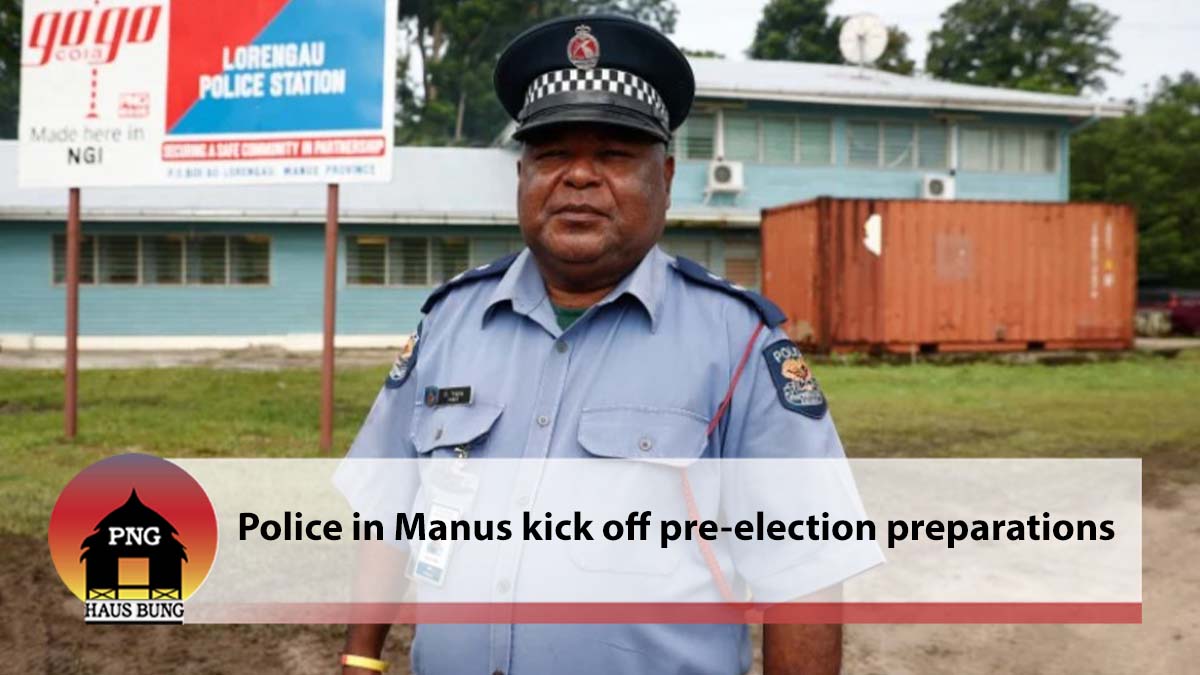 ELECTION AWARENESS IN MANUS KICKS OFF
Police in Manus Province have kick started their pre-election operations this week with the awareness drive conducted at main Lorengau town market.
Provincial Police Commander Chief Inspector David Yapu said despite the challenges including manpower and logistics problems, they are prepared to provide security operations for the elections.
He said he will utilise the PNG Defense Force personnel at the naval base at Lombrum along with Correctional Service personnel and Police reservists on the ground to boost manpower capacity for the election.
“The awareness is an important part of our preparations for the election and after the awareness in town areas, we will go into the LLGs and wards to conduct similar activities,” Mr Yapu said.
“We highlighted electoral offenses like bribery, double voting and undue influences in the awareness drive.”
“I appeal to our people to behave themselves during the elections and not to cause problems so as to see a free, fair and safe elections to vote for our leaders.”
Published on April 17, 2022
 PNC AIMS TO MAKE “FREE EDUCATION” A LAW
Making “Free Education” become a law in the country is one of the intervention the Peoples National Congress (PNC) Party has set to achieve in its policies heading into the 2022 National General Elections.
This was made known during the party’s three-day Convention held at the Crown Hotel in Port Moresby mid this week.
Party Leader and former Prime Minister Peter O’Neill said PNC sees education as a basic human right as it gives endless opportunities to younger folks and creates a way out of the poverty lines.
“PNC will provide free school fees for each student directly to the school from pre-school level up,” Mr O’Neill said.
“We will also build more classrooms and teachers’ houses and we will fight for skill-based training with more vocational and TVET centres.”
He further said the current student loan program by the current government will be changed as it a loan trap for the young students.
Instead Mr O’Neill said they aim to introduce National Scholarship again and will ensure all education facilities have access to the internet.
“We will also build more Universities including a medical University.”
The interventions the party aims to create in the education sector is one of the highlights made at the convention along with other interventions in the other key sectors.
Published on April 16, 2022
 UKRAINE WAR: 'HISTORICALLY SIGNIFICANT' DEFENCE OF UKRAINE IS 'TORMENTING' RUSSIAN TROOPS, SAYS ZELENSKYY
Ukraine's president says his military is "tormenting" Russian forces and their success in holding off invading troops has been "historically significant".
Ukraine landed a symbolic blow on Russia by sinking its Moskva missile cruiser on Thursday - a victory which has led to retaliatory strikes on Kyiv.
And while Kharkiv and eastern parts of the country come under renewed bombardment, Ukrainian president Volodymyr Zelenskyy says that when it comes to bringing about the "restoration of peace... our armed forces are doing it brilliantly."
"The success of our military on the battlefield is really significant," he said in a presidential address.
"Historically significant. But not enough to clean our land from the occupiers yet. We'll beat them more."
In other developments:
• Germany pledges €1bn in military support for Ukraine
• Ukraine's prime minister to attend World Bank and IMF meetings in Washington next week, US media reports
• Russia warns West of 'unpredictable consequences'
• Many of 900 civilians killed around Kyiv region were 'simply executed', says police chief
[caption id="attachment_20788" align="aligncenter" width="840"] The Moskva in Sevastopol, in occupied Crimea, on 7 April. Pic: Maxar Technologies via AP[/caption]
Russia 'will not be accepted anywhere anymore'
Mr Zelenskyy said his armed forces "are repelling the occupiers' attacks" and "carrying out counterattacks".
He added: "They have already tormented - in the true sense of the word - Russian conventional aviation so much that they are forced to use strategic long-range aircraft."
And he claimed that Russian troops in the Kherson and Zaporizhzhia regions have been "looking for anyone who has ever been associated with the Ukrainian army or government agencies".
"The occupiers think that this will somehow make it easier for them to control the territory. But they are wrong. They deceive themselves," he said.
"The problem of the occupiers is not that they are not accepted by some activists, veterans or journalists. Russia's problem is that the entire Ukrainian people does not accept it and will never accept it again. Russia lost Ukraine forever.
"Actually, it lost the whole world. It will not be accepted anywhere anymore."
[caption id="attachment_20789" align="aligncenter" width="873"] Anton Kuprin, the captain of the Moskva flagship that sank in the Black Sea[/caption]
Moskva 'hit by two Ukrainian anti-ship missiles'
Following the sinking of the Russian warship in the Black Sea off Odesa, Moscow said it would increase attacks on Kyiv in response to supposed Ukrainian military "diversions" on its territory.
Ukraine said it had hit the ship with missiles fired from the coast, but Russia claimed the Moskva went down as it was being towed to port in rough seas after an explosion of ammo caused a fire.
The US said it believes the vessel was hit by two Ukrainian Neptune anti-ship missiles.
Anton Gerashchenko, an adviser to Ukraine's ministry of internal affairs, shared a claim on the Telegram messaging app saying that the ship's captain, Anton Kuprin, died during an "explosion and fire on board".
Explosions were heard in Kyiv and other cities after the ship sank. Early on Friday, Russia claimed to have hit a factory in the capital that makes and repairs anti-ship missiles.
Russia 'shaping operations' ahead of Donbas push
As well as Kyiv, blasts were heard on Friday in the southern city of Kherson, the eastern city of Kharkiv and in the western city of Ivano-Frankivsk.
The Ukrainian capital has gradually displayed some signs of pre-war life after Russian troops failed to capture the city and retreated to focus on a concentrated assault in eastern Ukraine.
But the casualties in the Kyiv region are mounting.
The area's police chief said the bodies of more than 900 civilians have been discovered following Russia's withdrawal - more than 350 of them in Bucha.
Data indicated 95% of them were fatally shot, Andriy Nebytov said.
"People were simply executed in the streets," he said.
Evacuation efforts have continued across the country and on Friday, a total of 2,864 were able to leave conflict zones, including 363 people from the besieged port city of Mariupol, Ukraine claimed.
However, in Kharkiv, seven people were killed and 34 more were wounded during a shelling attack on a residential area, the region's governor said.
In the southern city of Kakhovka, two civilians died of shrapnel wounds after a rocket was shot down and five were injured, the area's local authority claimed.
Meanwhile, the Kremlin is continuing to marshal its forces for a renewed offensive in eastern Ukraine.
Extra equipment has arrived to the north of the Donbas region and in western Russia, according to a senior US defence official.
[caption id="attachment_20791" align="aligncenter" width="861"] A torn flag in front a wrecked apartment block in Mariupol[/caption]
The official said Russia was "shaping operations" but that the fresh offensive had not yet begun.
Further south, the besieged city of Mariupol remains contested between defenders and Russian forces.
Russia's naval forces have also moved further south following the sinking of the Moskva, the US official added.
SOURCE: SKY NEWS
Published on April 16, 2022
 ‘I THOUGHT I WAS BIGGER THAN THE CLUB’: SHARKS STAR OPENS UP ON REMARKABLE NRL COMEBACK
Sharks star Siosifa Talakai has opened up on his return to the NRL, admitting he thought his rugby league career was over years ago.
The 24-year-old made his first grade debut in 2016 for the Rabbitohs, but had his contract torn up by the South Sydney board and then coach Michael Maguire.
After spending the remainder of the season in Penrith’s reserve grade side after linking up with former Panthers general manager Phil Gould, Talakai had no contract offers and thought his time was up as a professional athlete.
“I thought my career was over back in 2018, I think I was a bit immature when I was at the Rabbitohs,” Talakai said to Fox League’s Jake Duke.
“I thought I was at the top of the club, I thought I was bigger than the club and just bigger than the whole NRL... and being a professional.
“(I was) young, but young and dumb, just silly mistakes, breaching contracts and an attitude thing.
“Had Greg Inglis, Sam Burgess, Adam Reynolds, Cody Walker, had all these big stars in my team and I thought I was one of them, but I was mud.”
Talakai revealed his sacking was “heartbreaking” after seeing the toll it took on his family, with a portion of his contract money going back to support his brothers, sisters, parents and grandparents.
“At the time, my dad was the main source of income and he was supporting six kids, my mum and my grandparents lived with us as well,” Talakai explained.
“He was the main income in a four-bedroom house, just seeing that (it was) very heartbreaking, the pressure that my dad had to go through week in week out making sure there was a roof over the top of our heads... it was heartbreaking just seeing that I wasn’t able to help my dad.”
But instead of holding it against the Rabbitohs, Talakai believes his sacking was exactly what he needed to learn his lesson, otherwise he probably “would have ended up in prison”.
To make ends meet and contribute for his family, the barnstorming backrower took up a job as a garbo, running the streets of Leichhardt and Balmain at 4am.
“It just grounded me,” Talakai said.
But his passion for rugby league never faded and the gun edge forward worked his way up the ranks in the Sharks feeder club, Newtown Jets, before his NRL return and securing a spot in Craig Fitzgibbon’s high-flying Sharks side.
Published on April 16, 2022
 UKRAINIAN POLICE SAY MORE THAN 900 BODIES DISCOVERED IN KYIV REGION AS RUSSIA PLEDGES MORE STRIKES AFTER HITTING MISSILE FACTORY
More than 900 civilian bodies have been discovered in the region surrounding the Ukrainian capital following the withdrawal of Russian forces — most of them fatally shot, police said.
The number of dead is double that announced by Ukrainian authorities almost two weeks ago.
Andriy Nebytov, the head of Kyiv's regional police force, said the bodies were abandoned in the streets or given temporary burials.
He cited police data indicating that 95 per cent died from gunshot wounds.
"Consequently, we understand that under the [Russian] occupation, people were simply executed in the streets," Mr Nebytov said.
[caption id="attachment_20758" align="aligncenter" width="867"] More than 350 civilians were killed in Bucha during the war with Russia.(AP: Rodrigo Abd)[/caption]
More bodies are being found every day, under rubble and in mass graves, he added.
The largest number of victims were found in Bucha, where there were more than 350, he said.
According to Mr Nebytov, utilities workers in Bucha gathered and buried bodies in the Kyiv suburb while it remained under Russian control.
He said that Russian troops had been "tracking down" people who expressed strong pro-Ukrainian views.
In the eastern Ukrainian city of of Kharkiv, Russian shelling hit a civilian area, killing seven people including a small child and wounding 34 others, the regional governor said.
The claims could not be independently verified.
Meanwhile a Ukrainian military factory outside Kyiv that produced missiles allegedly used to hit Russia's Moskva warship was partly destroyed by Russian strikes.
[caption id="attachment_20759" align="aligncenter" width="873"] The Vizar plant outside Kyiv — that produced missiles allegedly used to hit Russia's Moskva warship — was partly destroyed by Russian strikes.(AFP: Fadel Senna)[/caption]
Russia's defence ministry had pledged more strikes against the Ukrainian capital in response to attacks on Russian targets.
It added that Russian troops hit a "military" factory outside Kyiv late on Thursday (local time) using Kalibr sea-based long-range missiles.
A workshop and an administrative building at the Vizar plant, in the Kyiv suburb of Vyshneve near the international Zhuliany airport, were seriously damaged.
Around 50 vehicles parked near the plant had their windows blown out.
Russia had earlier announced it had hit the factory using Kalibr sea-based long-range missiles.
Russian strike appears to be retaliation for sunken ship
The strike came a day after Ukraine claimed it had destroyed Russia's Moskva warship, which Moscow later said had sunk.
Ukraine claimed the Moskva's damage was the result of one of its missile strikes.
Russia's defence ministry spoke only of a fire breaking out and of exploding ammunition. Moscow said more than 500 sailors had been evacuated, but there was no independent confirmation of the fate of the crew.
[caption id="attachment_20760" align="aligncenter" width="864"] Ukraine says it hit the Moskva, but Russia says the ship sunk after a fire broke out. (Reuters: Alexey Pavlishak)[/caption]
According to a statement on Ukraine's state weapons manufacturer Ukroboronprom website, the Vizar factory produced Neptune missiles.
Andrei Sizov, a 47-year-old owner of a nearby wood workshop, said the strikes came at night.
"Around 1:30 am, my security guard called me because there was an air strike," he told AFP.
"There were five hits. My employee was in the office and got thrown off his feet by the blast."
He believes Russia was taking revenge for the Moskva warship, saying: "They are making us pay for destroying the Moskva."
[caption id="attachment_20761" align="aligncenter" width="827"] The Vizar plant outside Kyiv — that produced missiles allegedly used to hit Russia's Moskva warship — was partly destroyed by Russian strikes.(AFP: Fadel Senna)[/caption]
The governor of Ukraine's southern Odesa region, Maxim Marchenko, had said on Thursday local time that the Ukrainian army had used Neptune missiles to strike the Moskva.
Moscow did not confirm this explanation for the sinking of its massive vessel, saying only that a fire broke out on board the 186-metre-long ship.
It said the cruiser sank during an attempt to tow it to the nearest port.
While two workers at the site of the Vizar factory told AFP the strike had not caused any casualties, Ukrainian authorities did not immediately confirm this information.
Cleaners were working to clear the rubble in the partly damaged administrative wing of the building.
[caption id="attachment_20762" align="aligncenter" width="868"] Hundreds of bodies have been discovered after Russian troops withdrew from the Kyiv region.(AP: Rodrigo Abd)[/caption]
Russian strikes in the Kyiv region have abated since the end of March, when Moscow withdrew its troops, saying it wanted to concentrate on Ukraine's south and east.
But Russia warned on Friday that it would intensify attacks on the capital after accusing Ukraine of targeting Russian border towns.
Kyiv denied this, instead alleging Russia had staged the incidents to stir up "anti-Ukrainian hysteria" in the country.
[caption id="attachment_20763" align="aligncenter" width="879"] Family members mourn the death of loved ones killed during the war.(AP: Rodrigo Abd)[/caption]
SOURCE: ABC NEWS
Published on April 16, 2022
 ATHLETICS PNG NAMES PACIFIC MINI GAMES SQUAD
Athletics PNG have named a strong team of 23 male and 14 female athletes for the Pacific Mini Games in June with two managers and six coaches to accompany the team to Saipan.
The team includes Pacific Sprint Queen Toea Wisil and Tokyo Olympian Rellie Kaputin with sprinters Leroy Kamau and Daniel Baul expected to lead the men's team.
President Tony Green said that the team will be looking for a strong showing at the Games as a result of the programmes that have been in place through the last two years.
Whilst many sports have been badly affected by venue closures especially in Port Moresby, athletics have been able to keep its squad members in shape by establish training groups in various centres including Kerowagi, Goroka, Kansas (USA) and Lae.
The World Athletics funded training programme for the 2023 World Cross Country Championships combined with support from PNG Air and Prima Smallgoods has been very good for the middle and long distance group.
The USA college programme will come to a conclusion in the third week of May at which time the athletes should be in peak form and following a short break they will then be able to focus on the Games, with Athletics scheduled for 21 to 25 June.
There are a small number of athletes with injury concerns who are being monitored, and one athlete currently undergoing rehab may be added subject to proving fitness to compete.
Plans are in place for the PNG based team members together with a small number of development squad members to attend the Oceania Championships which will be held in Mackay Queensland from June 7 to 9.
A number of athletes who require specialised coaching for the technical events will head to Queensland later this month for training under Head Coach Brett Green, Jumps/Multi event coach Phillip Newton and specialist hurdles coaches.
These include Rellie Kaputin and Eldan Toti (Jumps) ; Adrine Monagi and Daniel Baul (hurdles) ; and multi event athletes Karo Iga and Edna Boafob.
Green clarified that the final selection for individual sprinting events will be made by the coaches closer to the Games and will depend on fitness and performance of the athletes between now and June.
A number of para athletes are also being considered for the Games and their selection is expected to be finalised by the end of this month when the classification process and the necessary consultations are complete.
Head Coach Brett Green flew into the country on Monday to spend this week in Goroka with the coaches and PNG based team members.
The camp has several aims including team bonding, planning the final and more specific period of training and encouraging focus and goal setting.
The eight member management and the coaching team includes a mix of experienced coaches from both Australia and PNG and two coaches getting their first International assignment (Nelson Stone and Malcolm Limbai)
Image source: Athletics Podium
Published on April 15, 2022
 LACK OF POPULATION DATA HINDERS SERVICE DELIVERY
Morobe Provincial Government has raised a series of concerns over the services of village recorders in the districts.
Provincial Minister for Physical Planning and Monitoring Kunum Ameke said due to the non-availability of village recorders, there is no available database for the provincial government to be able to identify real statistics on the ground to deliver much needed basic services beneficial to the population in any particular area.
Due to nil existence of village recorders in the province, especially at the district level, the provincial government has no proper records on the number of people in an area and how much services is needed.
Mr. Ameke has therefore challenged the government to urgently engage village recorders to effectively take part in the delivery of services and play their roles in contributing to the development of the province in the future.
Image sourced: Paga Hill Estate
Published on April 15, 2022
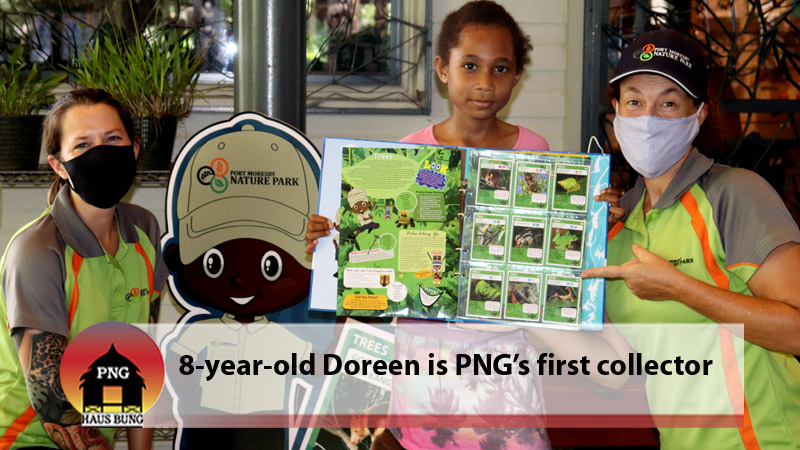 PNG’S FIRST COLLECTOR BY GRADE 3 STUDENT
As the momentum builds for the Wild Animal Collector Card series since its launch on the 3rd of March, the Port Moresby Nature Park is seeing kids of all ages visit to participate in the self-directed quiz and claim their Limited Edition cards.
One of these dedicated children is Doreen Lei, an 8-year-old grade three student, attending the Paradise College. Doreen is the very first person in all of PNG to complete the album and claim her Free Membership pass for the whole year. The race is now on to see who will be the next to make PNG history!
“I was not excepting to get anything or be the first to complete the album, I am quite surprised,” beamed Doreen.
Doreen convinced her dad, Barry Lei, to visit the Park on Tuesday so she could complete the quiz and collect her very last card.
The final piece of the puzzle was the fourth limited edition collector card and is only available by visiting the Park. Upon giving the correct answer at the park’s gift shop, Doreen was ecstatic to be given her last card.
“Every day as I came home from work the very first question Doreen would ask me was, ‘did you stop at the Stop&Shop, dad?’ She has learned so much from the card and regularly shares information with me about what a ‘vertebrate’ is or what ‘arboreal’ means. It’s a great education initiative about our PNG wildlife,” said Mr Lei.
Little Ms Lei also shared her favourite card as of the spider, ‘New Guinea Tarantula’ with the park’s CEO, Ms Kelsey Engle and the General Manager for the Life Sciences, Fiona Melvin.
“The Collector Card series is the first of its kind in PNG, so to be the first to collect the entire set is an amazing milestone! I am so proud that Port Moresby Nature Park has partnered with CPL to provide these FREE give away cards with your everyday purchases."
[caption id="attachment_20738" align="alignnone" width="596"] Winner, Ms Doreen Lei and father, Mr Barry Lei[/caption]
"All you have to do is carry out your everyday shopping at a Stop N Shop stores in Port Moresby- what could be easier! With 36 to collect I can’t believe how quickly Doreen and the Lei family has collected them. I am so excited to hear that she will be showing off her cards next week on her return to school. Its so important that our children learn about the amazing PNG wildlife- so much of it is only found here, so if we don’t look after it, who will. The cards and album are full of fun games and activities that the family can do together as well."
"Doreen is the most amazing little girl and she should be very proud of her achievement. She is a wonderful advocate for our wildlife and I can see an amazing future ahead of her. Well done Doreen (and her father, Barry!".
"For anyone struggling to find that one or two last cards- stay tuned on our socials – we will be organising a day at the park where you can bring along your cards and swap with other collectors. I can’t wait!”
"The Wild Animals Collector Card Series is a family-oriented activity, which aims to provide educational learning opportunities for children across PNG on PNG’s wildlife, while at the same time, rewarding supporters of both CPL Group and Port Moresby Nature Park."
"Thanks to CPL Group, the Nature Park can encourage children and local communities and to develop a love for the natural environment and protect it. With little changes made by everyone, we can make a big difference."
“We hold the value and promise to PNG that we, as the leading multi-format retailer in PNG, we are committed to being responsible to our people, our communities and our environment."
"Learning should be a life-long process and it is an important ethos to instil in the young. Our SNS stores strive to have innovative partnerships with our farmers, nutrition specialists, and those who promote the protection of the natural environment. For it is the stewardship of the environment that we contribute to a higher quality of life and which aligns to the vision statement of the CPL Group to help Papua New Guinea lead healthier and better lives,” said Mr Navin Raju- CPL Group CEO.
Port Moresby Nature Park is a charity organisation that relies on grants and donor funding to operate. By visiting the Park and joining its Annual Membership Program, you help support the Park’s efforts in preserving PNG’s unique natural environment for future generations, including the 550 resident animals, majority which have been surrendered to the Park for care.
Published on April 15, 2022
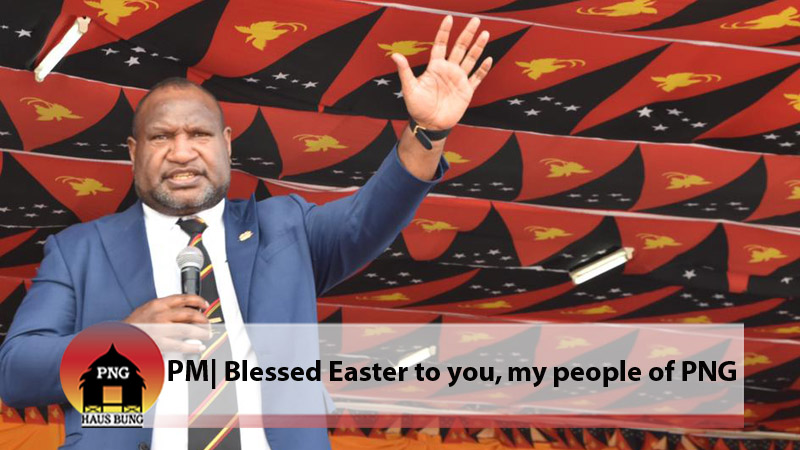 BE STEADFAST THIS EASTER
"Blessed Easter to all Papua New Guineans."
Easter is a time for all Christians to remember our Lord Jesus Christ who was crucified and died on the cross for the gift of salvation to all mankind.
It is a time to reflect on ourselves in our life’s journey and appreciate our existence here on earth.
Fellow Papua New Guineans, while most are used to the meaning of Easter as the death, resurrection and ascension of our Lord Jesus Christ and the gift of salvation for all people, there is another message we as the people of a Christian Nation can take from the events of Easter.
Like every bible story, tumbuna story or Brother’s Grim Tales that we have heard growing up, those stories have a moral message behind them.
The Easter Story of Our Lord Jesus Christ not only brings a message of hope but also brings an underlying message of staying steadfast to your faith and principles despite everything that is going wrong around you. To look at the bigger picture or the long term gain.
In the case of our country, we want to “Take Back PNG” from complacency and corruption and to improve our country’s economic outlook.
When my Government came into Office in 2019, our vision was to Take Back PNG; getting more from our resources for our people; reforming laws and policies to prevent wastage of our limited financial resources; encouraging our people to aim to become financially independent by going into SMEs and creating cheap financial facilities to help them achieve that goal and working towards reducing debt and eventually becoming debt free so we could have surplus in our national budget.
However, the COVID-19 pandemic threw a wrench in the works when it arrived after the 2019 National Budget was passed. This was a situation that we did not expect to hit us this early so we put our limited resources into growing the economy.
On that note, I would like to take this time to thank our people for respecting and tolerating the Government’s decision to do a hard lockdown while systems were put in place to help us mitigate and reduce the spread and impacts of COVID-19.
And by the grace of the Good Lord, the impacts of the pandemic on the health and wellbeing of our citizens were less than predicted by the health experts around the world and in the region.
As of 12th March, 2022, we have reported a cumulative total of 43,615 cases, including 89 news cases out of 249, 149 people tested. Active cases are 60 while 42, 906 people have recovered. Total number of people vaccinated is 348, 938.
To those who have lost a loved one to the pandemic, our prayers and thoughts are with you during this time.
The current challenging economic conditions facing the country today are a direct impact of the COVID-19 pandemic.
When my Government came into Office, economic conditions were relatively good.
Economic conditions have changed since, particularly in light of recent challenges such as COVID-19 and COVID-19 restrictions that impacted international trade movements for almost a year in 2019 – 2020.
When my Government took Office, the pandemic had just hit our shores and there were no funding contingencies in the 2019 O’Neill Government passed National Budget to support the economy should there be a global pandemic or any other form of crisis that may affect our economy.
Since then, to keep the economy running despite the global market being impacted by COVID-19, my Government successfully secured at concessional rates around K6.3 billion (USD$1.9 Billion) from multilateral and bilateral partners, which were invested in the Government’s wealth creation and sustainable development agenda under the ‘Take Back PNG’ slogan.
Significant examples of investing in wealth creation and sustainable development agenda is the K200 million parked in the Bank South Pacific (BSP) and the National Development Bank (NDB) through the Sector Lending Programs for SME support and stimulus packages.
The Government has further invested K50 million in commodity price support and agriculture intervention for major agricultural commodities such as coffee, copra, cocoa and vanilla.
In terms of price support, Government has allocated funding from the K50 million to increase the price of cash crops so that farmers can get a reasonable income for the work they put in to help grow our economy.
The Marape-Basil Government has also allocated K20 billion in the 2021 National Budget for infrastructure development projects like major roads, airports, seaports upgrading & development and Connect PNG.
The Connect PNG Program has seen new roads, which are the missing links that can connect more rural areas to districts and provincial centres, cut through some of the most rugged terrains.
Two of those missing links recently cut are the Enga to Sepik Highway and the Erave to Kikori Road. The Enga to Sepik highway has reached Maramuni at the border of Enga and Sepik Province.
Two of those missing links recently cut are the Enga to Sepik Highway and the Erave to Kikori Road. The Enga to Sepik highway has reached Maramuni at the border of Enga and Sepik Provinces.
The Wabag to Maramuni stretch of Road is about 52 kilometers and was built at the cost of K15 million, which according to the engineers who worked on the road is less than what is would have cost if the people (landowners) in the area did not work with the Government to make the road become a reality.
As a result of working together with the people, the first vehicles to reach Maramuni, arrived on the 16th of September, 2020. The emotion on the faces of the people, as seen on a documentary put together by Scott Waide of Lekmak for the Minister for Fisheries and the Member for Wabag Dr. Lino Tom, it was a dream come true for them.
One man cried and said to Dr. Lino; “I have always wanted to see a vehicle arrive in my village but I never dream that I would actually see it happen my lifetime. Now that I have seen it happen, I can died a happy man.”
The current Government has also successfully negotiated mining and petroleum projects for Porgera, P’nyang and Papua LNG projects, with greater benefits for the people.
My Government has also embarked on the Public Sector Reforms such as the Cost Rationalization in key government agencies & provinces and City Authorities established.
According to the World Bank overview of the PNG Economy, as a result of the pandemic, the real GDP of PNG decreased by 3.8 percent in 2020. This was due to the fact that not only was the global commodities prices affected but also due to hard lock-downs of countries that PNG trades with.
There was also the foreign currency exchange as well which is also affecting the cost of goods and services too.
The World Bank forecasts that the country’s economy is expected to grow by 3.5 percent in the period of 2021 – 2022 but it will be less than 9 percent of what was predicted before the pandemic.
At this stage of the pandemic with new strains of the various being identified, the health, recovery and resiliency of the economy is largely dependent on the Health Sector’s response to the pandemic; therefore, we have invested K600 million into the Health Sector in the 2022 National Budget.
Over the years, we have lost some great minds and even young people to cancer, who could have contributed so much to Papua New Guinea.
We were also unable to maintain the existing facilities we had because we did not foresee that 911 would happen, making the world put restrictions on the import of cobalt that we desperately needed for our existing cancer facilities.
I humbly seek your understanding and tolerance over this matter and I pray for peace in the hearts of those who have lost a loved one during the time we tried to get legislations in place to meet international requirements for importing cobalt.
Now that we have the Radiation Safety and Control Act 2019, the Government has now embarked on building a world-class Cancer treatment facility at the Port Moresby General Hospital under the Government’s Public Investment Program (PIP).
The first phase of the project, which are cancer treatment bunkers, has already been completed and there are three more phases to go before completion. Once completed, people to seek treatment here and not overseas thereby reducing the stress on their finances.
The Government has also funded the building of a fully equipped Catheterization Laboratory for Heart Surgeries on the second floor of the Port Moresby General Hospital. This was opened in 2019 and Surgeries have been conducted here at a lesser cost for the people.
Another world-class facility is the Enga Provincial Hospital that will soon be completed. This facility will also have a Cancer and Heart conditions treatment facilities and can be accessed by all Papua New Guineans.
I know a lot of our people are now feeling the pinch of the contracted economy of our country with an inflation of more than 6 percent on basic goods. This was forecasted in the money plan for 2022 and we are keeping an eye on the situation to manage it better so no serious adverse effect is felt by the people.
In doing our bit to reduce the financial burdens put on our people, my Government is covering the cost for Education for children from Elementary to Grade 12, making Education Free for this year.
In terms of your children who are or will be taking places in Tertiary Institutions, we have introduced the Higher Education Loan Program (HELP). Through this program, we are making available funding that can be borrowed by students, not their parents, and successfully students who get the loan will repay it back to the government for others to access when they start working.
This program was put in place to assist those who have secured places in tertiary institutions but due to their families financial constraints, may choose to withdraw. My Government does not want students to drop out from constraints, may choose to withdraw.
My Government does not want students to drop out from school. We want to see all Papua New Guineans get an education so that you can also contribute towards taking back our country. On this note, the main Easter message that I would like to get to you is that you, the people are the Government.
We, your elected leaders, are the people you trusted to better manage the systems in place to support you. Therefore, we cannot bring change and prosperity to our country on our own without your contributions as well. The Government’s plan to take back PNG will not yield results quickly.
We will see results in the next 10 to 20 years. I now ask you all to be steadfast in your belief that your Government has your best interest at heart and will do everything it can to improve your wellbeing and livelihood.
Here I leave you with bible verses with a message of hope after all obstacles are faced to reach our goal.
“1 Peter 1:3: "Praise be to the God and Father of our Lord Jesus Christ! In his great mercy he has given us a new birth into a living hope through the resurrection of Jesus Christ from the dead.”
“1 Corinthians 15:21: "For since death came through a man, the resurrection of the dead comes also through a man." “Arise, shine; for thy light is come, and the glory of the Lord is risen upon thee. For, behold, the darkness shall cover the earth, and gross darkness the people: but the Lord shall arise upon thee, and his glory shall be seen upon thee. And the Gentiles shall come to thy light, and kings to the brightness of thy rising” (Isaiah 60:1–3).
Blessed Easter to you, my people of Papua New Guinea.
Published on April 15, 2022
 2022 DIGICEL CUP SEASON TO KICK OFF
The Papua New Guinea National Rugby League Competition (PNGNRLC), managers of the domestic semi-professional rugby league competition, the Digicel Cup, have released the fixtures draw for the 2022 season.
Round 1 will kick off on Sunday 24 April with double headers in Port Moresby and Lae, and matches in Wabag and Goroka.
The twelve franchises will be competing over 17 rounds and 4 weeks of finals, with the Grand Final set for 25th September.
There will be no games for two weeks during the polling period of the National General Elections in late June- early July.
Other venues will be Minj, Kokopo and Kimbe. Hela Wigmen’s future venue in Tari is expected to be completed during the year while PRK Mendi Muruks home venue is unavailable due to construction works.
Moniplus Port Moresby Vipers have requested for their home games to be held at Sir Hubert Murray Stadium but this is yet to be approved by the Board.
PNGNRLC Chairman Adrian Chow, re-elected for another 3 year term at its AGM last weekend, said that the Digicel Cup competition was the vital link between the masses of players in schools and local leagues, and the high performance levels of the Hunters, Kumuls and Orchids.
The franchises were urged to play their role in promoting game development in the provinces, in alignment with PNGRFL’s objectives, as the future of the game depended on the upcoming players and officials.
With the RLWC taking place in England in October, there are opportunities for players in the national competition to gain selection to the squad.
He thanked Digicel PNG for entering its 12th year as Naming Rights Sponsor of the national competition and stated that PNGNRLC management would be working closely with Digicel to deliver entertaining rugby league on field and on screen. SP Brewery will be continuing as Platinum Sponsor.
Digicel PNG Vice President Lorna McPherson speaking at this week's press conference said that Digicel has supported the semi professional league since 2011.
“Digicel Papua New Guinea supports the development of the people of Papua New Guinea, and we remain committed to sponsoring the local sports, talent and our national sport, rugby league, through the PNGNRL.”
“Our commitment is playing a part in any form of development in PNG,” McPherson said.
McPherson added that as major sponsors Digicel is proud to bring live rugby action through their platforms TVWAN and LOOP PNG as they recognize the importance of rugby league as a sport that promotes discipline, builds character and encourages good sportsmanship.
Papua New Guinea National Rugby League Competition Manager Mr Ora Gairo stated that this year anticipates a better season with the Banis Protocols continued to be observed.
“It’s totally different from last year where we were concentrated in just Lae and Port Moresby without crowds, but for this year, we’ll have crowds for the games starting round 1,” Mr Gairo said.
On behalf of the Papua New Guinea Rugby Football League, Chief Executive Officer Mr Stanley Hondina thanked Digicel PNG for extending their commitment to rugby league.
“We are fortunate to have people like Lorna on the Board who understands the big picture of rugby league,” Mr Hondina said.
Round 1 will see double headers in Lae and Port Moresby, while Goroka and Wabag will host a match each on the 24th of this month.
Published on April 14, 2022