POSTS BY AUTHOR
PNG Haus Bung
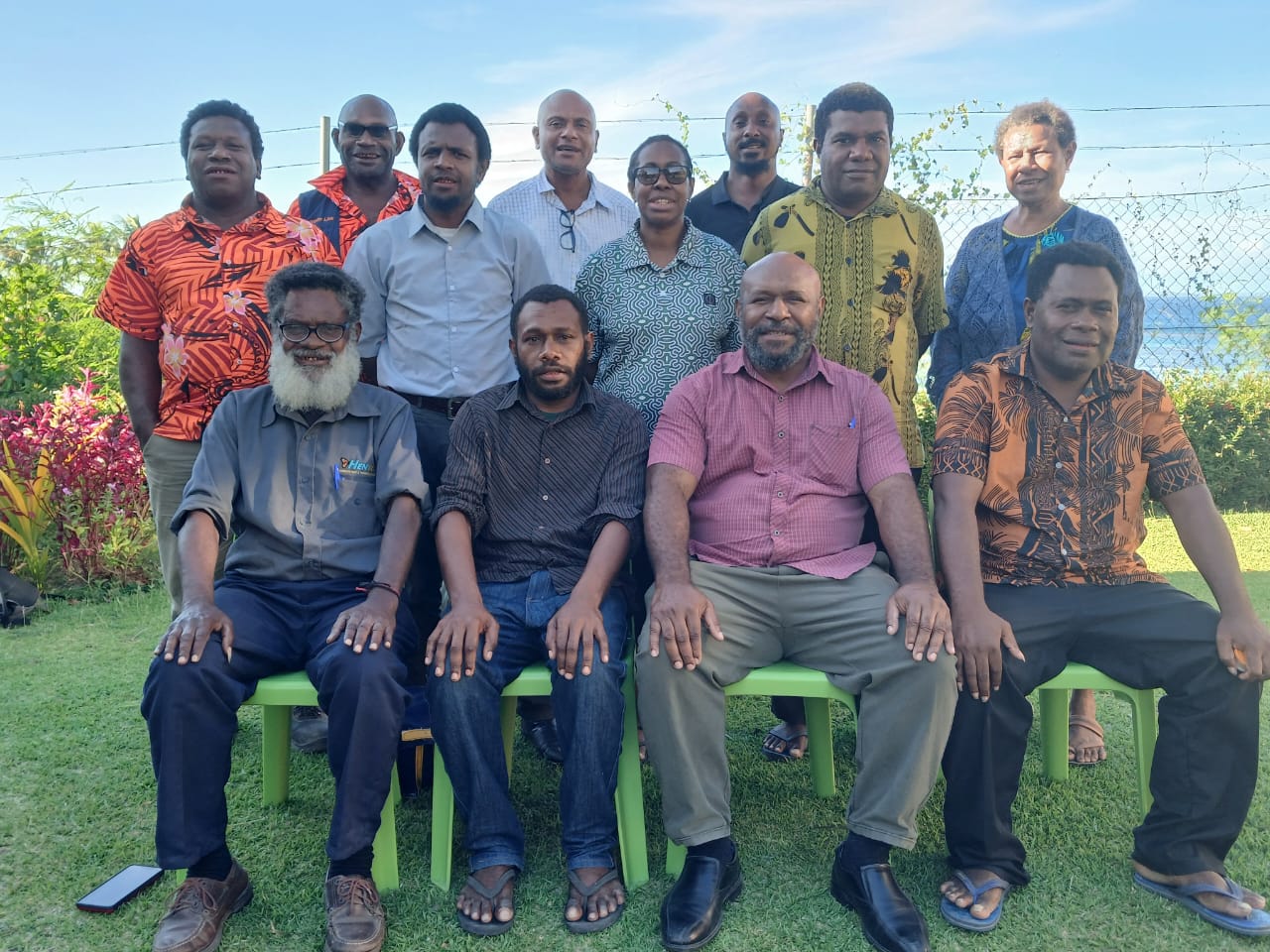
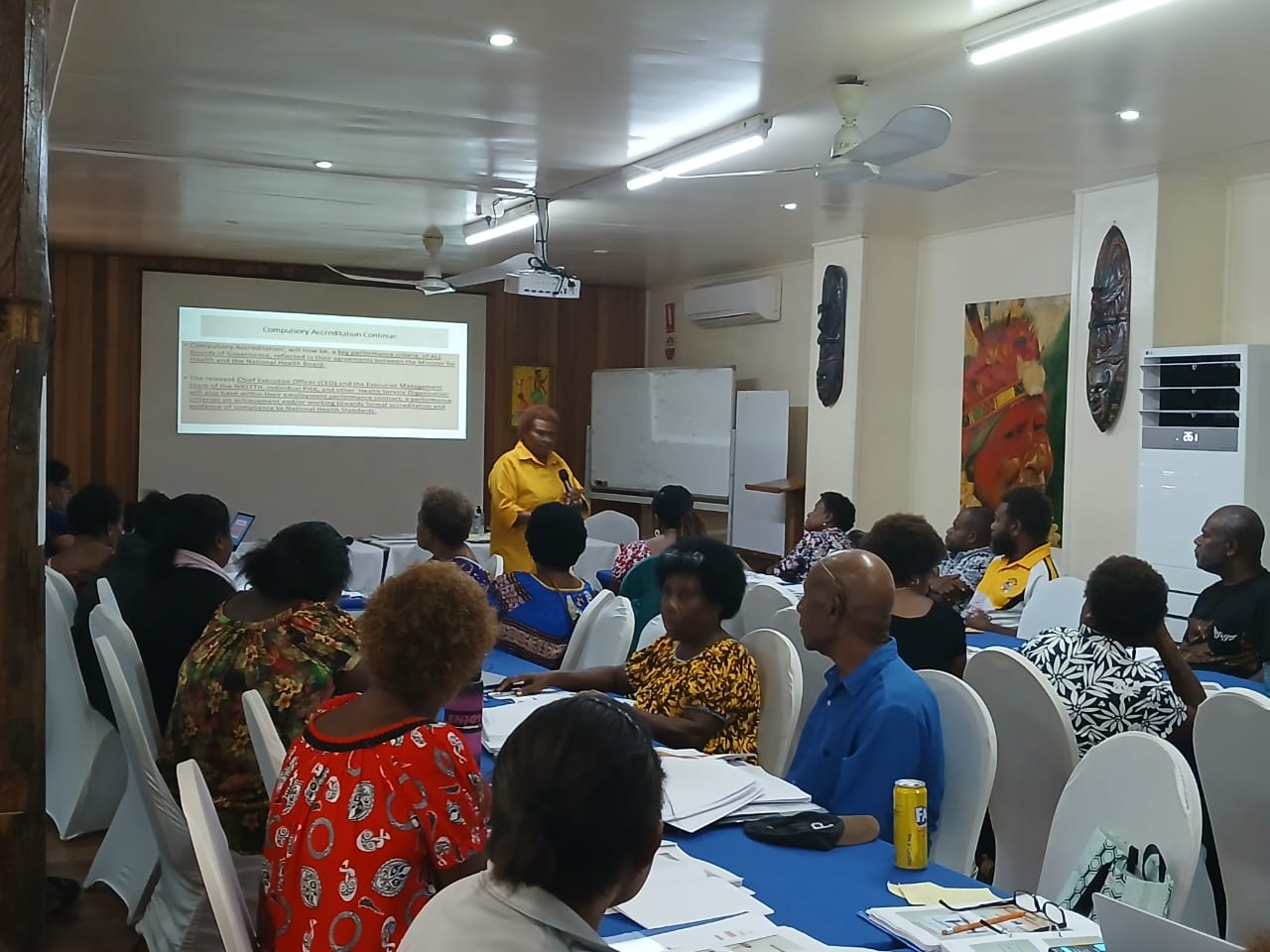
PNGEC HOSTS WORKSHOP IN PREPARATION FOR 2027 NGE
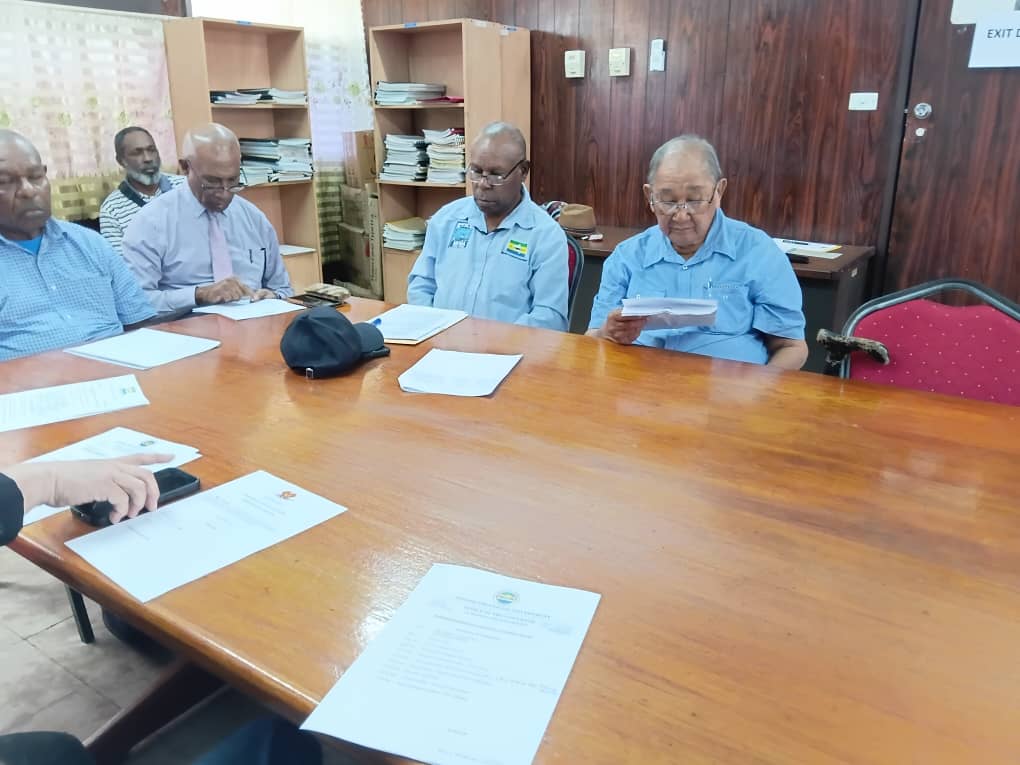
The PNG Electoral Commission (PNGEC) is holding a week-long strategic planning workshop in preparation for the upcoming National General Elections (NGE) in 2027.
This began on Monday with training and induction for new Temporary Election Workers (TEWs) from head office who had recently signed new contracts.
Acting Electoral Commissioner Margaret Vagi when addressing the new TEWs said that apart from educational qualifications and experience, character and personality are vital in effectively carrying out your duties and making a positive impact in meeting the Commission’s goals.
“The PNGEC is a tough organization to work with in delivering successful elections but working as a team we have and can overcome the challenges,” she said.
The induction saw an introduction to the Public Service General Orders and internal PNGEC and Electoral Laws and applicable by-laws.
Meanwhile, Deputy Electoral Commissioner Kila Vaname, congratulated and encouraged staff to take time to read and understand the electoral rules and regulations that guide the work of the commission.
The induction was facilitated by the Human Resource Branch headed by Director Oscar Pomaleu.
On Tuesday, the Senior Management Team (SMT), middle management and senior officers, started the Strategic Planning workshop which will conclude this Friday.
This began with a review of the Annual Management Report and Annual Branch Activity Plans for 2026 and into 2027.
The Commissions major activity task for 2026 is the Electoral Roll update, Procurement of big-ticket items, Awareness and Training prior to the 2027 NGE.
The Acting Electoral Commissioner has aired concerns on funding that is required during the first and second quarter of this fiscal year to allow her and the Electoral Commission to prepare well for 2027 National Elections.
The procurement process takes two to four months depending on availability of required materials in country.
She said it is important that consideration be given on funding soon.
Following this workshop will be an Electoral Manager’s workshop in February 2026 to confirm strategies and implementation plan for 2026 and 2027.
Published on January 29, 2026
AROPA AIRPORT UPGRADE WORKS PROGRESSING WELL
Travelers and airline operators are being advised that ongoing upgrade works at Kieta (Aropa) Airport in the Autonomous Region of Bougainville will lead to temporary operational restrictions, as the National Airports Corporation (NAC) prepares to commence Stage 4 of its Method of Works Plan (MOWP) late next week.
The airport upgrade, which began in October 2025, has so far progressed through Stages 1 to 3, achieving approximately 38% completion of both airside and landside works.
During these stages, ATR 72 and Dash 8 or similar aircraft have continued operations without interruption.
With the start of Stage 4 on 31 January 2026, the runway will be temporarily shortened from its existing 1,525 meters to 810 meters, allowing essential construction to continue.
NAC has warned that during this period, regular public transport (RPT) flights may be temporarily suspended, depending on airline operator decisions.
The full runway upgrade is expected to be completed by April 2027, covering all 10 stages, ensuring the long-term safety and continued operation of Kieta Airport.
NAC confirmed that all work schedules remain subject to weather conditions, and stakeholders will receive ongoing updates.
The Corporation appreciates the public’s understanding and cooperation during the temporary restrictions.
“We are working closely with our contractor to complete the works on time while minimizing disruption to airport operations.”
Published on January 29, 2026
PORT MORESBY NATURE PARK TO HOST ‘REVERSE THE RED’ DAY
Port Moresby Nature Park will host its first-ever Reverse the Red Day on Friday, 6 February, joining a global effort to halt and reverse species extinction.This international initiative highlights successful conservation actions and raises awareness on protecting Papua New Guinea’s threatened wildlife and will showcase the Park’s ongoing biodiversity work and acknowledge the support of partners, sponsors and the local community.
PNG, as a member of the United Nations, actively participates in international agreements such as the United Nations Framework Convention on Climate Change (UNFCCC) and the Convention on Biological Diversity (CBD).
These conventions underscore the global urgency to address human impacts on climate and biodiversity.
In line with these commitments, PNG is currently reviewing its National Biodiversity Strategy and Action Plan to guide future conservation efforts.
As one of the implementing partners, Port Moresby Nature Park contributes through species recovery programs, habitat restoration across its 30-acre grounds, and public education initiatives that reach more than 35,000 students each year.
The Reverse the Red campaign aims to move species away from the International Union for Conservation of Nature (IUCN) Red List’s threatened categories towards recovery, reinforcing the message that coordinated action can secure a sustainable future for Papua New Guinea’s unique flora and fauna.
Published on January 29, 2026
ABG REJECTS A PROPOSED PARTNERSHIP BETWEEN BCL & CMOC
The President of the Autonomous Bougainville Government (ABG), Ishmael Toroama, has confirmed that the ABG has rejected the proposed partnership between Bougainville Copper Limited (BCL) and CMOC Group Limited in relation to the Panguna project.
This decision follows careful consideration and reflects the ABG’s position as the majority shareholder with a combined 72.9 per cent ownership in BCL. The President has affirmed that the ABG does not authorize any proposal involving equity participation or dilution of its shareholding in BCL arising from the Expression of Interest partnering process undertaken by BCL.
BCL has been directed to discontinue further progression of the CMOC proposal and the related partnering process and to instead pursue engagement with Lloyds Metals & Energy Limited as the ABG’s preferred partner under a contract mining or services partnership model, which should not affect BCL’s EL01 license standing or ABG’s shareholding in BCL.
This direction reflects ABG’s policy position that Bougainville is to retain ownership and control while engaging experienced operators through clearly defined contractual arrangements.
The ABG remains committed to progressing the Panguna project in a lawful, transparent, and orderly manner that serves the long-term interests of the people of Bougainville.
Published on January 29, 2026
RESEARCH VITAL TO GROW PNG'S AGRICULTURE SECTOR
Agricultural research must play a central role in transforming Papua New Guinea’s farming sector from subsistence-based production to a commercially competitive industry according to National Agricultural Research Institute Director General Dr Nelson Simbiken.
Dr Simbiken said research is not an academic exercise but a practical necessity that directly addresses the challenges farmers face from production to market access.
He said strong research systems are critical for improving crop productivity, reducing post-harvest losses, increasing value addition and ensuring agricultural products meet quality standards required for domestic and export markets.
Established in 1996, NARI’s mandate is to enhance productivity, efficiency, stability and sustainability within the smallholder agriculture sector, which supports the majority of Papua New Guinea’s rural population.
Dr Simbiken said over the past three decades, NARI has built a strong technical foundation, releasing more than 27 improved crop varieties including taro, rice and banana varieties that are now being adopted by farmers and commercialized.
He said these innovations have contributed to improved food security and better livelihoods for rural communities across the country.
However, Dr Simbiken acknowledged that having technology at the farm gate is only the first step, and that significant gaps remain in post-harvest processing, value addition and market access.
“The challenge now is to transform these innovations into high-value products that reach the kitchen table and the global market,” he said.
To address this gap, Dr Simbiken stressed the importance of public-private partnerships, saying the private sector has a key role to play in processing, logistics and market development.
He also highlighted the need for stronger government support, describing agricultural research as a public good that requires state intervention to de-risk innovation and encourage private sector investment.
Dr Simbiken said NARI is advocating for the establishment of a national agricultural innovation grant scheme, which would provide targeted funding to support research, development and commercialization.
He said strengthening research investment is essential if Papua New Guinea is to achieve long-term goals under the National Agriculture Sector Plan, including food security, job creation and the transformation of subsistence farmers into tax-paying commercial producers.
Dr Simbiken said Reset 50 represents a long-term commitment to turning research into tangible economic outcomes and building a resilient and prosperous future for rural communities.
Published on January 29, 2026
KULUNGERE ROAD OPENS, LINKING COCOA FARMERS TO ESSENTIAL SERVICES
Communities in Kulungere of Evon Gore area in Sinivit Local Level Government (LLG), Pomio District, of East New Britain province, now have improved road access to essential public services and market access.
Thank you to the National Government, supported by the World Bank through the PNG Agriculture Commercialization and Diversification (PACD) Cocoa Project.
The 4km road was officially opened on Monday 26th of January 2026 by the East New Britain Governor Michael Marum, Cocoa Board of PNG Chief Executive Officer (CEO) Jesse Tukup Anjen, and World Bank Division Director of Papua New Guinea, Solomon Islands and Vanuatu Han Fraeters.
Road contract was awarded to Kokopo Plant Hire Ltd in February 2025 and was completed last December for a contract value of K5.7 million.
Kulungere feeder road serves more than 2,000 people of the Upper Evon and Kulungere Communities.
Of these, almost 250 households benefited from the PPAP Project under the Growers Partnership under Call 1.
Senior Engineer Raymond Paulias highlighted key components of the rehabilitation works.
He said the scope of works involved rehabilitation the existing dilapidated road to all weather condition to ease market access constraints for the Cocoa growing community.
The community had struggled for many decades without this road access and is extremely pleased with the road and World Bank for providing loan finance to the National Government for it to be rehabilitated.
The works included the installation of the following:
· 2 Concrete Causeway Crossings over 2 existing rivers.
· 3Km of Longitudinal roadside Lined Drains.
· 18 No. Cross Drainage Culverts.
· 800m of 150mm depth x 3m wide concrete pavement on critical steep sections; and
· 200mm depth of road base pavement layer.
“The rehabilitated road now enables vehicle access to the community not only for cocoa market access but also for improved access to education and medical facilities- particularly for medical emergencies,” noted Mr. Paulias.
“It opens more economic opportunities, as evident with locals erecting new trade stores and kiosks along the road since works commenced.”
Meanwhile, CEO Jesse Tukup Anjen, encouraged communities to protect the new road and continue expanding cocoa production.
He urged the communities to embrace this road, look after it and do maintenance so that the road will last long.
He thanked the World Bank and the National government for believing in these partnerships and the continuous working collaborations and now they are here to see the money being materialized and our people get the direct benefit.
Furthermore, Governor Marum echoed similar sentiments, thanking the World Bank and National Government for their partnership in ensuring local farmers can bring produce to market more efficiently.
The Kulungere Road is one of three Agriculture Roads rehabilitated under the Component 2 - Agriculture Roads of the PACD Cocoa Project.
Published on January 28, 2026
RABAUL LEADERS COMMIT TO ACCOUNTABILITY THROUGH NEW KPI FRAMEWORK
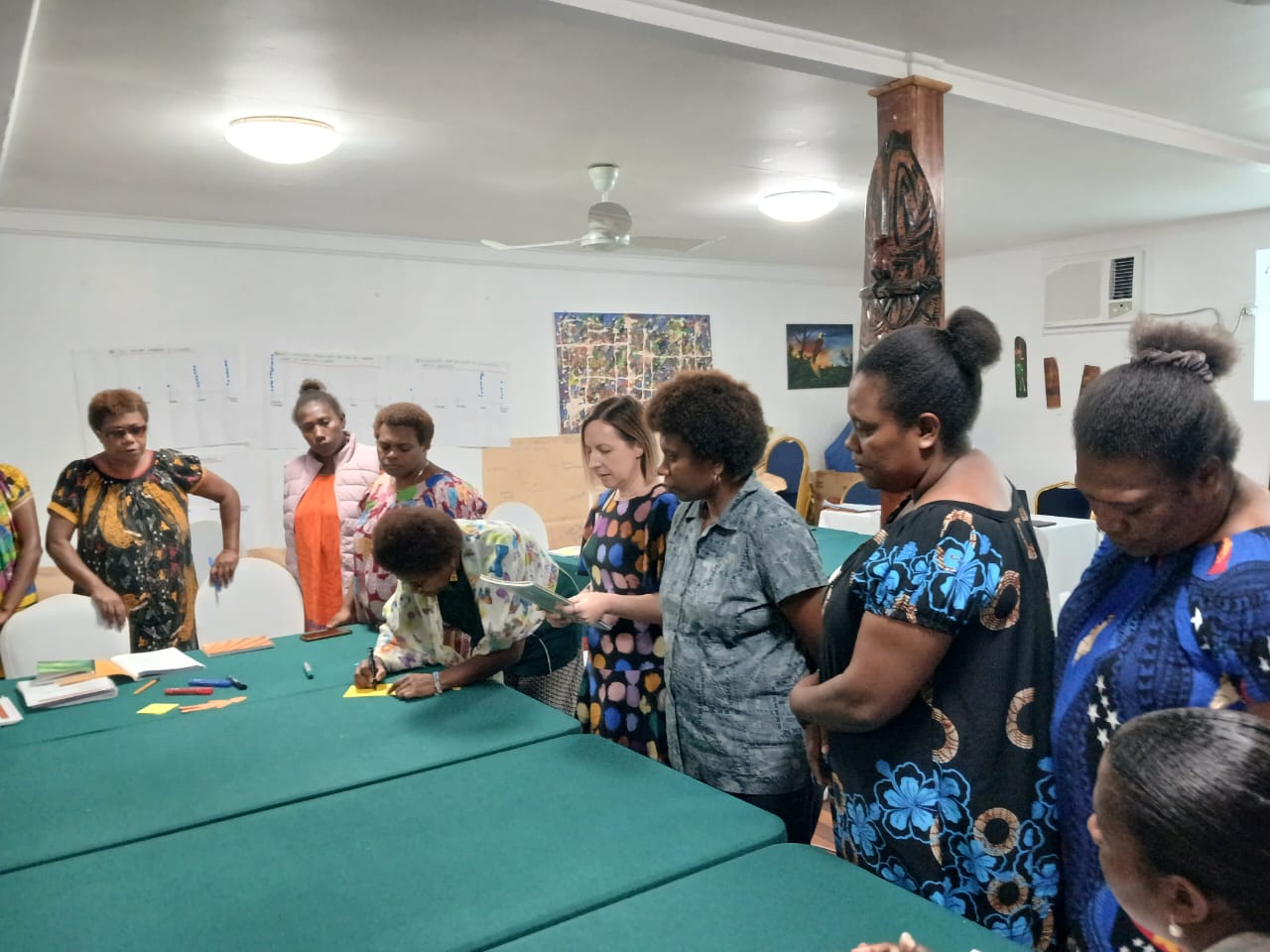
Local Level Government (LLG) and Ward leaders in Rabaul District in East New Britain province, have successfully completed their respective Commitment and Performance Agreements signing last week after a week-long LLG leaders Induction Program conducted at Malaguna Secondary School Hall.
These Key Performance Indicators (KPI’s) signing aims to assist the leaders in better understanding their roles and aligning their work starting from the LLG presidents down to the ward members, ward recorders and their respective Ward Development Committees.
The KPI agreement outlines tasks and activities for the year including the key indicators, progressive or completion status from the 1st to 4th quarter as well as remarks.
Witnessing the LLG and Ward leaders KPI signing today was Deputy Provincial Administrator for District, LLG and Ward Affairs- Danley Puapena, who emphasised on the importance of having KPI’s as it is a guide for leaders in implementing their programs.
“This is the first time we are doing KPI signing for our LLG and ward leaders.”
“We normally do for our public servants at the beginning of the year and with the inclusion of our LLG political leaders, we can work together in serving our people.”
He further said that it is required by law to sign a contract to serve our people.
Mr. Puapena added saying that apart from their Declaration of Oaths for Office and Loyalty, they are also required to sign their work Commitment Agreements which will monitor their KPI’s.
Meanwhile, Acting Human Resource Advisor Rose August, also went through with the participants the checklist for initial tasks for LLG leaders to kick off their duties for the year.
She went on outlining the LLG president and mayor’s initial tasks checklist which includes:
1. Establishing administrative buildings in a more central location, which for Rabaul District, LLG Administrative Offices is in place.
2. Endorse/Approve Respective LLG Standing Orders
3. Develop respective LLGs & Wards 5 Year Development Plans
4. Establishing Ward Community Halls
5. Developing and passing of LLG and Ward Laws and.
6. Identify Internal Revenue Sources and encourage imposing of Head and Back Taxes in the respective Wards
The Advisor said that ward members have some similar roles, however more focused at the ward level.
She also said that they must understand their roles and responsibilities, review existing records, meet other ward officials and community leaders to be familiarized with the community and their people.
The Rabaul District LLG Leaders one-week Induction program ended with the KPI’s signing and presentations from Finance and Parliamentary Services.
Published on January 28, 2026
MADANG PASSES ITS 2026 PROVINCIAL BUDGET
The Madang Provincial Government has officially passed its 2026 provincial budget totaling K474,474,322 during an assembly held today at the Madang Provincial Government House.The budget was presented by Madang Governor and Provincial Member Ramsey Pariwa before Local Level Government (LLG) Presidents, provincial department representatives, and members of the public who attended the meeting.While delivering the budget, Governor Pariwa described it as a practical and focused financial plan aimed at addressing the province’s most pressing needs.“I must say, this budget is realistic and fairly represents the priority areas in Madang Province,” Pariwa said.The Governor welcomed the presence of fellow leaders, MP for Usino-Bundi Gama district, Vincent Kumura and MP for Middle Ramu Kansol Harwaii Kamdaru, acknowledging their attendance and support.“This is your house, and I am happy to see you here,” he told the members.Governor Pariwa stressed that accountability and proper planning will be key in the implementation of the 2026 budget. He urged LLG Presidents and departmental heads to develop clear activity plans before seeking funding support.“The Madang Provincial Government will not fund any project that does not have an activity plan,” he stated.He further highlighted that the 2026 budget is focused on improving economic development, strengthening infrastructure, and supporting education across the province.Pariwa also issued a strong warning on the misuse of public funds, calling for discipline and good governance at all levels of administration.“There should be no misappropriation and misuse, as the law will deal with you,” he saidThe K474 million budget is expected to guide development priorities and service delivery throughout Madang Province in 2026.
Published on January 28, 2026
PARADISE HIGH & JUBILEE SECONDARY CROWNED WINNERS OF PNG@50 SCHOOLS TECH COMP
Paradise High School and Jubilee Secondary School in Port Moresby city have respectably emerged as top winners in their category at the National Information and Communications Technology Authority’s (NICTA) PNG@50 Schools Technology Competition, an initiative designed to inspire innovation and digital creativity among young Papua New Guineans.
The winners were officially announced and awarded their prizes on 27th January 2026 in Port Moresby, marking the culmination of a nationwide school’s competition held last year under the theme “Connecting Generations: 50 Years of Telecommunications in Papua New Guinea.”
The competition brought together primary and secondary students from across the country, challenging them to imagine how technology can bridge distances, preserve culture and improve everyday life in schools and communities.
NICTA organized the competition as part of PNG’s 50th Independence anniversary celebrations, with the aim of promoting creativity, imagination, innovation and digital literacy among students.
The Primary School Competition, titled “My Dream Device,” invited students to design original artwork and write short descriptions of futuristic communication devices that help people stay connected across generations.
The Secondary School Competition, known as the App Design Concept Challenge, required students to identify real-world problems in their schools or communities and propose digital solutions aligned with the “Connecting Generations” theme.
Primary School winners.In the Primary School category, Paradise High School dominated the top positions:
• 1st Place: Caroline Aufa (Paradise High School)
• 2nd Place: Dorothy Kome (Paradise High School)
• 3rd Place: Zoey Andrea Reyes (SouthBridges International)
Judges praised the entries for their originality and thoughtful approaches to future communication technologies.
Secondary School winners.The Secondary School category highlighted practical, community-focused digital concepts.
• First place was awarded to Jubilee Secondary School, represented by a team of three students: Garry Avira, Alfred Miro and Markson Betuels. Their winning concept, EduConnect, is a prototype learning assistant designed to improve student performance and strengthen communication between students, teachers and parents.
• Second place went to Apryll Sarufa of Port Moresby International School (POMIS) for Tingim Pasin Tumbuna, a cultural learning app concept aimed at preserving and promoting Papua New Guinea’s traditions. The app includes sections on traditional dances, languages, customs, legends, recipes, interactive maps and multimedia tools.
• Third place was awarded to Kerrianna Kare of Highlands Lutheran International School for SafeLearn Community, a safety and learning continuity app designed to support students during times of tribal conflict. The concept includes real-time security alerts, safe check-in and check-out features, parent updates, and virtual classrooms that function both online and offline.
The app concept features NFC-based attendance with real-time notifications, an academic performance dashboard, and access to digital learning resources such as notes, quizzes, recorded lessons and discussion forums.
The judging panel consisted of representatives from Digicel PNG Limited, Vodafone, and NICTA. Judges described the process as highly competitive, citing the strong quality of entries across both categories.
NICTA Acting Chief Executive Officer, Mr. Polume Lume, congratulated all participants and acknowledged the broader support behind the competition.
“NICTA would like to congratulate all winners and participants, and we acknowledge the support of teachers and parents in helping students participate and showcase their ideas,” Mr. Lume said.
He also thanked the competition’s sponsoring partners for their contributions.
“NICTA would also like to acknowledge the wonderful support of our sponsoring partners Digicel PNG Limited and Vodafone who contributed to the prizes being awarded here today,” he said.
The competition highlights the growing potential of young Papua New Guineans to shape the country’s ICT future, particularly as PNG reflects on five decades of telecommunications development.
With strong interest and innovative ideas on display, NICTA has indicated that similar initiatives may continue as part of its broader efforts to build digital skills and prepare the next generation for leadership in the ICT sector.
Published on January 28, 2026
NICTA OPENS 2026 GIRLS IN ICT SCHOLARSHIPS
The National Information and Communications Technology Authority (NICTA) has announced two fully funded Girls in ICT Tertiary Scholarships for 2026, continuing its push to get more young women into technology, gaming, and STEM-related careers in Papua New Guinea.
Since 2016, NICTA has supported over 40 women to study Information and Communications Technology (ICT) and Science, Technology, Engineering, and Mathematics (STEM) courses at tertiary institutions across the country.
Some of these graduates have already entered the workforce, contributing skills to PNG’s growing digital and technology sectors.
The scholarship program is part of NICTA’s commitment to the global Girls in ICT campaign led by the International Telecommunication Union (ITU), focusing on closing the gender gap in technology participation.
Over time, the initiative has been adapted locally to align with Papua New Guinea’s education and development priorities.
The program supports key national policies, including the National Gender Equity and Social Inclusion (GESI) Policy, the PNG Digital Transformation Policy, and the National ICT Roadmap.
These frameworks highlight the importance of building digital skills, especially among women and girls, to meet future workforce demands.
With technology now shaping how young people learn, game, create content, and build online careers, developing ICT skills early is critical.
A skilled and inclusive workforce is needed to tackle challenges in connectivity, affordability, access, and digital capability nationwide.
The Girls in ICT Tertiary Scholarship is a collaborative effort involving multiple stakeholders, with success driven by the academic excellence of young women who have taken on the demanding fields of ICT and STEM.
Currently, eight students are benefiting from the program, with seven studying at the Papua New Guinea University of Technology and one at Divine Word University.
The addition of two new scholars in 2026 will bring the total number of active scholarships to 10.
The scholarship covers full tuition fees, boarding and lodging, and stipends, removing major financial barriers for students who may otherwise miss out on tertiary education in technology-related fields.
NICTA is now calling for applications from female students who completed Year 12 in 2025 and have secured a place at a recognized higher education institution in Papua New Guinea.
Applicants must be enrolled in an ICT or STEM-related course and the applications for the 2026 Girls in ICT Tertiary Scholarship close at the end of February 2026.
Empowering young women with digital skills not only builds future-ready careers in gaming, software development, cybersecurity, engineering, and online entrepreneurship but also strengthens PNG’s path toward inclusive digital transformation.
Published on January 28, 2026
ENB PROVINCIAL GOVT COMPLETES CLIFTON SCHOOL FENCING
The East New Britain Provincial Government has completed a major school fencing project at Clifton Primary School in the Clifton Resettlement area, improving safety and security for students, teachers and school property.The project was initiated following a formal request by the Chairman of the School Board, Mr. Steven Beno, and his executive, who raised ongoing concerns about security challenges affecting the school.
Valued at K150,000, the fencing project was delivered through a strong partnership between government and the private sector.
The Rabaul District Administration contributed K80,000 towards fencing materials, while NGI Agmark Group of Companies provided additional materials valued at K15,000. The Office of the Governor covered the remaining project costs.More than 900 metres of perimeter fencing were constructed using galvanized chain mesh.
Beyond strengthening school security, the project also created short-term employment and nurtured community ownership.
Over 40 youths from Gelagela Baai, Nordup, Matalau, Iavakaka and Clifton villages were engaged during the three-week construction period.
Clifton Primary School Principal, Mr. Bunbun, welcomed the completion of the project, saying the new fence will greatly enhance security and create a safer learning environment for both students and teachers.
Rabaul District Administrator Mr. Fred Lemeki also expressed appreciation on behalf of the district and the local Member of Parliament, Dr Allan Marat, acknowledging the effort that made the project possible.
Governor Michael Marum commended all stakeholders involved, describing the initiative as a clear example of what can be achieved through partnership and shared responsibility.
“This project demonstrates the importance of partnership and shared responsibility. When we work together, we can deliver practical outcomes that directly benefit our children and communities.”
Published on January 28, 2026
EDUCATION DEPARTMENT RELEASES OVER K200 MILLION IN SCHOOL GRANTS FOR T1
The Department of Education has begun releasing more than K225.8 million in school operational grants and project fees to schools across Papua New Guinea for the first quarter of 2026.
Education Secretary announced that the funds—totaling K225,845,619.86—are currently being processed and are expected to be deposited into school bank accounts within this week. The funding will support schools across all education sectors as they kick off the 2026 academic year.
The disbursement includes:
• K181.5 million for School Operational and Financial (SOF) Grants for all school sectors
• K4.4 million for SOF Grants for FODE and IERC
• K39.1 million in Project Fees for all school sectors
• K809,750 in Project Fees for FODE and IERC
The Secretary reaffirmed the Government’s strong commitment to the Free Education Policy, saying the funding is aimed at removing financial barriers and ensuring every child has access to quality education.
“Our goal is simple — no child should be left behind,” the Secretary said, adding that early payments give schools the stability they need to focus on teaching and learning.
School heads, administrators, and provincial education offices have been reminded to closely monitor their accounts and manage the funds responsibly, with a strong focus on improving classroom learning.
The Department of Education will also publish a full list of payments for all schools, broken down by province, on its website for public viewing.
Parents and guardians were encouraged to continue supporting their children’s education and well-being as the new school year begins.
The Secretary concluded by wishing all teachers and students the very best for the 2026 academic year.
Published on January 27, 2026